Analisi esperta di Second Requiem di Anne Truitt
Stile: Color Field Painting · Genere: sculpture
Artwork: Second Requiem by Anne Truitt
Style: Color Field Painting
Genre: Sculpture
Expert Analysis:
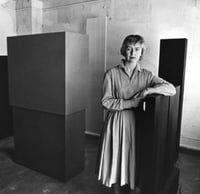
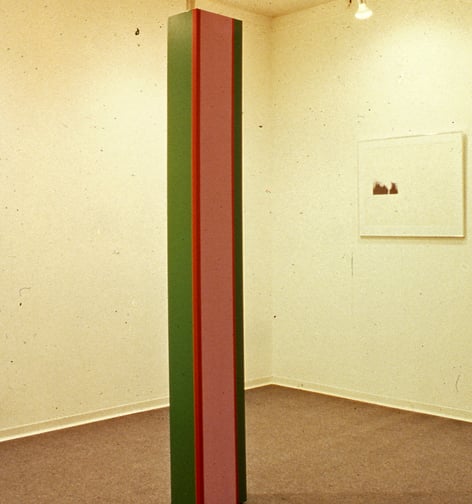
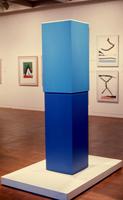
Anne Truitt’s Second Requiem stands as a pivotal work that collapses the traditional boundary between painting and sculpture, embodying the core concerns of Color Field painting while asserting a distinctly three-dimensional presence. Although Color Field is predominantly associated with large, flat canvases (e.g., Rothko, Newman), Truitt transposes its principles onto volumetric form, making the sculpture itself a “painted field” that the viewer must walk around and experience in space.
Significance within Color Field and Minimalism:
-
Color as Structural Substance: In Second Requiem, Truitt applies thin, layered coats of color directly onto a carved wooden column, allowing the pigment to soak into the surface rather than sit as a skin. This method creates an effect where color is not merely a decorative coat but an integral part of the object’s physical presence. The hues—often muted, earth-toned, or subtly modulated—vibrate across the sculpture’s planes, echoing the atmospheric color fields of her painter contemporaries.
-
Objecthood and Perceptual Encounter: Truitt’s work rejects the narrative or symbolic weight of traditional figurative sculpture. Instead, Second Requiem presents a stark, vertical form that commands attention through its sheer, quiet autonomy. The title “Requiem” suggests a funereal or meditative tone, yet the work does not illustrate mourning; rather, it evokes a mood through the interplay of color, proportion, and the way light falls on its faceted surfaces. This aligns with Color Field’s goal of eliciting an immediate, embodied emotional response without recourse to subject matter.
-
Pioneering a Hybrid Genre: By making sculpture that is literally drenched in color, Truitt challenged the mid-century hierarchy that separated painting (color, surface) from sculpture (volume, mass). Her practice anticipated later developments in post-minimalist installation and shaped-color sculpture, influencing artists who sought to fuse chromatic sensation with physical structure.
Unique Contribution of Second Requiem:
The sculpture’s significance lies in its insistence that color can be as expressive and “deep” in three dimensions as it is on a flat canvas. Where a Color Field canvas faces the viewer frontally, Truitt’s column asks the viewer to move around it, discovering how hues shift with changing light and angle. This kinetic experience—color unfolding in time and space—expands the Color Field ethos into a fully environmental, phenomenological encounter.
In sum, Second Requiem is a landmark that demonstrates how Color Field’s radical use of saturated, autonomous color could be liberated from the picture plane to inhabit real volume, inviting a new kind of perceptual engagement that is both painterly and sculptural.
Visivamente simili
20 opere con composizione e palette affini
Installation view
Gaylen Gerber
Cristiano Tassinari, C is for Cherry, Francesca Antonini Gallery, Rome, Italy
Cristiano Tassinari
Installation view
Bruno Jakob
Territorium 25
Gunter Umberg
Come Unto These Yellow Sands II
Anne Truitt
Installation view
Gaylen Gerber
Summer Sentinel
Anne Truitt
Untitled/Exquisite Corpse: The Complete Paintings of Manet 227 of 556 Baigneuses en Seine (Bathers in the Seine) 1874?
Stephen Prina
Cristiano Tassinari, C is for Cherry, Francesca Antonini Gallery, Rome, Italy
Cristiano Tassinari
Intervention
Edward Krasinski
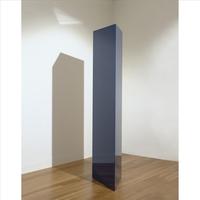
Glacier
John McCracken
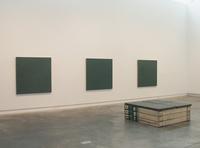
Monochrome Painting: A Posteriori Prototype: Average Size
Stephen Prina
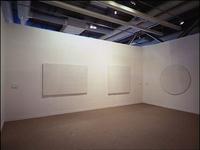
Toiles à l’unité/Légendes
Claude Rutault
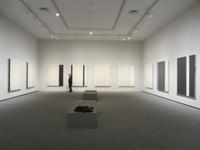
Stations of the Cross
Barnett Newman
dé-finition/méthode #261: la peinture sort de sa réserve
Claude Rutault
Orange, Black Painting with Blue Edge, and Burgundy
Robert Irwin
Valley Forge
Anne Truitt
Installation view
Edward Krasinski
Installation views
Edward Krasinski
Mouvement
Horacio Garcia-Rossi