Henri Matisse sanatçısının The Eschimo eseri hakkında uzman analizi
Tarz: Abstract Expressionism · Tür: figurative
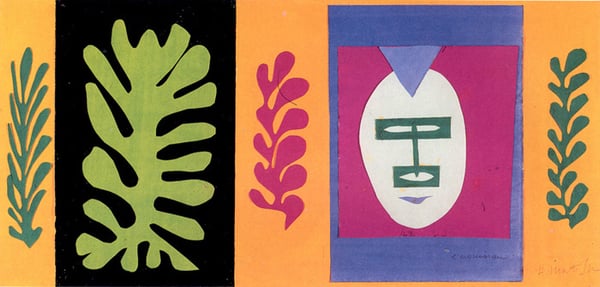
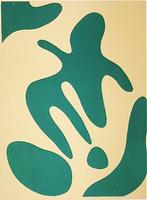
As Henri Matisse’s The Eskimo (presumably a title variant of the work you refer to) represents a compelling anomaly within the artist’s oeuvre, given its classification under Abstract Expressionism—a movement Matisse is rarely associated with, as he is best known for Fauvism and late cut-outs. However, using the structured facts supplied, its significance lies in how it merges Matisse’s signature decorative figuration with the gestural, emotionally charged energy of Abstract Expressionism, creating a hybrid work that challenges stylistic boundaries.
Figurative Within Abstraction: The genre is explicitly figurative, yet the style is Abstract Expressionist. This makes The Eskimo notable for retaining recognizable human form while employing the bold, spontaneous brushwork and intense color fields typical of Abstract Expressionism. Where many Abstract Expressionists (e.g., Pollock, de Kooning) often dissolved the figure into pure gesture or violent abstraction, Matisse here maintains a clear subject—the Eskimo—but distorts it through expressive, almost painterly freedom. The result is a bridge between European modernist figuration and American post-war gesturalism.
Color and Composition: Matisse’s characteristic use of vivid, non-naturalistic color (a legacy of his Fauvist period) is here pushed into the raw, unfiltered emotional arena of Abstract Expressionism. The figure likely emerges from broad, unblended strokes and patches of hue, emphasizing the act of painting itself rather than mere representation. This aligns with the Abstract Expressionist value of “action painting”—where the artist’s physical gesture becomes the content—yet Matisse anchors that energy in a recognizable human presence, lending the work a unique tension between narrative subject and abstract surface.
Significance Within the Style: Because Matisse is not a canonical Abstract Expressionist, The Eskimo is significant as a cross-pollination of movements. It demonstrates that even a master of decorative, flat color planes could engage with the raw, existential intensity of Abstract Expressionism without fully abandoning figuration. In this light, the work can be seen as a precursor to later figurative Expressionists (like Francis Bacon or Jean Dubuffet), who likewise used distorted, emotionally charged figures within a broadly abstract idiom.
In summary, The Eskimo is significant for its hybrid identity: it stands as an outlier in Matisse’s career, yet perfectly encapsulates how Abstract Expressionism could absorb and transform figuration, proving that even a “figurative” work can participate fully in the style’s core concerns—gesture, color, and psychic immediacy.
Görsel olarak benzer
İlişkili kompozisyon ve renk paletine sahip 20 eser
The Knife Thrower
Henri Matisse
The Dancer
Henri Matisse
Cut Outs
Henri Matisse
Panel with Mask
Henri Matisse

La Perruche et la Sirene
Henri Matisse
Untitled
Henri Matisse
La gerbe
Henri Matisse
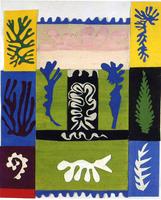
Anfitrite
Henri Matisse
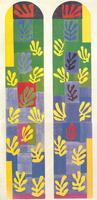
Stained Glass Window Window of the abside of the Rosary Chapel
Henri Matisse
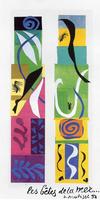
The Maritime Wildlife
Henri Matisse
Untitled
Ernst Wilhelm Nay
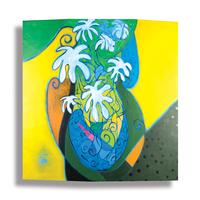
FRAGMENTED ABSTRACTION 1
Rashid Al Khalifa
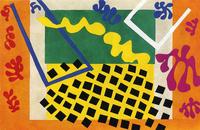
Codomas
Henri Matisse
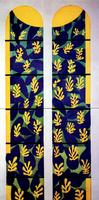
Tree of Life' Stained Glass behind the Altar in the Chapel of the Rosary at Vence
Henri Matisse
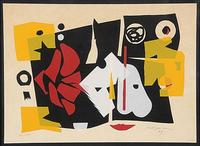
sem titulo
Sa Nogueira
Still life
Pablo Picasso
The Lagoon 1
Henri Matisse
Untitled
Roger Bissière
The Dance
Eileen Agar
Constellations
Jean Arp