Expertenanalyse zu Robert Williamss Runaway Imagination on the Back of a Wild Mare
Stil: Lowbrow Art · Genre: figurative
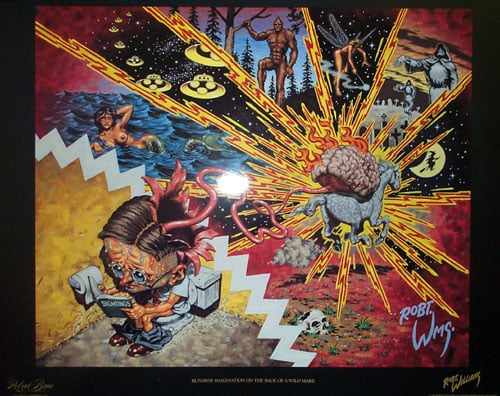
Expert Analysis: "Runaway Imagination on the Back of a Wild Mare" by Robert Williams (Lowbrow Art, Figurative)
Robert Williams stands as a foundational figure in the Lowbrow movement—a style that emerged from the fringes of American pop culture, blending underground comix, hot-rod aesthetics, pulp illustration, and surrealist sensibilities. This painting, "Runaway Imagination on the Back of a Wild Mare," epitomizes the movement's defiance of traditional high-art hierarchies and its celebration of raw, unfiltered creativity.
Visual and Conceptual Core:
The title itself signals a central Lowbrow theme: the untamed, irrational power of the imagination. The "wild mare" functions as a visceral metaphor for artistic impulse—unbridled, unpredictable, and resistant to control. Figuratively, Williams places the rider (likely a surrogate for the artist or the creative mind) in a precarious, exhilarating relationship with this force. The work likely employs his signature exaggerated draftsmanship: bulging, cartoonish anatomy, lurid color palettes, and meticulous rendering of horrific yet humorous details. This tension between polished technique and grotesque content is a hallmark of Lowbrow.
Significance within Lowbrow Art:
-
Championing the "Low" as Fine Art: Williams co-founded Juxtapoz magazine in 1994 and helped elevate Lowbrow from subcultural obscurity to gallery legitimacy. This piece embodies his manifesto: that imagery drawn from tattoo flash, monster magazines, and custom car culture deserves the same analytical respect as academic painting. Here, the wild mare might reference both the hot-rod muscle cars (a recurring Lowbrow motif) and the classical trope of the horse as passion, twisted into a punk-surrealist icon.
-
The Surrealist Underground: While Lowbrow draws from Dada and Surrealism, Williams injects a distinctly American, blue-collar grit. The "runaway imagination" suggests a rejection of rational, bourgeois taste in favor of id-driven, often disturbing dreamscapes. Unlike Surrealist automatism, his work is hyper-articulated—every pinstripe and chrome highlight painstakingly rendered, creating a hyper-real fantasy that subverts reality.
-
Narrative and Symbolism: Figurative Lowbrow often tells twisted stories. The mare's "wild" nature implies a centrifugal force—maybe the artist strapped to a bucking beast of inspiration. This reflects the movement's ethos: art as a visceral, risky thrill, not a polite object to be contemplated at a distance. The mare could also allude to the "white horse" of apocalyptic or ecstatic visions, democratized through a lowbrow lens.
Legacy:
"Runaway Imagination on the Back of a Wild Mare" is significant as a distillation of Williams' core philosophy: that true creativity is a reckless ride, and that the most potent images emerge from the collision of high craft and low subject matter. In the broader art world, it stands as a defiant assertion that pulp, pop, and punk are as worthy of serious analysis as any Renaissance altarpiece—and often far more alive.
Visuell ähnlich
20 Werke mit ähnlicher Komposition und Farbpalette
Mirror Image with Varicose Eyeballs
Robert Williams
Ranch of Disease
Robert Williams
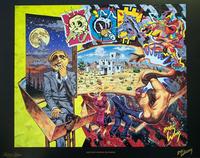
Nine Indo Nostril Pickineers
Robert Williams
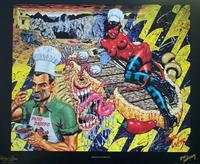
Perineum Tartare
Robert Williams
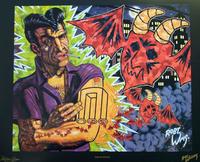
The Op Tattoo
Robert Williams
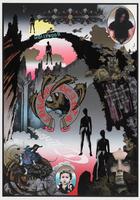
Chrome Hearts
Tadanori Yokoo
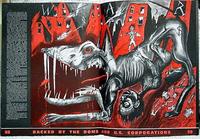
Suicide
Sue Coe
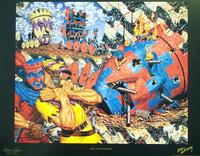
Siege of the Masquers
Robert Williams
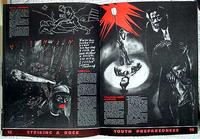
Suicide
Sue Coe
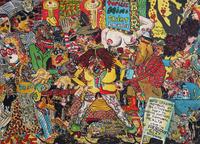
Nervous City
Red Grooms
Gyntiana - The Birth of Onionman
Jorg Immendorff
The Dream.
Erro
As I Opened Fire
Roy Lichtenstein
The Girl with the Faberge Ass
Robert Williams
Crazy Diamond is Unbreakable
Hirohiko Araki
Brother.
Erro
Illustration to Aleksander Blok's poem 'The Twelve'
Jury Annenkov
Timmy's Last Surprise
Robert Williams
Exposition Universelle 1889, Le Pays des Feés
Jules Cheret
Sitting... six months later
Oyvind Fahlstrom