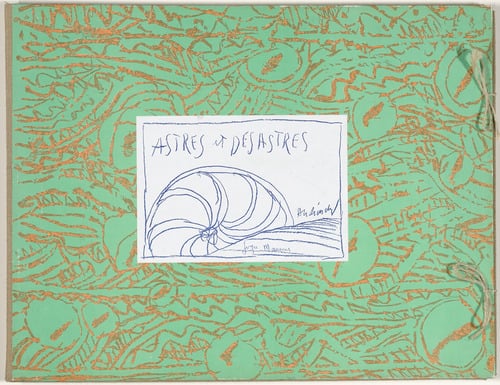
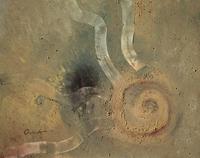
Stars and Disasters (Astres et Désastres)
Dettagli
Analisi esperta di Stars and Disasters (Astres et Désastres) di Pierre Alechinsky
Stile: Expressionism · Genere: abstract
Expert Analysis of "Stars and Disasters (Astres et Désastres)" by Pierre Alechinsky
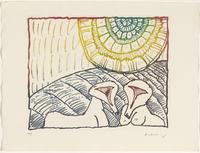
Pierre Alechinsky’s Stars and Disasters (Astres et Désastres) is a compelling work within the Expressionist movement, rendered in an abstract genre. Its significance lies in how it harnesses the core tenets of Expressionism—emotional intensity, subjective experience, and a rejection of naturalistic representation—through entirely non-figurative means.
The painting’s title itself suggests a thematic duality: the celestial ("Stars") versus the catastrophic ("Disasters"). As an abstract work, it does not depict these concepts literally; rather, Alechinsky uses color, line, and composition to evoke the tension between order and chaos, creation and destruction. The artist’s gestural brushwork and dynamic forms—characteristic of his later style—translate internal psychological states into visual energy. This aligns with the Expressionist goal of conveying raw emotion rather than external reality.
As an abstract Expressionist piece, the work is significant for pushing beyond the bounds of recognizable imagery while still retaining the movement’s hallmark expressive power. Alechinsky’s composition likely balances spontaneous, often calligraphic marks with areas of intense color, creating a visual field that feels both cosmic and intimate. The "disasters" may emerge through clashing forms or agitated lines, while the "stars" could be implied by isolated bursts of light or rhythmically placed elements—all without literal representation.
Ultimately, Stars and Disasters demonstrates that abstraction can be as potent a vehicle for Expressionist feeling as any figuration. Alechinsky’s ability to evoke vast, contradictory forces purely through abstract means marks this work as a notable contribution to the Expressionist tradition, showing how the movement evolved to embrace non-objective visual language.
Visivamente simili
20 opere con composizione e palette affini
Return of Nautilus
Eileen Agar
Shell
Edward Weston
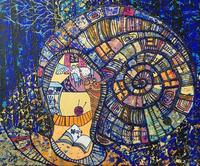
Snailhouse
Raiskina Marina
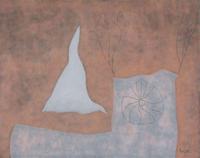
Pinwheel
William Baziotes
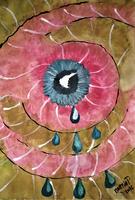
Melancolía
Martin Pereira
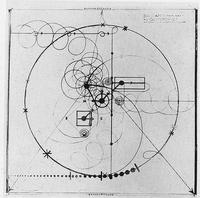
Diagram for Gesture Dance
Oskar Schlemmer
The album "Circus"
Fernand Leger
Persian Treasure
Anna Zemánková
Stars and Disasters (Astres et Désastres)
Pierre Alechinsky
The Small Black Holes
Serge Charchoune
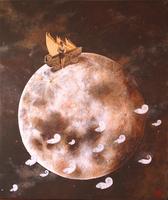
A day of fishing in lunar seas
Marina Pallares
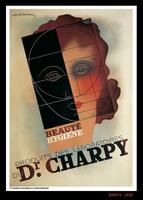
Dr Charpy
Cassandre
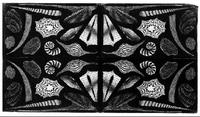
Sea Shells
M.C. Escher
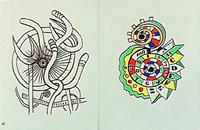
The album "Circus"
Fernand Leger
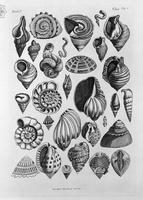
Various shells taken from the real
Giovanni Battista Piranesi
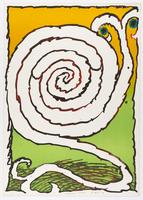
Plate II from the portfolio Ceremonial Labyrinths (Labyrinthes d'apparat)
Pierre Alechinsky
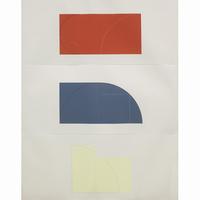
Series of Three
Robert Mangold
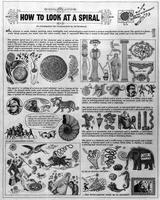
How to Look at a Spiral
Ad Reinhardt
Eternidad absoluta
Ramon Oviedo
The Creation of Man
Marc Chagall