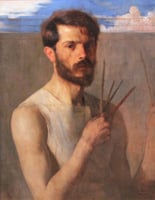
Expertenanalyse zu Eliseu Viscontis Youth
Stil: Romanticism · Genre: nude painting (nu)
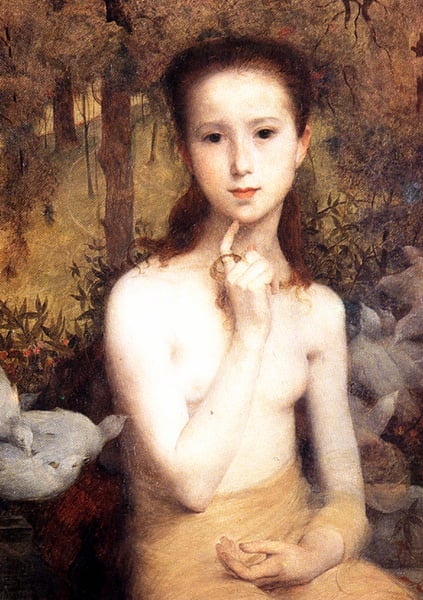
Expert Analysis of "Youth" by Eliseu Visconti
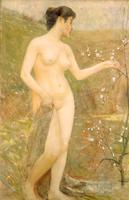
Within the framework of Romanticism, Eliseu Visconti’s Youth stands as a compelling example of the period’s fascination with emotion, individuality, and the sublime beauty of the human form. As a nude painting (nu), the work transcends mere anatomical study to become a meditation on the transient, idealized state of youth itself.
Significance within Romanticism:
- Emotional Resonance: Unlike Neoclassical nudes, which often emphasized cold perfection and moral allegory, Youth likely channels Romanticism’s hallmark—raw sentiment. The figure’s posture, gaze, or lighting would evoke vulnerability, longing, or innocence, making youth not just a physical condition but an emotional experience.
- Individuality over Ideal: Romanticism prized the unique human subject. Visconti’s portrayal of youth probably avoids generic classical proportions in favor of a more naturalistic, specific figure—a celebration of the individual’s fleeting vitality rather than an eternal ideal.
- Nature and Transience: Romantic nudes often place the body in dialogue with nature’s power or impermanence. Youth may use soft shadows, organic contours, or a subdued palette to suggest that youth, like a season, is a fragile moment soon to pass.
Genre Significance (Nude Painting): As a nude, Youth participates in the Romantic reclamation of the body as a vessel for feeling. The work likely presents nudity not as academic exercise but as a sincere, even poetic exploration of human vulnerability and grace. It challenges the viewer to see the unclothed form as an expression of life’s ephemeral beauty.
Legacy: While rooted in Romanticism, Visconti’s Youth anticipates later modernist concerns—the psychological depth of the sitter, the primacy of mood over narrative. Its significance lies in how it uses the nude to distill the Romantic spirit: a tender, melancholic hymn to the very moment of being young.
Museum / Gallery
Visuell ähnlich
20 Werke mit ähnlicher Komposition und Farbpalette
Standing Bather
Pierre-Auguste Renoir
Two Girls
Joan Brull
In the Forest
Guillaume Seignac
Oleanders
Joan Brull
Bather drying herself
Pierre-Auguste Renoir
Bather seated on a rock
Pierre-Auguste Renoir
Young huntress
Ernest Hébert
Bather
Pierre-Auguste Renoir
Gabrielle with a Rose (The Sicilian Woman)
Pierre-Auguste Renoir
Bather with Long Hair
Pierre-Auguste Renoir
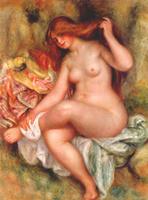
A Seating Bather
Pierre-Auguste Renoir
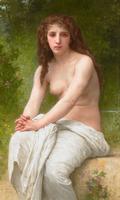
Reflection
William-Adolphe Bouguereau
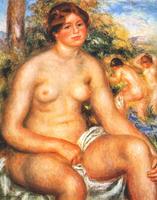
Seated Bather
Pierre-Auguste Renoir
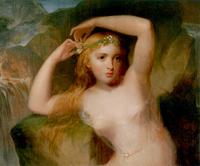
A Sea Nymph
Thomas Sully
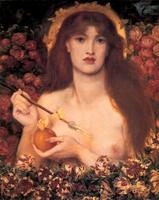
Venus Verticordia
Dante Gabriel Rossetti

Eve Tempted
George Frederick Watts
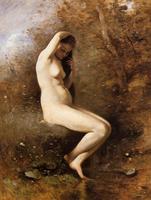
Venus Bathing
Camille Corot
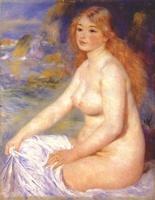
Blonde bather
Pierre-Auguste Renoir
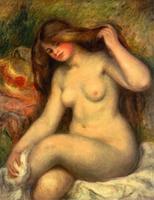
Large Bather with Crossed Legs
Pierre-Auguste Renoir
Nude with Peach Blossoms
Fujishima Takeji