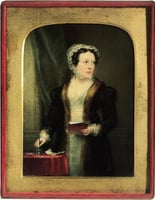
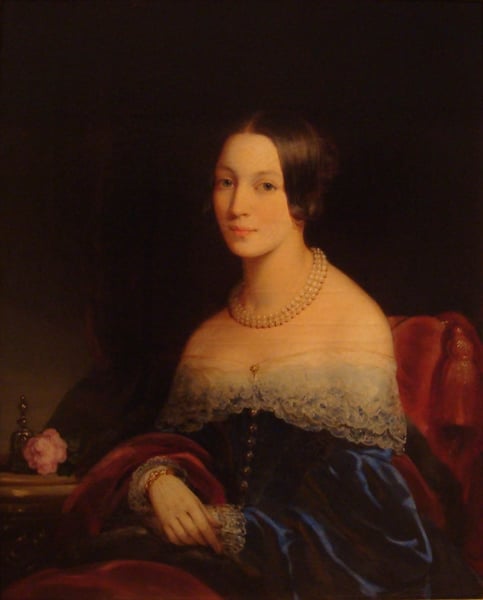
Analisi esperta di Portrait of Julia Feodorovna Kurakina di Christina Robertson
Stile: Academicism · Genere: portrait
Expert Analysis: "Portrait of Julia Feodorovna Kurakina" by Christina Robertson (Academicism, Portrait)
This work exemplifies the core tenets of Academicism—a 19th-century style that prized technical mastery, idealized beauty, and adherence to classical compositional principles. As a portrait, it not only captures the likeness of its sitter but also elevates her through a polished, refined aesthetic that aligns with the era’s aristocratic taste.
Significance within Academicism and Period Context
1. Mastery of Delicate Realism
Robertson’s handling of textures—the luminous sheen of silk, the soft translucency of lace, and the warm glow of skin—demonstrates the academic emphasis on trompe-l’œil precision. Every fold of fabric and strand of hair is rendered with meticulous brushwork, a hallmark of the École des Beaux-Arts tradition that Academicism championed.
2. Idealized Nobility
Julia Feodorovna Kurakina is portrayed not merely as an individual but as an archetype of aristocratic grace. Her serene expression, poised posture, and elegant attire conform to academic ideals of beauty and decorum, reinforcing the sitter’s social status. The portrait avoids overt emotional expression, instead projecting timeless dignity—a characteristic prized in official portraiture of the period.
3. Robertson’s Unique Position
Christina Robertson (1796–1854) was a Scottish-born artist who achieved remarkable success in the Russian Imperial court, a rare feat for a woman in a male-dominated field. Her portraits, including this one, stand as testament to the global reach of Academicism; she seamlessly blended Western European academic conventions with the tastes of the Russian aristocracy. The work’s significance lies in its demonstration that female artists could command the same level of technical skill and social access as their male counterparts within the strictures of academic art.
4. Balance of Naturalism and Formality
While Academicism often inclined toward stiff formality, Robertson injects a subtle warmth—note the slight tilt of the head and the soft focus in the eyes—that prevents the portrait from becoming merely a decorative trophy. This balance between lifelike vitality and idealized composure is what elevates the work beyond a simple depiction into a symbol of its era’s highest artistic ambitions.
Conclusion
Portrait of Julia Feodorovna Kurakina is significant as a quintessential example of Academicism’s portrait genre, showcasing flawless technique, aristocratic idealization, and the breakout success of a female artist within a rigidly hierarchical system. It remains a document of both personal identity and the enduring aesthetic values of 19th-century academic art.
Visivamente simili
20 opere con composizione e palette affini
Portrait of E.A. Sisalinoy
Vasily Tropinin
Portrait of a Lady (said to be the Countess of Loudoun)
John Hayls
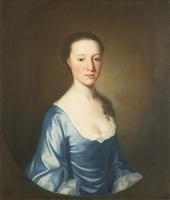
Jane Atkinson (1742–1823)
George Romney
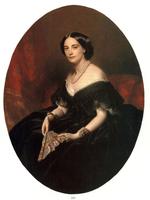
Portrait of a Lady
Franz Xaver Winterhalter
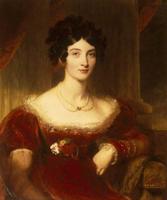
Anne Frances Bankes
Thomas Lawrence
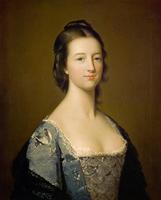
Elizabeth Gunning, Duchess of Hamilton (later Duchess of Argyll)
Gavin Hamilton
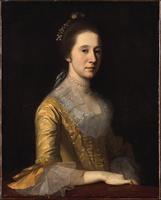
Margaret Strachan (Mrs. Thomas Harwood)
Charles Willson Peale
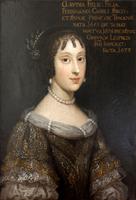
Claudia Felicitas of Austria
Juan Carreno de Miranda
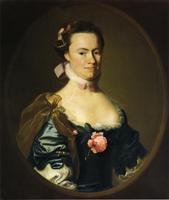
Lydia Lynde
John Singleton Copley
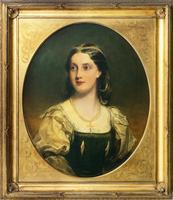
Lady Gowans of Gowanbank
William Crawford
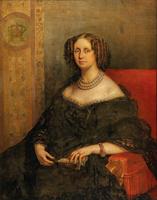
Portrait of Louise d'Orléans, Queen of Belgium
Jean-François Portaels
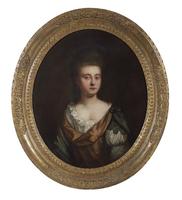
Half-Length Portrait of a Young Woman
Jonathan Richardson
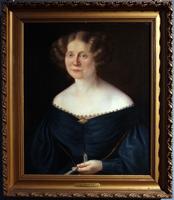
Portrait of Rosy Piérard
François-Joseph Navez
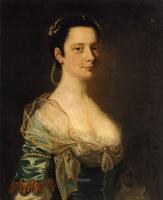
Portrait of a Lady
Joseph Wright
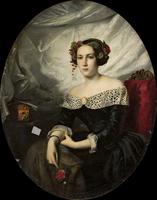
Portret damy z kamea i roza
Bernhard Mohrhagen
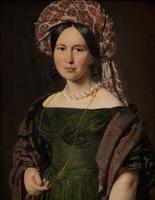
Cathrine Jensen, née Lorenzen, the Artist's Wife, Wearing a Turban
Christian Albrecht Jensen
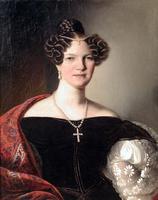
Portrait of Amalia Ritter de Zahony
Giuseppe Tominz
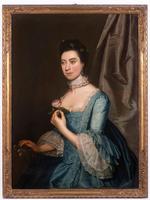
Portrait of a Lady
Johann Heinrich Tischbein the elder
Portrait of Queen Henrietta Maria
Anthony van Dyck
Honthorst Elisabeth Palatine
Gerard van Honthorst