Expertenanalyse zu Charles Bells Oh Boy
Stil: Photorealism · Genre: still life
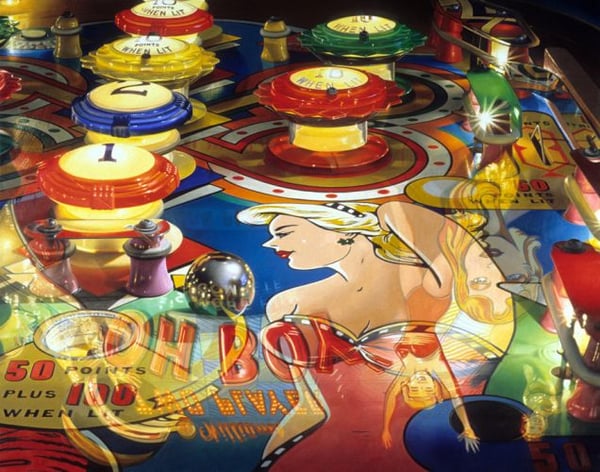
Expert Analysis of “Oh Boy” by Charles Bell
Charles Bell’s “Oh Boy” stands as a quintessential example of Photorealism, a movement that emerged in the late 1960s and early 1970s. Bell, one of the movement’s most dedicated practitioners, specialized in large-scale still lifes of gumball machines, pinball parts, and other mass-produced, brightly colored objects. This work is significant for several reasons:
-
Mastery of Photorealistic Technique: Bell meticulously transferred photographic precision to canvas, often using an airbrush to achieve the seamless, glossy finish that mimics the polished surfaces of plastic, glass, and metal. In “Oh Boy,” every reflection, highlight, and shadow is rendered with obsessive detail—creating an illusion so convincing that it challenges the boundary between painting and photograph.
-
Elevation of the Mundane to the Monumental: Unlike traditional still lifes that celebrate natural abundance (fruit, flowers) or domestic luxury, Bell’s subject—a gumball machine—is a humble, commercial object from mid-20th-century Americana. By magnifying it to a scale that dominates the viewer’s field of vision, he transforms a common vending machine into an iconic, almost sculptural presence. The title “Oh Boy” hints at childhood delight, yet the hyperreal treatment gives the object an eerie, monumental stillness.
-
Play of Light and Transparency: Bell was renowned for his ability to depict light interacting with transparent and translucent materials. The gumball machine’s glass globe becomes a complex lens, refracting and distorting the brightly colored spheres inside. The metallic coin slot, the chrome base, and the red plastic knob all catch and reflect light differently, demonstrating Bell’s deep understanding of optical phenomena. This technical virtuosity is a hallmark of Photorealism’s ambition to rival photography in capturing fleeting visual effects.
-
Commentary on Consumer Culture: By isolating a gumball machine—a symbol of inexpensive, disposable pleasure—Bell invites reflection on American materialism and nostalgia. The work’s immaculate, almost sterile finish contrasts with its playful subject, suggesting a tension between the artificial perfection of commercial imagery and the messy reality of consumption. In the context of 1970s and 1980s art, Bell’s still lifes align with Photorealism’s critique of mass media and its seductive surfaces.
In summary, “Oh Boy” is significant because it embodies the core ambitions of Photorealism: the fusion of photographic accuracy with painterly scale, the transformation of the everyday into the extraordinary, and a cool, detached exploration of light, surface, and American visual culture. Charles Bell’s work remains a touchstone for how still life can be radically reimagined through the lens of hyperrealism.
Visuell ähnlich
20 Werke mit ähnlicher Komposition und Farbpalette
Sophisticated Lady
Charles Bell
Lucky Lady
Charles Bell
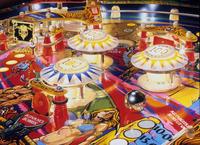
Finis Coronat Opus
Charles Bell
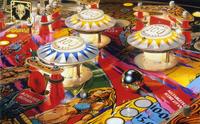
1 to 4 Can Play
Charles Bell
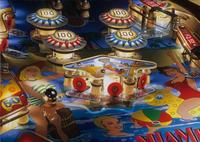
Miami Beach
Charles Bell
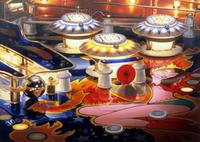
Double Bonus
Charles Bell
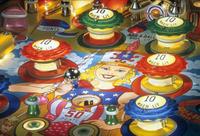
Majorette
Charles Bell
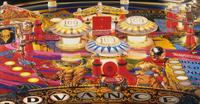
Paragon
Charles Bell
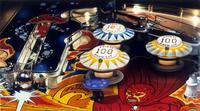
100 Points When Lit
Charles Bell
Pinball
Claudio Bravo
Automat
Matthias Weischer
Urban Chaos.
Erro
The Dream.
Erro
Impeller
Peter Phillips
Hommage à Léger
Erro
Tiger
Peter Phillips
No Time to Waste
Arsen Savadov
Disneyland
Richard Lindner
Ferris Wheel in the Tuileries
Pierre Dubreuil
The Brooklyn Bridge
Joseph Stella