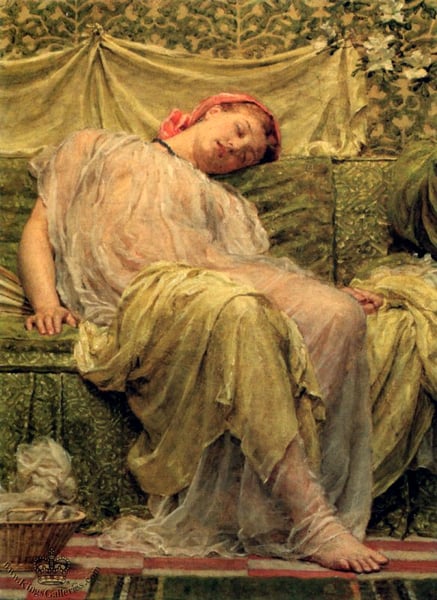
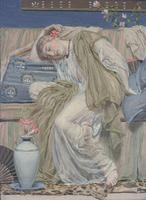
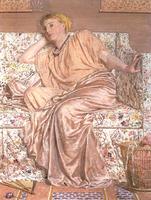
Albert Joseph Moore's A Workbasket exemplifies the pinnacle of Academicism—the rigorous, idealized style that dominated European art institutions in the 19th century. As a genre painting, it elevates a simple domestic scene (a woman with a sewing basket) into a study of formal perfection. The work’s significance lies in Moore’s ability to reconcile Academicism’s demand for classical balance with the intimate, everyday subject matter of genre art.
Rather than telling a narrative, Moore prioritizes aesthetic harmony: the figure’s pose, the drapery, and the arrangement of the workbasket create a rhythmic, almost musical composition. The palette is restrained, favoring muted, harmonious tones that emphasize line and form over emotional drama. This approach aligns with the Aesthetic Movement, of which Moore was a key figure, but remains firmly rooted in Academic tradition through its polished finish, idealized anatomy, and disdain for vulgar realism. In A Workbasket, the mundane act of sewing becomes a timeless, graceful ritual—proving that Academicism could transform the ordinary into the sublime through sheer technical mastery and decorative sensibility.