Expertenanalyse zu Jean Rene Bazaines Marriage from The Seven Sacrements
Stil: Art Informel
Expert Analysis: Marriage from The Seven Sacraments by Jean Rene Bazaine
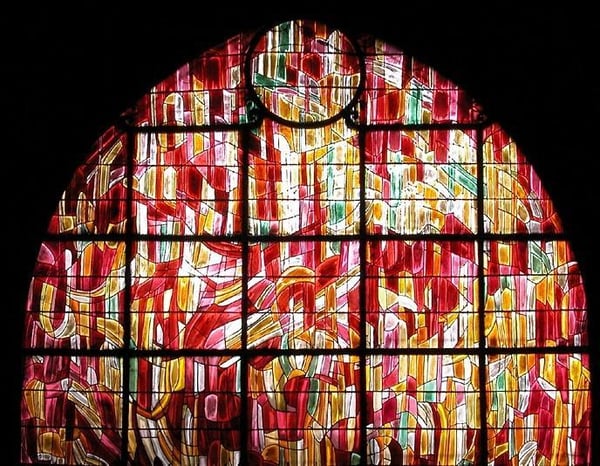
Jean Rene Bazaine’s Marriage from The Seven Sacraments stands as a profound example of Art Informel applied to sacred subject matter. In this work, Bazaine breaks from traditional religious iconography, instead using the gestural, non-representational vocabulary of Informel to explore the spiritual essence of the sacrament.
Significance within Art Informel:
- Materiality and Gesture: The painting embodies the Informel emphasis on raw, intuitive mark-making. Bazaine builds the composition through irregular patches of color, fluid lines, and textured surfaces, rejecting geometric order in favor of an organic, unpredictable energy. This approach mirrors the spontaneous, existentialist ideals of the movement, which sought to capture the artist’s inner state and the physical act of painting.
- Sacred Abstraction: By translating a Catholic sacrament into pure abstraction, Bazaine pushes Informel beyond its typical secular or existential themes. Marriage becomes a meditation on union and transcendence, not through recognizable figures (bride, groom, altar) but through the interaction of warm earthy tones and luminous whites—suggesting both the bodily and the divine. The lack of clear forms forces the viewer to engage with the emotion of the ritual rather than its narrative.
- Historical Context: Created during the post-war period, this work reflects the broader shift in European art away from figuration and toward a more direct, visceral expression of the ineffable. Bazaine’s series on the seven sacraments reimagines a centuries-old Catholic tradition within the vocabulary of mid-20th-century abstraction, making it a key example of how Informel could engage with inherited cultural structures while dismantling their visual conventions.
In Marriage, Bazaine synthesizes the core tenets of Art Informel—spontaneity, material sensitivity, and rejection of form—with the timeless theme of sacred union, marking it as a significant contribution to both the movement and the redefinition of religious art in the modern era.
Stil
Tags
Visuell ähnlich
20 Werke mit ähnlicher Komposition und Farbpalette
Rose de Metz, Vatican
Roger Bissière
Eglise de Varengeville-sur-Mer
Raoul Ubac
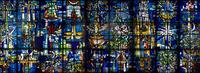
Letanía Lauretana En La Capilla De La Casa Convento De Las Religiosas De María Inmaculada En Córdoba 1966
Antonio Povedano
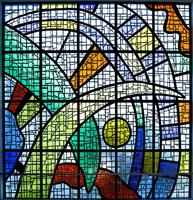
Stained glass windows for the University of Caracas
Fernand Leger
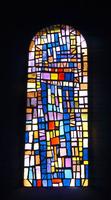
Eglise de Cornol (Suisse), vitrail
Roger Bissière
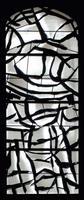
Eglise de Varengeville-sur-Mer
Raoul Ubac
Krakow Medical Society House, Stained Glass Window
Stanisław Wyspiański
Igreja de S. Miguel, Queijas
Eduardo Nery
Krakow Medical Society House, Stained Glass Window
Stanisław Wyspiański
Sacred Heart of Audincourt
Fernand Leger
Church Am Steinhof, drawing of western window
Koloman Moser
Les vitraux de la Chapelle de St Raphaël
Andre-Pierre Arnal
The Glass Wall (Dedicated to Linda McCartney)
Brian Clarke
Sacred Heart of Audincourt
Fernand Leger
Project window (Audincourt)
Fernand Leger
St. Mark and St. Matthew
Marc Chagall
God the Father - Arise
Stanisław Wyspiański
The Tribe of Benjamin. Stained glass window for the synagogue of the Hadassh Hebrew University Medical Center in Jerusalem.
Marc Chagall
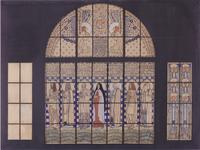
Church Am Steinhof, design for the east side windows
Koloman Moser
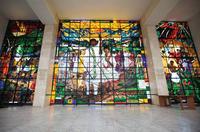
The Total Liberation of Africa
Afewerk Tekle