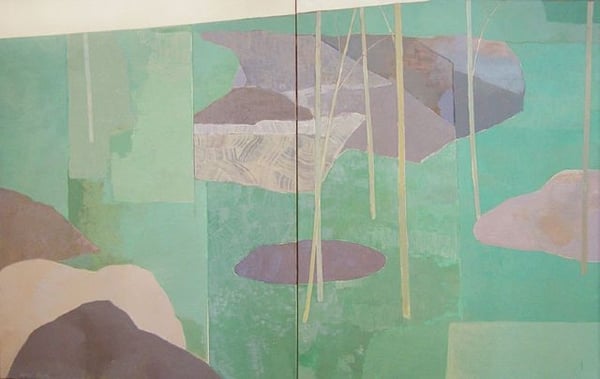
Young Bamboo (Diptych)
Analisi esperta di Young Bamboo (Diptych) di Kenzo Okada
Stile: Abstract Expressionism · Genere: abstract
Expert Analysis: "Young Bamboo (Diptych)" by Kenzo Okada
Kenzo Okada’s Young Bamboo (Diptych) stands as a singular achievement within Abstract Expressionism, a movement dominated by gestural bravura and large-scale emotional intensity. What makes this work significant is how Okada subtly reorients the core tenets of the movement—spontaneity, flatness, and non-objectivity—through a distinctly Japanese sensibility of restraint, natural observation, and asymmetrical balance.
The diptych format is crucial: rather than a single explosive field, Okada divides the canvas into two companion panels. This structure echoes the classic Japanese screen (byōbu) or sliding door (fusuma), inviting a contemplative, sequential viewing experience rather than a single frontal assault. The title “Young Bamboo” alludes to the vigorous, upward growth of bamboo shoots—a motif loaded with East Asian cultural resonance (resilience, purity, flexibility). Yet Okada does not depict bamboo literally. Instead, he translates its essence into abstract marks: vertical strokes, soft washes of green and earthy brown, and subtle drips that suggest organic growth without representation.
The significance lies in Okada’s fusion of two seemingly opposing philosophies. From Abstract Expressionism he takes the freedom of the gesture and the primacy of the picture plane as an autonomous field. But he replaces the aggressive, often angst-ridden mark-making of his New York School peers with a quiet, meditative touch—a “non-gestural” abstraction. The paint is applied thinly, almost like ink wash, allowing the canvas grain to show through. Color is subdued and atmospheric, avoiding the high-contrast drama of Pollock or de Kooning.
Thus, Young Bamboo exemplifies what critic Dore Ashton called “tranquil abstraction” and bridges the gap between Western post-war avant-garde and traditional Japanese ink painting (sumi-e). In doing so, Okada expanded the vocabulary of Abstract Expressionism, proving that its core ideals—immediacy and emotional truth—could be achieved through softness, silence, and the poetics of nature rather than noise and struggle. The work is a quiet masterpiece of cross-cultural synthesis, where a diptych becomes a window onto a garden of the mind.
Visivamente simili
20 opere con composizione e palette affini
Small Garden
Hiroyuki Tajima
Three Whites
Kenzo Okada
Stream
Kenzo Okada
Red and Orange
Kenzo Okada
Triptych 'White Sail'
Hryhorii Havrylenko
Shapes of Spring
Milton Avery
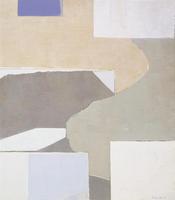
White and Brown
Kenzo Okada
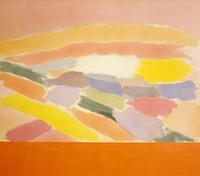
Arielle
Ronnie Landfield
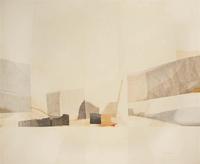
Untitled
Kenzo Okada
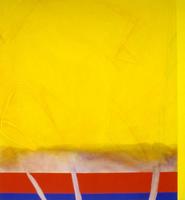
Edge Of Autumn
Ronnie Landfield
Vivid Spring
Ronnie Landfield
Loves Power
Ronnie Landfield
Flowering #2
Friedel Dzubas
Diptych
Esteban Vicente
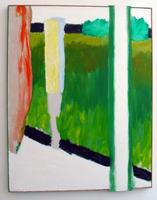
My garden
Roger Raveel
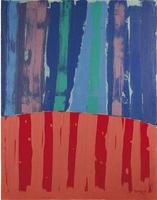
Due Tempi
Antonio Corpora
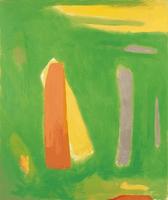
Ritmico
Esteban Vicente
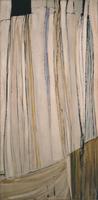
Winter 1956, Yorkshire
Terry Frost
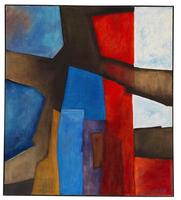
Rot-vertikal
Fritz Winter
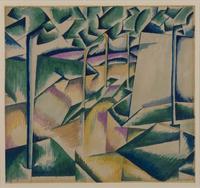
Landscape
Edward Wadsworth