Expert analysis of Yayoi Kusama’s Pumpkin
Style: Art Brut, Pop Art · Genre: figurative
Expert Analysis of "Pumpkin" by Yayoi Kusama
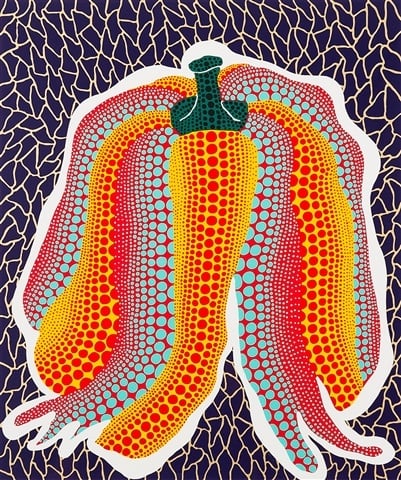
Yayoi Kusama’s Pumpkin stands as a seminal work that bridges the raw, intuitive impulse of Art Brut with the bold, mass-cultural language of Pop Art. While the subject is a humble, everyday vegetable—figurative in its recognizability—Kusama transforms it into a vehicle for obsessive pattern, psychological depth, and consumer-culture critique.
Stylistic Significance: Art Brut meets Pop Art
Art Brut, or “raw art,” values spontaneous, untrained expression—and Kusama’s compulsive repetition of polka dots and her deeply personal symbolism (the pumpkin often references her childhood hallucinations and comfort) align perfectly with that ethos. Yet she simultaneously adopts Pop Art’s strategies: flattening form, employing high-contrast colors, and appropriating a familiar object (the pumpkin) as an icon. This dual allegiance makes Pumpkin a rare synthesis: it retains the intimate, therapeutic urgency of outsider creation while engaging with the glossy, reproducible imagery of consumer society.
Figurative Transformation
Although the work is figurative—we can clearly identify a pumpkin—Kusama pushes representation toward abstraction through relentless pattern. The surface is covered in her signature polka dots, which disrupt the naturalistic contours and create a hypnotic, infinite field. The pumpkin becomes less a vegetable and more a screen for the artist’s interior world: a symbol of both vulnerability and resilience (she has said the pumpkin comforts her during mental distress). This tension between the familiar and the warped is central to its significance.
Cultural and Historical Impact
Pumpkin exemplifies Kusama’s ability to elevate personal obsession into universal iconography. Alongside her Infinity Nets and Dots Obsession installations, this work helped solidify her reputation as a matriarch of both Pop and avant-garde art. It also anticipates contemporary fascination with pattern, repeat, and the blurring of high and low art—themes that dominate today’s digital visual culture. The pumpkin motif has become so iconic that it functions as a standalone brand, proving Kusama’s mastery of Pop Art’s central tenet: the everyday object, when charged with obsessive repetition, can become a transcendent emblem.
Conclusion
In Pumpkin, Kusama achieves a profound alchemy: the raw, hermetic energy of Art Brut meets the accessible, reproducible language of Pop. The work is significant not only as a personal talisman but as a landmark that redefines how we see pattern, repetition, and the psychological resonance of ordinary things. It remains a touchstone for artists exploring the intersection of mental interiority and popular imagery.
Visually similar
20 works with related composition and palette
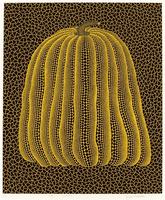
Yellow Pumpkin
Yayoi Kusama
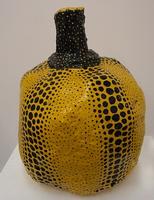
Pumpkin
Yayoi Kusama
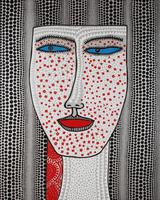
Kusama In A Foreign Country
Yayoi Kusama
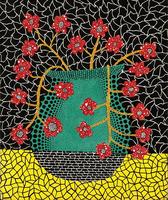
Flowers
Yayoi Kusama
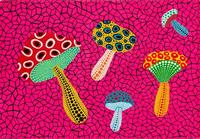
Mushrooms
Yayoi Kusama
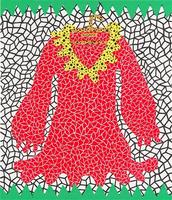
Dress
Yayoi Kusama
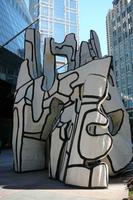
Monument with Standing Beast
Jean Dubuffet
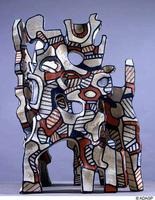
The Cosmorama IV
Jean Dubuffet
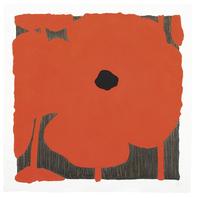
Red Flowers
Donald Sultan
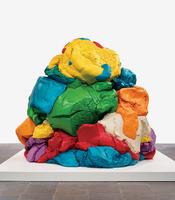
Play-Doh
Jeff Koons
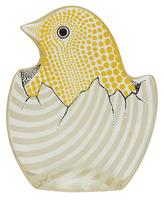
Chick in the Shell of an Egg
Abraham Palatnik
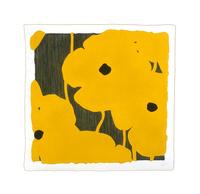
Yellow Flowers
Donald Sultan
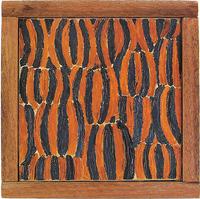
View of Maya
Forrest Bess
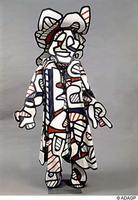
Nini the Smirker (Minaude)
Jean Dubuffet
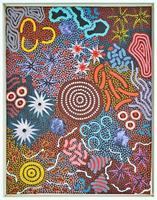
8 Nungala Sisters Going Hunting For Bush Tucker
Michelle Possum Nungurrayi
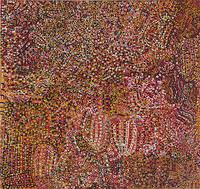
Ntange Dreaming
Emily Kame Kngwarreye
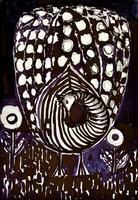
The Peacock in the Dream
George Stefanescu
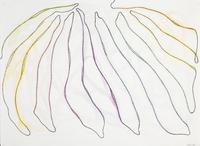
Estados Complementarios #X08
Pablo Rey
Shoes
Yayoi Kusama
Untitled
Aki Kuroda