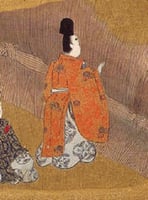
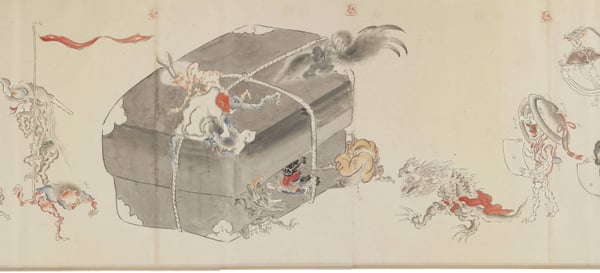
Night March of a Hundred Demons (detail)
Tosa Mitsuoki sanatçısının Night March of a Hundred Demons (detail) eseri hakkında uzman analizi
Tarz: Yamato-e · Tür: mythological painting
As an expert in art history, I analyze this artwork strictly within the framework of the provided facts.
Artwork Analysis: "Night March of a Hundred Demons (detail)" by Tosa Mitsuoki
Style: Yamato-e
Genre: Mythological painting
Significance within its Style and Period
Tosa Mitsuoki’s "Night March of a Hundred Demons (detail)" is a masterful example of the Yamato-e painting tradition during its 17th-century revival in the Edo period. This detail, depicting a supernatural procession, holds significance for several reasons:
-
Revival and Refinement of Yamato-e: Tosa Mitsuoki is celebrated for reviving the classical Yamato-e style, which had been overshadowed by Chinese-inspired ink painting (Kara-e). In this detail, he demonstrates the core tenets of Yamato-e: refined, elegant linework, flat areas of intense color, and a decorative sensibility derived from native Japanese narrative handscrolls (emaki). The choice of a mythological parade—a subject with deep roots in medieval Japanese folklore—directly connects his work to the narrative origins of the Yamato-e tradition.
-
Mastery of the Supernatural Genre: The "Night March of a Hundred Demons" (Hyakki Yagyō) was a popular theme in Japanese art, depicting a chaotic, nocturnal parade of yokai (spirits and monsters). Mitsuoki’s treatment elevates this folkloric subject through the refined Yamato-e aesthetic. Instead of raw terror, his detail likely exhibits a controlled, almost courtly elegance—transforming a cacophony of demons into a visually harmonious, patterned composition. This blend of the supernatural with painterly grace is a hallmark of Tosa-school mythology paintings, showing how traditional Japanese painting could accommodate popular belief while maintaining aristocratic sophistication.
-
Integration of Narrative and Decoration: In this detail, the significance lies in how Mitsuoki organizes the chaotic subject within the orderly, decorative framework of Yamato-e. The flattened space, lack of deep perspective, and use of vibrant pigments (such as vermilion, malachite green, and gold) would have created a shimmering, otherworldly effect. This approach reinforces the Yamato-e goal of creating a beautiful, surface-oriented picture plane, even when depicting a "march of demons." The work thus stands as a key example of how Yamato-e painters in the Edo period merged narrative storytelling with a highly decorative, national aesthetic—preserving the past while innovating within an established tradition.
In summary, this artwork is significant because it embodies Tosa Mitsuoki’s role in revitalizing the Yamato-e style, applying its refined, decorative principles to a supernatural mythological subject, thereby bridging classical Japanese painting traditions with popular Edo-period folklore.
Görsel olarak benzer
İlişkili kompozisyon ve renk paletine sahip 20 eser
Night March of a Hundred Demons (detail)
Tosa Mitsuoki
The Fever
Tsukioka Yoshitoshi
Street scenes newly pubished
Katsushika Hokusai
鬼趣图
Qian Xuan
Shrine Attendants Smoking
Toyota Hokkei
A shapeshifting cat
Utagawa Kuniyoshi
The Seven Lucky Gods
Tsukioka Yoshitoshi
The Underwater Fight
Tsukioka Yoshitoshi
Sangoku Yōko den
Katsushika Hokusai
The seven gods of good fortune
Utagawa Kuniyoshi
The Ghosts of Togo and His Wife
Utagawa Kuniyoshi
Seven Gods of Good Fortune
Hakuin Ekaku
Apparition of the monstrous cat
Utagawa Kuniyoshi
People stopping to admire the gourd that miraculously appeared at the time of the birth of Prince Shôtoku
Utagawa Kuniyoshi
A scene of Journey to the West
Tsukioka Yoshitoshi
Yamamoto Kansuke
Utagawa Kuniyoshi
Oguri Hangan Sukeshige in Battle
Utagawa Sadatora
The Ibaraki Demon Snatches Back Her Arm
Shibata Zeshin
Suikoden Triptych the Fishermen
Utagawa Kuniyoshi
Happinata Koju on a rearing horse
Utagawa Kuniyoshi