
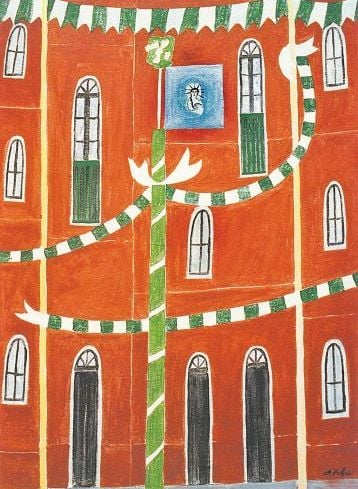
Expert analysis of Alfredo Volpi’s Festa de São João
Style: Naïve Art (Primitivism) · Genre: cityscape
Expert Analysis of "Festa de São João" by Alfredo Volpi
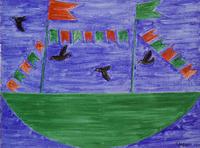
Alfredo Volpi’s "Festa de São João" stands as a masterful example of Naïve Art (Primitivism) within the cityscape genre, yet its significance lies in how Volpi transcends the typical boundaries of this style. While Naïve Art is often characterized by apparent simplicity, flat perspective, and childlike directness, Volpi’s work achieves a sophisticated synthesis of Brazilian folk tradition and modernist reduction.
What makes this artwork significant within its style and period:
-
Cultural Authenticity in Naïve Art
Volpi, a Brazilian modernist of Italian descent, channeled the spirit of popular festivals—here, the Festa de São João (St. John’s Festival). Unlike European Primitivism that often exoticized rural life, Volpi’s depiction is rooted in lived experience. He treats the cityscape not as a tourist view but as a celebration of communal joy, using the naïve vocabulary of flat colors and simplified forms to convey the festival’s rhythmic energy. The flag-decorated streets, dancing figures, and fireworks (implied in the composition) are rendered with an almost heraldic clarity, elevating the everyday into the monumental. -
Bridge Between Folk Art and Modernism
Volpi’s “primitivism” is not a lack of skill but a deliberate rejection of academic perspective—a trait he shares with artists like Rousseau. However, "Festa de São João" also reflects Volpi’s later interest in geometric abstraction. The cityscape is reduced to blocks of color (roofs, facades, sky) that prefigure his renowned “bandeirinhas” (little flags) series. This work thus stands at a crossroads: it retains the naïve delight in narrative and texture while pushing toward the purified planes of high modernism. -
Color as Ritual
In Naïve Art, color is often intuitive. Here, Volpi employs a jubilant palette of reds, blues, yellows, and whites that mimic the actual banners and streamers of São João festivities. But his tempera technique (applied in thin, even layers) gives the colors a luminous, matte quality—a hallmark of his mature style. The result is a cityscape that feels both tangible and dreamlike, capturing the festival’s transient magic without sentimental clutter. -
Legacy in Brazilian Art
While many Naïve painters documented local life with earnest charm, Volpi’s "Festa de São João" influenced an entire generation of Brazilian artists by proving that “primitive” directness could coexist with formal rigor. The work anticipates the Neo-Concrete movement’s interest in optical intensity and spatial play, even as it remains firmly grounded in the warmth of a popular street feast.
In sum, "Festa de São João" is significant because it transforms a simple cityscape into a paradigm of what Naïve Art can achieve when driven by cultural specificity, color logic, and an architectonic instinct—making Volpi one of the few primitivist painters whose work resonates equally with folk audiences and avant-garde sensibilities.
Visually similar
20 works with related composition and palette
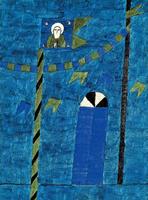
Mastro de São Pedro
Alfredo Volpi
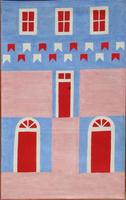
Fachada
Alfredo Volpi
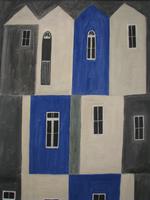
Casas
Alfredo Volpi
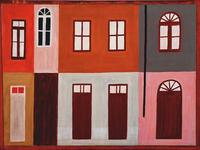
Casas
Alfredo Volpi
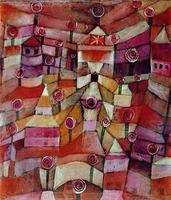
Rose garden
Paul Klee
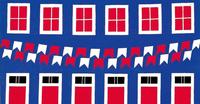
Grande fachada festiva
Alfredo Volpi
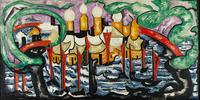
Composition no. 62
Jacoba van Heemskerck
Il Sapore Delle Lune
Enzo Cucchi
Untitled
Alfredo Volpi
745 Blobs Grow in Beloved Gardens
Friedensreich Hundertwasser
906 Domestic Cat – The Cat of Atlantis
Friedensreich Hundertwasser
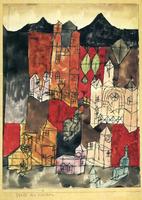
City of Churches
Paul Klee
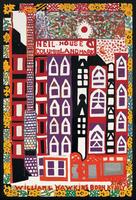
Neil House Columbus Landmark
William Hawkins
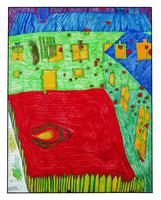
531 Jew's House in Austria
Friedensreich Hundertwasser
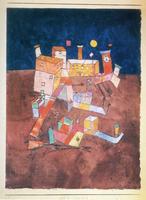
Part of G
Paul Klee
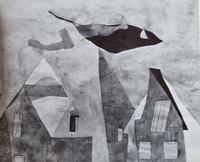
Vajda Lajos Házak Felett 1937
Vajda Lajos
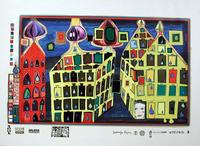
630A It Hurts to Wait With Love if Love Is Somewhere Else
Friedensreich Hundertwasser
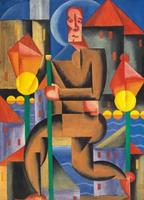
The Lamplighter
Sandor Bortnyik
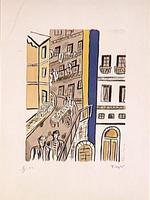
Street
Fernand Leger
Barco com Bandeirinhas e Pássaros
Alfredo Volpi