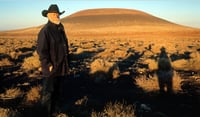
Expert analysis of James Turrell’s Sustaining Light
Style: Light and Space · Genre: installation
Expert Analysis of "Sustaining Light" by James Turrell
Style: Light and Space | Genre: Installation
James Turrell’s "Sustaining Light" is a quintessential work of the Light and Space movement, a Californian avant-garde tendency that emerged in the 1960s and 1970s. This movement redefined sculpture by dematerializing it into pure sensory phenomena—light, color, and atmosphere. As an installation, the piece transforms a gallery or architectural space into an immersive environment where light itself becomes the sole subject and medium.
Significance within the Light and Space style:
Turrell’s work epitomizes the movement’s core principle: perception is the art. Unlike traditional painting or sculpture that depicts or represents light, "Sustaining Light" is light, made tangible through controlled colored illumination. The viewer does not look at a discrete object but enters a bounded field of luminous color that seems to have mass, depth, and even weight. This aligns with the Light and Space artists’ rejection of objecthood in favor of phenomenological experience—the work only fully exists in the act of beholding.
Perceptual and spatial innovation:
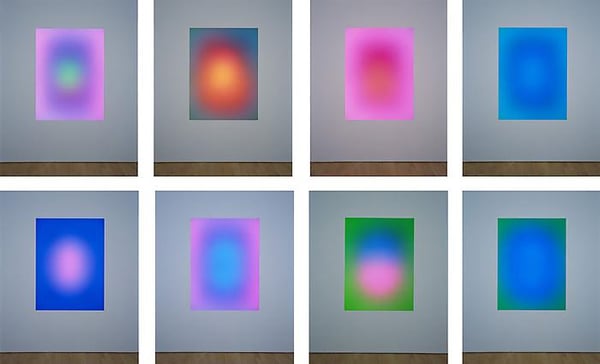
The installation typically comprises a darkened room with a rectangular aperture through which colored light (often a subtle gradient of lavender, indigo, or warm amber) appears suspended. Turrell masterfully exploits Ganzfeld effects (the loss of depth perception in a uniform field) and chromatic adaptation to destabilize the viewer’s sense of space and scale. What initially seems like a flat, painted surface reveals itself to be a three-dimensional void filled with radiant mist. This perceptual ambiguity forces the audience to become acutely aware of their own seeing—the physiological and psychological processes that construct reality.
Theoretical and philosophical resonance:
"Sustaining Light" extends the Light and Space movement’s debt to Minimalism (stripped-down form, focus on direct experience) while also invoking spiritual and meditative traditions. Turrell himself has described his works as “skyscapes” or “celestial vaults,” inviting contemplation akin to the Quaker “inner light” or astronomical observation. The title “Sustaining Light” hints at endurance and continuity—the light remains constant, yet the viewer’s perception of it shifts in relation to time, mood, and retinal fatigue. This makes the installation a performance of perception with no fixed identity.
Legacy and impact:
As a landmark installation within the Light and Space canon, "Sustaining Light" exemplifies how Turrell pushed the genre from ephemeral experiments (like Larry Bell’s coated glass cubes) toward large-scale, architecturally integrated environments. It demonstrates that light can be carved, shaped, and sustained as a physical presence—a radical redefinition of “installation” that has influenced countless contemporary artists working with perception, technology, and immersive experience.
In sum, "Sustaining Light" is significant because it does not merely represent light but actualizes it as a medium of pure perceptual encounter, confirming Turrell’s role as the supreme poet of light in the late 20th and early 21st centuries.
Visually similar
20 works with related composition and palette
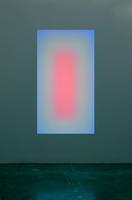
Gathered Light
James Turrell
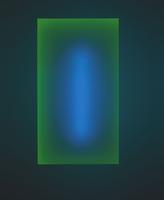
Spinther
James Turrell
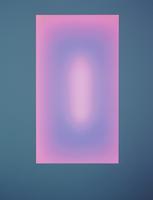
Coconino
James Turrell
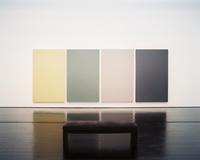
The Seasons
Brice Marden
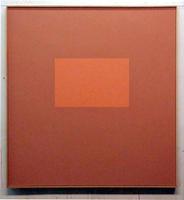
Alexander #2
Walter Darby Bannard
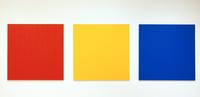
Red Yellow Blue III
Ellsworth Kelly
Up Green
Leon Berkowitz
Double Céphéide
Claude Tousignant
On the threshold of infinity
Andrzej Nowacki
Algonquit Series #12
Leon Berkowitz
Solomon's Temple
Leon Berkowitz
"Untitled"
Kosakov Dimitrij
Crescendo Diminuendo
Cesar Paternosto
Mother E
Anne Appleby
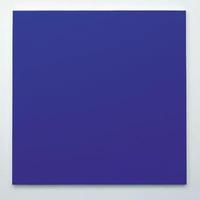
Painting 98-19
Rudolf de Crignis
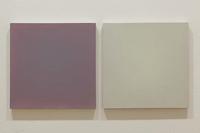
Willow and Aspen
Anne Appleby
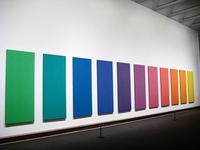
Spectrum V
Ellsworth Kelly
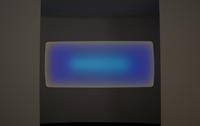
The Kaloo
James Turrell
Red Alert
Hito Steyerl
"Ohne Titel"
Kosakov Dimitrij