
Analisi esperta di Is It True What They Say About Dixie di Rosalyn Drexler
Stile: Pop Art · Genere: figurative
Expert Art Historical Analysis
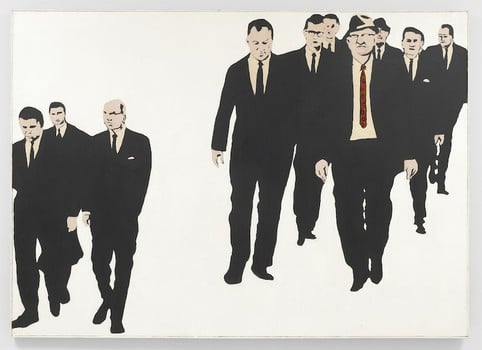
Rosalyn Drexler’s Is It True What They Say About Dixie exemplifies the Pop Art movement’s critical engagement with American cultural mythology, filtered through a distinctly personal and theatrical lens. As a female artist working in a male-dominated movement, Drexler brought a subversive, witty perspective to Pop’s signature vocabulary of mass-media imagery and commercial aesthetics.
Significance within Pop Art and Figurative Tradition
-
Subverting Southern Stereotypes: The title directly quotes the popular 1930s Tin Pan Alley song, which playfully romanticizes the American South. Drexler appropriates this nostalgic tune but reframes it within Pop’s ironic context. By isolating the question “Is it true…?” she invites viewers to interrogate the myths of Dixie—whether about race, history, or regional identity—rather than simply accepting them. This aligns with Pop’s habit of critiquing the very imagery it borrows.
-
Theatrical Figuration: Drexler’s background in playwriting and performance infuses her figurative work with a staged, almost cinematic quality. The figures in her paintings often appear isolated against flat, bold-color backgrounds, reminiscent of film stills or tabloid photographs. This flattening of space, a hallmark of Pop, denies the viewer a comfortable, illusionistic depth, forcing attention onto the constructed nature of the image and its underlying message.
-
Challenging the Pop Canon: While contemporaries like Warhol and Lichtenstein focused on consumer products and comic strips, Drexler consistently turned to issues of gender, race, and power. Is It True What They Say About Dixie stands as a bold counterpoint to Pop’s more neutral or celebratory depictions of American life. Drexler used the movement’s visual language—bright colors, hard edges, and appropriated sources—to expose the tensions behind the nation’s sunny self-image.
-
Hybrid of High and Low: The work merges a lowbrow song reference with high-art Pop techniques, creating a layered commentary. Drexler’s characteristic use of collage-like composition—often incorporating found photographs or magazine cutouts—further blurs the line between original creation and appropriation, a key Pop strategy for questioning authenticity and originality.
In summary, Is It True What They Say About Dixie is significant for its incisive, playful deconstruction of American regional mythologies, its theatrical approach to figuration, and its place within Drexler’s pioneering critique of social norms through the visual language of Pop Art.
Visivamente simili
20 opere con composizione e palette affini
Untitled (Onkel)
Konrad Lueg
Blek Le Rat 2007
Blek le Rat
I Only Have Eyes for You, 1980
Richard Hambleton
Untitled
Irfan Ajvazi
Portrait of S.N. Troinitsky
Boris Kustodiev
The Funeral Party
L. S. Lowry
Futurismo Rivisitato
Mario Schifano
Man Who Walks Through Walls
Blek le Rat
John Fitzgerald Kennedy
Abdul Mati Klarwein
The Billy Boys
Jack Vettriano
A Sketch of a Man's Costume for the Play by E. Sinclair 'Jimmie Higgins'
Vadym Meller
Execution
Andrzej Wróblewski
Chubby Checker
Rosalyn Drexler
The Tamer
Tia Peltz
Norman Lewis
Benny Andrews
American People Series #4: The Civil Rights Triangle
Faith Ringgold
L'Assemblée Libre
Evelyne Axell
The Way You Look Tonight. Diagonal Graciousness
Barkley L. Hendricks
The Defenders
Rosalyn Drexler
Portrait of Sidney Janis Selling Portrait of Sidney Janis by Marisol, by Marisol
Marisol Escobar