Analisi esperta di Noon Mediterranean Landscape di Martial Raysse
Stile: Nouveau Réalisme · Genere: figurative
Expert Analysis of "Noon Mediterranean Landscape" by Martial Raysse
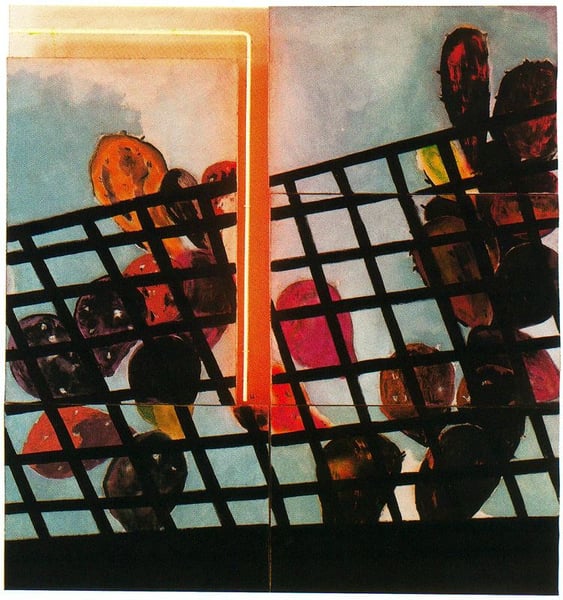
Martial Raysse’s Noon Mediterranean Landscape is a striking example of Nouveau Réalisme, a French movement of the 1960s that sought to capture the “new reality” of a consumer-driven, media-saturated world. While the work is figurative—depicting a recognizable Mediterranean scene—its significance lies in how Raysse subverts traditional landscape painting through the use of industrial, commercial, and synthetic materials.
Key Elements of Significance:
-
Synthetic Palette and Artificial Paradise: Raysse appropriates the brilliant, almost garish colors of neon signs, plastic packaging, and tourist posters. The “noon” light of the Mediterranean is not captured from nature but fabricated through fluorescent paints and often combined with actual plastic objects or collage elements. This creates a hyper-real, dreamlike vision that critiques the commodification of leisure and the transformation of natural landscapes into mass-produced clichés.
-
Blurring of Painting and Assemblage: True to Nouveau Réalisme’s ethos of incorporating “real” objects, Raysse frequently integrates found materials—such as plastic flowers, toy fish, or segments of advertisements—directly onto the canvas. In Noon Mediterranean Landscape, the “sea” might be rendered with shiny, industrially produced surfaces, while the “sky” could include fragments of commercial packaging. This hybrid technique challenges the traditional boundaries between painting, sculpture, and everyday life.
-
Irony and Ambivalence: Unlike earlier landscape traditions that sought sublime or authentic experience, Raysse’s work presents the Mediterranean as a manufactured paradise—simultaneously alluring and hollow. The bright, cheerful colors mask a sense of artificiality and spiritual emptiness, reflecting the artist’s critique of post-war consumer society. The scene feels frozen, almost static, like a stage set or a glossy advertisement.
-
Nouveau Réalisme’s Core Mission: Raysse, alongside artists like Arman and Christo, aimed to “reassess the real” by using the detritus and imagery of modern life. Noon Mediterranean Landscape achieves this by making the viewer confront how our perception of nature is mediated by tourism, advertising, and industry. The painting is neither a celebration nor a simple condemnation; it is a mirror held up to the artificial “real” of the 1960s.
In summary, the work is significant as a quintessential Nouveau Réaliste statement: it transforms a timeless genre—the Mediterranean landscape—into a vivid, unsettling commentary on the synthetic, consumer-based reality of the modern world. Raysse’s bold use of commercial materials and his ironic, bright palette make this painting a landmark in the movement’s exploration of the boundary between art and everyday life.
Genere
Stile
Visivamente simili
20 opere con composizione e palette affini
Emblemata - Cactus
M.C. Escher
#27: El Nopal (Nopal)
Marina Pallares
Untitled (cactus plants in background)
Stanley Pinker
Variation: Zärtlichkeiten
Alexej von Jawlensky
Manacá
Tarsila do Amaral
Cactus
Emma Odette
Galimberti Sándor, Csendélet Kaktusszal 1910
Galimberti Sándor
Natureza morta com três vasos de cactos
Lasar Segall
老墙
Wu Guanzhong
Untitled (aka Landscape with Catci)
Robert Julian Onderdonk
Sleeping Child
Henri Manguin
Ass: Maquette for the Elbow Series (A2)
John Baldessari
Cacti
Kuzma Petrov-Vodkin
Green Swing
Alice Baber
Cactus in Bloom
Robert Julian Onderdonk
Plant black
Fernand Leger
Abstract Composition
Alice Baber
Ensayo de color
Carlos Orozco Romero
Tunas (Still Life with Prickly Pear Fruit)
Frida Kahlo
Illustration to "A Week of Kindness"
Max Ernst