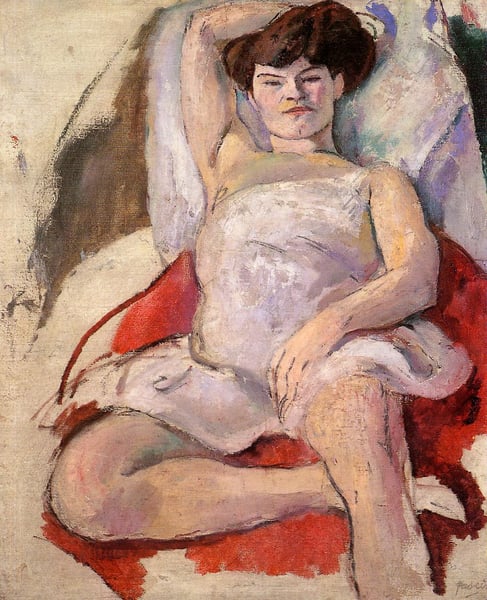
Expertenanalyse zu Jules Pascins Dancer at the Moulin Rouge
Stil: Expressionism · Genre: nude painting (nu)
Analysis of "Dancer at the Moulin Rouge" by Jules Pascin
Jules Pascin’s Dancer at the Moulin Rouge exemplifies Expressionist nude painting by transforming a classic cabaret subject into a vehicle for psychological and emotional intensity. Within the bustling, hedonistic world of Montmartre, Pascin strips away anecdotal detail to focus on the vulnerable, almost fragile figure of the dancer. The work’s significance lies in its departure from idealized or academic nudes: the dancer’s body is rendered with loose, expressive brushwork and subtle distortions that convey inner tension rather than physical perfection. This aligns with Expressionism’s core aim—to prioritize subjective feeling over objective representation. By placing the nude in the context of the Moulin Rouge, Pascin also comments on the commodification and solitude beneath the spectacle, making the painting a poignant meditation on modern urban life. Its blend of eroticism, melancholy, and raw technique marks it as a key example of early 20th-century Expressionist portraiture.
Visuell ähnlich
20 Werke mit ähnlicher Komposition und Farbpalette
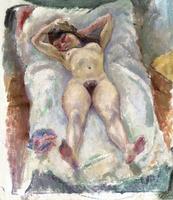
Woman Lying Down with Her Arms Raised
Jules Pascin
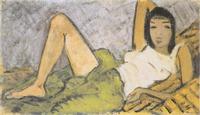
Liegendes Mädchen
Otto Mueller
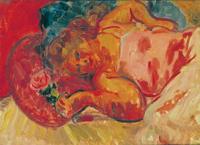
Vera Reclining
Matthew Smith
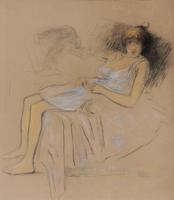
Model at rest
Theophile Steinlen
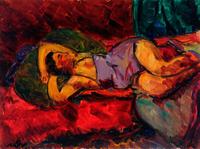
Reclining Nude. The Mauve Chemise
Matthew Smith
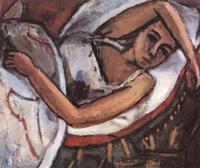
Reclining Woman
Bela Czobel
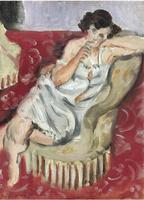
Nu Au Fauteuil
Henri Matisse
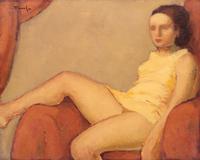
Catrina
Nicolae Tonitza
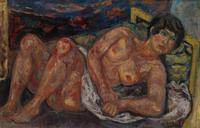
Reclining Nude
Pinchus Kremegne
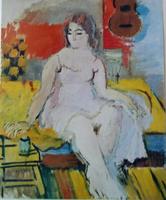
Nude
Alexandru Ciucurencu
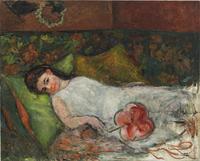
Young Girl with Flower
Émilie Charmy
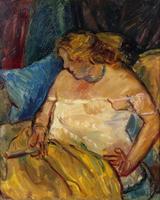
Femme En Chemise
Matthew Smith
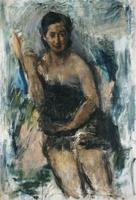
Liza Kottou
George Bouzianis
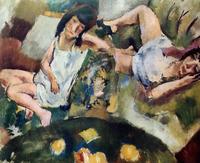
Siesta
Jules Pascin
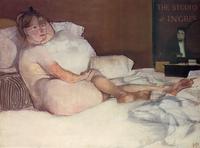
The Studio of Ingres
Victor Pasmore
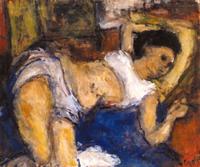
Czobel Bela Pihenö Nő
Bela Czobel
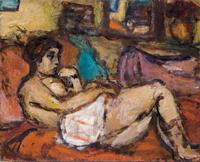
Czóbel Béla Nude Women
Bela Czobel
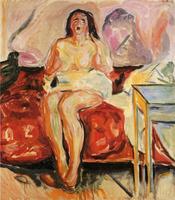
Girl Yawning
Edvard Munch
Indulge
Umberto Veruda
Rest
Edgar Degas