Analisi esperta di Diana di Jules Joseph Lefebvre
Stile: Academicism · Genere: mythological painting
Expert Analysis of Jules Joseph Lefebvre's Diana
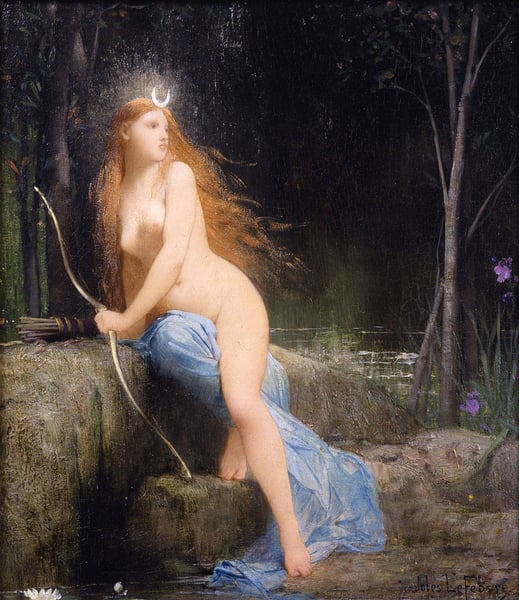
Jules Joseph Lefebvre’s Diana stands as a quintessential example of Academicism at its most refined. The painting adheres strictly to the core tenets of the French Academic tradition: flawless draughtsmanship, idealized human anatomy, and a polished, enamel-like finish that suppresses visible brushstrokes. Lefebvre, a master of the École des Beaux-Arts méthode, was celebrated for his depictions of the female nude, and Diana perfectly encapsulates his ability to elevate mythological subject matter into a near-sculptural study of classical beauty.
As a mythological painting, the work draws on the classical figure of Diana (Artemis), the virgin goddess of the hunt. True to Academic convention, Lefebvre does not aim for naturalistic realism but for a heightened, idealized form—what nineteenth-century critics called le beau idéal. Diana’s unblemished skin, perfect proportions, and composed grace reflect the academic belief that the nude should transcend mere flesh to embody timeless, moral beauty. The likely inclusion of attributes such as a bow, crescent moon, or hunting dog would anchor the figure in narrative, yet Lefebvre’s primary focus is formal harmony.
The significance of Diana within Academicism lies in its demonstration of the movement’s core virtues:
- Technical mastery: Lefebvre’s rendering of light on skin, subtle chiaroscuro, and anatomical precision rival those of Ingres.
- Moral elevation: By choosing a chaste goddess, the painter sanitizes the nude into a vehicle for virtuous contemplation, a key emphasis of Salon-approved art.
- Tradition: The work echoes classical sculpture (such as the Diana of Versailles) while showcasing the contemporary academic curriculum’s emphasis on line over color.
Lefebvre’s Diana thus represents the apex of Academic painting before the rise of Impressionism and Modernism—a work that prioritizes ideal form, scholarly rigor, and the serene perfection of a bygone mythological world.
Visivamente simili
20 opere con composizione e palette affini
Fragrant Iris
Guillaume Seignac
Woman as Diana in Nature
Gustave-Claude-Etienne Courtois
La Libellule
Guillaume Seignac
Diane
Luc-Olivier Merson
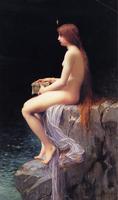
Pandora
Jules Joseph Lefebvre
Eve After the Fall
Alexandre Cabanel
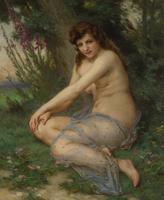
In the Forest
Guillaume Seignac
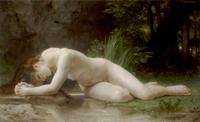
Biblis
William-Adolphe Bouguereau
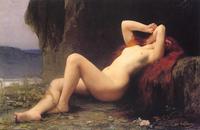
Mary Magdalene In The Cave
Jules Joseph Lefebvre
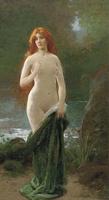
Nymphe Am Waldsee
Jules-Frédéric Ballavoine
Galatea
Gustave Moreau
The bather
Émile Munier
Love takes off
William-Adolphe Bouguereau
Baigneuse
William-Adolphe Bouguereau
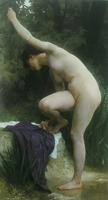
Bather
William-Adolphe Bouguereau
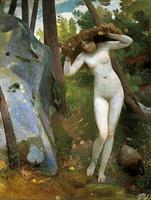
At the source (the nymph in the woods)
Giovanni (Nino) Costa
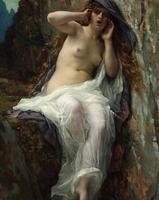
Écho
Alexandre Cabanel
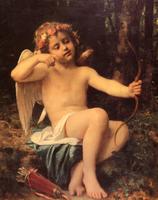
Cupids arrows
Léon Bazile Perrault
Venus and Cupid
Lucas van Leyden
Diana
Pierre-Auguste Renoir