
Pierre-Auguste Renoir sanatçısının Diana eseri hakkında uzman analizi
Tarz: Realism · Tür: mythological painting
Expert Analysis: "Diana" by Pierre-Auguste Renoir
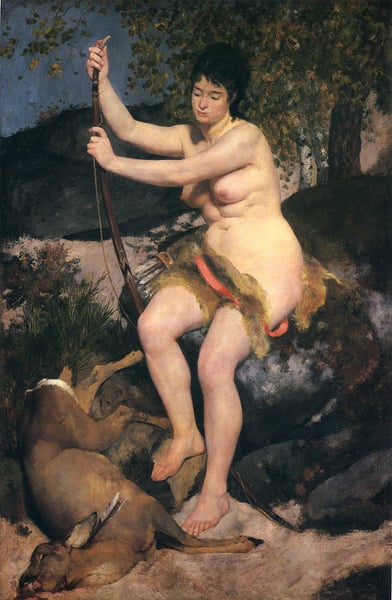
Renoir’s Diana occupies a fascinating crossroads in 19th-century art. Though the artist would later become synonymous with Impressionism, this work is squarely aligned with Realism—a movement that sought to depict subjects with unidealized, observable truth. By choosing a mythological painting genre, Renoir deliberately subverts the heroic conventions of classical mythology, applying Realist principles to a figure traditionally rendered with ideal perfection.
Significance within Realism:
- Rejection of Idealization: In Diana, Renoir presents the goddess of the hunt not as a distant, marble deity but as a tangible, mortal woman. Her anatomy is naturalistic—soft, fleshy, and unposed in a way that echoes the everyday bodies of the peasant women in Courbet’s work. The bow and arrows are not symbols of divine power but functional objects, depicted with meticulous, Realist attention to material texture.
- Everyday Truth: The composition avoids theatrical heroics. The lighting is diffused and atmospheric rather than dramatically spotlighted, grounding the scene in a believable, observable world. This approach mirrors the Realist credo of painting “the life around us” even when that life is framed by myth.
Significance within the Mythological Genre:
- Subverting Tradition: Mythological painting had long been a vehicle for Neoclassical grandeur. Renoir’s Realist treatment demystifies the subject, challenging the viewer to see Diana as a woman first. The work anticipates the later Impressionist interest in the fleeting, sensory experience, yet remains anchored in Realism’s insistence on the physicality of the flesh.
- Transitional Work: Diana marks an early instance of Modernism’s tension between classical subject matter and contemporary visual truth. It demonstrates that even a mythological scene can be a laboratory for Realist observation—foreshadowing how later artists would strip myth of its sacred veneer.
Overall Significance: This painting is a bold statement that no subject—however ancient or revered—is immune to the Realist gaze. Renoir proves that the most truthful depiction of a goddess is not an idealized vision but a woman of flesh and bone, captured with the unflinching honesty that defines Realism.
Görsel olarak benzer
İlişkili kompozisyon ve renk paletine sahip 20 eser

Woman as Diana in Nature
Gustave-Claude-Etienne Courtois

Diana
Jules Joseph Lefebvre
Apollo and Diana
Lucas Cranach the Elder

Diane
Luc-Olivier Merson
The Toilet of Venus
William-Adolphe Bouguereau

In the Forest
Guillaume Seignac
Venus Bathing
Camille Corot

Untitled
Herbert James Draper
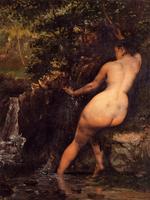
The Source (Bather at the Source)
Gustave Courbet
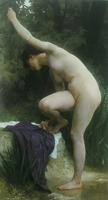
Bather
William-Adolphe Bouguereau

The snake charmer
Paul Trouillebert
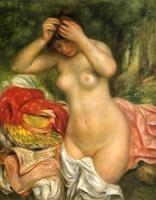
Bather Arranging her Hair
Pierre-Auguste Renoir
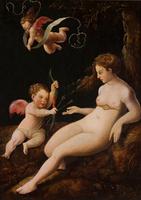
Venus and Cupid
Lucas van Leyden

Cupids arrows
Léon Bazile Perrault
The Little Shepherdess
Paul Peel

Musidora
Thomas Sully

The bather
Émile Munier

The Young Bather
Gustave Courbet
Bather drying herself
Pierre-Auguste Renoir
Love Disarmed
William-Adolphe Bouguereau