Analisi esperta di Hórrido o silêncio do teu corpo di Antonio Palolo
Stile: Pop Art · Genere: figurative
Expert Analysis of "Hórrido o silêncio do teu corpo" (Antonio Palolo, Pop Art, figurative)
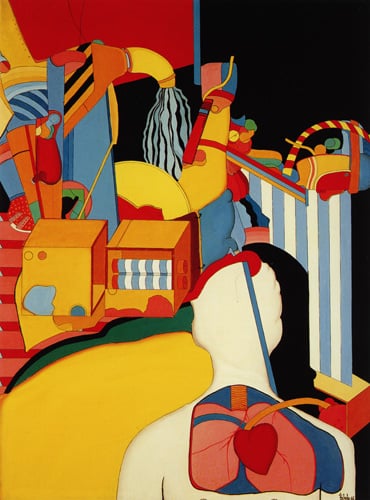
Antonio Palolo’s “Hórrido o silêncio do teu corpo” (translated roughly as “Horrible the silence of your body”) stands as a compelling fusion of international Pop Art idioms with a distinctly Portuguese sensibility—one that pushes the movement beyond its usual Anglo-American preoccupations. While Pop Art is most famously associated with Warhol’s soup cans or Lichtenstein’s comic panels, Palolo’s work from the late 1960s and early 1970s demonstrates how the style could be adapted to convey social and political tension under an authoritarian regime (Portugal’s Estado Novo).
The title itself is a provocative inversion of Pop’s typically celebratory, consumerist tone. “Horrible the silence of your body” suggests a body rendered mute, oppressed, or objectified—a far cry from the vibrant, noisy abundance of American Pop. This tension is key to the work’s significance: Palolo uses the bold, flat colors and graphic clarity of Pop to address themes of repression, silence, and bodily presence under censorship. The figurative element is not a straightforward portrait but likely a fragmented or stylized form, echoing the way Pop Art often flattens and abstracts the human figure into a sign or icon. Palolo, however, infuses that icon with discomfort—the “horrible silence” implies a voice that has been stifled, a body that cannot speak.
Stylistically, the work belongs to Palolo’s phase where he merged Pop’s commercial aesthetics with surreal and geometric abstraction. The use of stark outlines, high-contrast colors, and simplified shapes aligns with Pop’s visual language, yet the eerie stillness and the emotional charge of the title break from the genre’s usual detachment. This makes the piece significant as a critical Pop Art statement—one that appropriates the movement’s tools not to celebrate mass culture but to critique the silencing of individual expression.
In the broader context of Pop Art, Palolo’s work is notable for showing how the style could travel across borders and adapt to local realities. While Andy Warhol’s Marilyn Diptych explores fame and mortality, and Roy Lichtenstein’s Whaam! critiques war through comic tropes, Palolo’s “Hórrido o silêncio do teu corpo” does something rarer: it turns Pop’s visual punch inward, using the genre’s boldness to articulate the pain of a body that cannot speak. This fusion of the international Pop vernacular with a deeply local, political subtext is what makes the work a significant, if lesser-known, contribution to the movement’s global history.
Genere
Stile
Visivamente simili
20 opere con composizione e palette affini
Still life
Fernand Leger
Mechanical compositions
Fernand Leger
Machine elements
Fernand Leger
The typographer
Fernand Leger
Propellers 2nd state
Fernand Leger
Machine elements
Fernand Leger
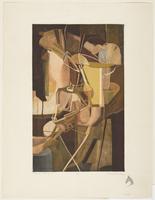
The Bride, After Duchamp
Jacques Villon
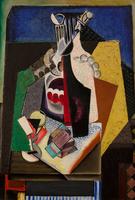
Bodegón Con Caja De Cerillas
Maria Blanchard
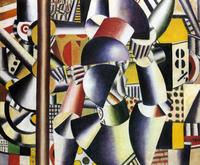
Acrobats in the circus
Fernand Leger
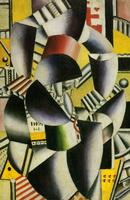
Man and Woman
Fernand Leger
Les Champs Synthétiques
Georges Troubat
Nighttime, Enigma and Nostalgia
Arshile Gorky
Composizione futurista
Julius Evola
The birds in the landscape
Fernand Leger
Strawberry Jam
Juan Gris
Stranger No. 2
Richard Lindner
Nature morte Le bûcheron
Le Corbusier
Landscape of Olympia
Yiannis Tsaroychis
I See Again in Memory My Dear Udnie
Francis Picabia
Cubist Pipe Lines
Le Corbusier