Analisi esperta di View of Szentendre di Vajda Lajos
Stile: Expressionism · Genere: cityscape
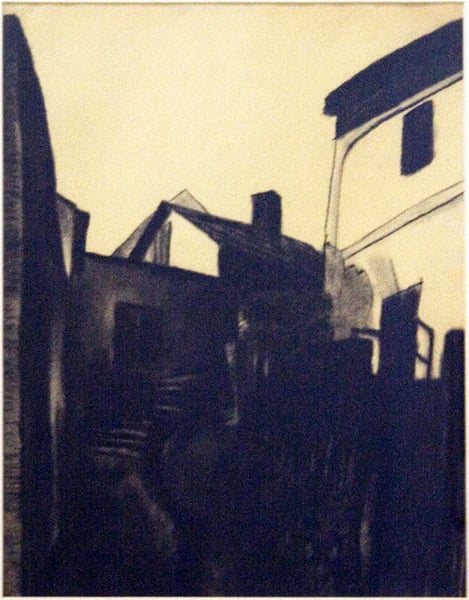
Expert Analysis of "View of Szentendre" by Vajda Lajos
Vajda Lajos’s View of Szentendre stands as a compelling example of Hungarian Expressionism, a movement that sought to convey inner emotional truth rather than optical reality. Painted in the artist’s mature period, this cityscape transforms the familiar town of Szentendre—a historic artist colony near Budapest—into a vibrant, psychologically charged vision.
Key Significance within Expressionism
- Emotive Distortion: Typical of Expressionist practice, Vajda exaggerates perspective and simplifies architectural forms, using tilted rooflines and compressed space to evoke a sense of unease or spiritual yearning. The viewer is not merely looking at a town but experiencing the artist’s subjective response to it.
- Color as Intensity: The palette is intensified beyond naturalism—deep blues, fiery oranges, and stark contrasts—applied in broad, impulsive strokes. This aligns with Expressionism’s rejection of Impressionist “plein air” calm in favor of a raw, almost primitive emotional force.
- Symbolic Locale: Szentendre itself held symbolic weight for Hungarian modernists. By abstracting its familiar skyline (the church towers, the Danube hills), Vajda asserts the artist’s right to reshape reality, anticipating later shifts toward non-representational art in his own oeuvre and Hungarian avant-garde circles.
What Makes It Remarkable
Unlike many Expressionist cityscapes that dwell on urban alienation (e.g., Kirchner’s Berlin), Vajda’s View of Szentendre balances dynamism with a meditative, almost iconic stillness. The buildings seem to pulse with an inner life, reflecting the artist’s interest in folk art and Orthodox iconography—themes he would later fuse with Surrealism. This painting captures a pivotal moment: Expressionism’s hunger for authenticity applied to a landscape that was itself a crossroads of Eastern and Western European culture. In doing so, it elevates a local view into a universal statement about the search for meaning in a fragmented modern world.
Visivamente simili
20 opere con composizione e palette affini
Vajda Lajos Houses in the Night 1928
Vajda Lajos
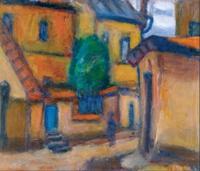
Kisvárosi Utca
Bela Czobel
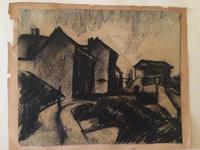
Street View
Kmetty János
Bela Dalabert Czobel, Szentendre 1956
Bela Czobel
Bela Dalabert Czobel, Szentendre 1956
Bela Czobel
Zsákutca
Bela Czobel
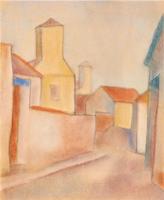
Vajda Lajos Street in Szentendre 310x250mm Pastel on Paper
Vajda Lajos
Shop in Autumn
Maria Bozoky
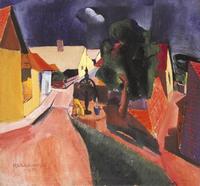
Street at Szentendre in Stormy Weather
Istvan Ilosvai Varga
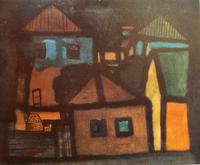
Vajda Lajos Houses in Szentendre 1937 Tempera on Cardboard, 28x43cm
Vajda Lajos
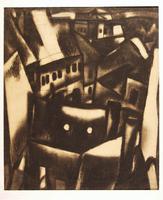
Lelátás a templomdombról
Vajda Lajos
Street
Stefan Dimitrescu
Houses
Theophrastos Triantafyllidis
Yellow Blockhouse
Istvan Ilosvai Varga
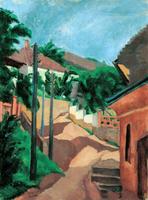
Street in Trencsén
Lajos Tihanyi
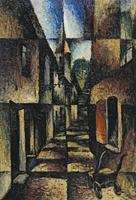
Street with church
Arthur Segal
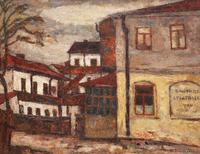
Târgu Cucului Inn
Stefan Dimitrescu
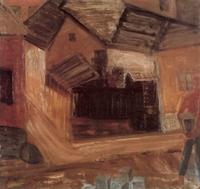
Houses with Man Carrying Stone
Istvan Ilosvai Varga
In front of the House
Stefan Dimitrescu
A040 - Road to the village
Ramiro Martín Martín