
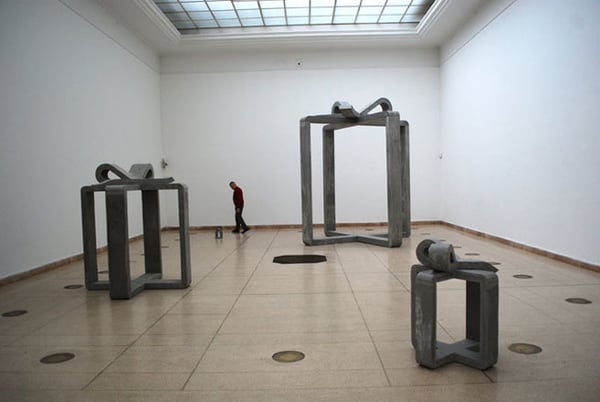
Analisi esperta di Seven Future Gifts di Mircea Cantor
Stile: Conceptual Art · Genere: installation
Expert Analysis: "Seven Future Gifts" by Mircea Cantor
As a conceptual installation, Mircea Cantor’s “Seven Future Gifts” derives its significance from the tension between expectation and materiality—a hallmark of his practice that interrogates cultural symbols, political promises, and the fragility of hope.
Formal Description: The work consists of seven ordinary bricks, each meticulously wrapped in brightly colored, gift-like paper and tied with ribbon. The objects are arranged in a row or cluster, their festive exteriors contrasting sharply with the inert, heavy building material they conceal. This deliberate mismatch between packaging and content is the conceptual core.
Conceptual Significance: Cantor exploits the universal ritual of gift-giving—where the wrapped object signifies anticipation, generosity, and future possibility—to critique how we fetishize potential. The bricks, humble and unyielding, represent the solid, often disappointing reality beneath political slogans, social promises, or even art-world hype. The number “seven” evokes symbolic completeness (seven days, seven deadly sins, seven wonders) and a cyclic sense of time, suggesting that each future gift may already be weighted with the past.
Within conceptual art, Cantor’s piece resonates because it reduces the artwork to a pure idea: the act of wrapping becomes a provocation. The viewer is invited to imagine what the “gift” might be, only to confront the inert materiality of a brick—unyielding, unglamorous, but also a foundational element of construction. This duality—the brick as both obstacle and building block—mirrors Cantor’s broader exploration of transformation and stasis.
Context and Legacy: Cantor emerged as a key figure in the 2000s Romanian and international conceptual scene, often using ordinary objects to reveal systemic tensions. “Seven Future Gifts” (2005) distinguishes itself by its deceptive simplicity; it is not merely a critique of consumerism but a meditation on the gap between what is offered and what is received. The installation challenges viewers to consider the space between desire and fulfillment—a theme that remains urgent in debates about art’s social role. Its significance lies in its ability to make a profound philosophical argument using the most mundane of means, epitomizing conceptual art’s power to transform perception through context and intention alone.
Visivamente simili
20 opere con composizione e palette affini
Untitled
James Licini
Oh!
Grazia Varisco
The Cathedral Evening
Ronald Bladen
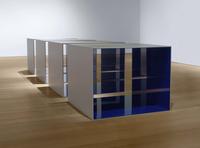
Untitled
Donald Judd
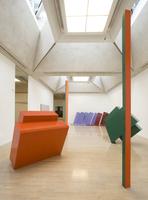
Call
Phillip King
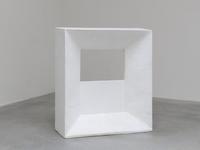
Window Piece
Phillip King
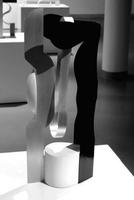
Rzeźba Abstrakcyjna I
Katarzyna Kobro
Rzeźba Przestrzenna
Katarzyna Kobro
Equal (Corner Prop Piece)
Richard Serra
The Void
Noguchi Isamu
Untitled
Robert Grosvenor
Valentina
Camilla Low
Untitled
Larry Bell
Corner Beam
Robert Morris
Return
Anne Truitt
Twining Court II
Anne Truitt
Circuit II
Richard Serra
The Rules of Attraction
Jose Davila
Second Requiem
Anne Truitt
Piccolo movimento 6
Ettore Spalletti