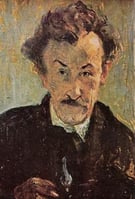
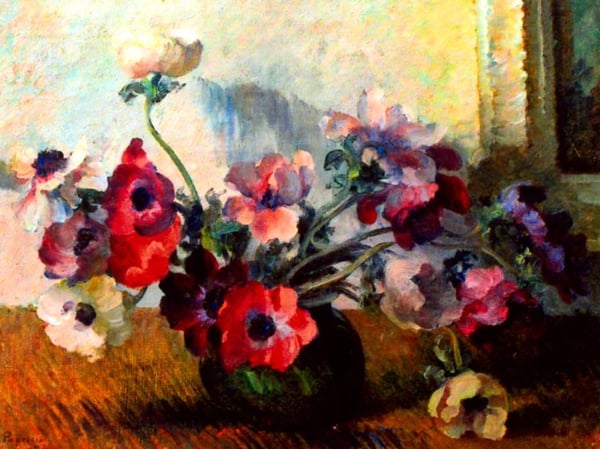
Still Life with Flowers
Analisi esperta di Still Life with Flowers di Stefan Popescu
Stile: Impressionism · Genere: flower painting
Expert Art Historical Analysis
Artwork: Still Life with Flowers by Stefan Popescu
Style: Impressionism
Genre: Flower painting
This work is a compelling example of Impressionist still life, a genre that allowed artists to explore the interplay of light, color, and brushwork in a controlled yet vibrant setting. Popescu’s Still Life with Flowers epitomizes the Impressionist commitment to capturing transient visual sensations rather than precise botanical detail.
Significance within the Impressionist Style:
- Focus on Light and Atmosphere – Like Monet’s water lilies or Renoir’s bouquets, Popescu likely uses dappled, broken brushstrokes to render the petals and leaves, emphasizing how light shifts across the surface of the blooms. The painting would prioritize the momentary effect of sunlight filtering through a window or reflecting off a vase, dissolving hard outlines in favor of atmospheric color patches.
- Color and Perception – Impressionist flower paintings often employ complementary colors (e.g., violet shadows against yellow stamens) to heighten visual intensity. Popescu’s composition probably avoids local color in favor of the perceived hues under specific lighting conditions—a hallmark of the movement that distinguishes his work from traditional Dutch or Romantic floral still lifes.
- Everyday Subject Elevated – By choosing a common domestic subject (a vase of flowers), Popescu aligns with Impressionism’s radical shift away from history painting or moral allegory. The significance lies in making the mundane extraordinary through the artist’s optical experience, celebrating the beauty of a fleeting moment rather than symbolic meaning.
Contribution to the Genre:
Flower painting within Impressionism offered a perfect laboratory for experimenting with plein-air principles in the studio. Popescu’s Still Life with Flowers would be significant as a document of how Eastern European artists (Popescu was Romanian) adopted and adapted French Impressionist techniques—merging the movement’s emphasis on spontaneity with a local sensitivity to light and color, thus expanding the geographic and stylistic boundaries of the period.
In summary, the artwork is important as an Impressionist flower still life that demonstrates the style’s core doctrines: optical truth, evanescent light, and the liberation of color from form. Its significance lies not in narrative or symbolism, but in its pure visual poetry, capturing the essence of a bouquet as seen in a specific, shimmering instant.
Visivamente simili
20 opere con composizione e palette affini
Spray of Anemones
Pierre-Auguste Renoir
Anemones
Pierre-Auguste Renoir
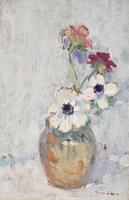
Anemone
Sever Burada
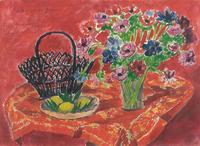
Vase d'anemones, citrons et panier sur la table
Andre Dunoyer de Segonzac
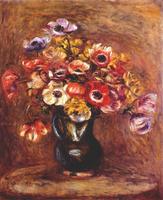
Anemones
Pierre-Auguste Renoir
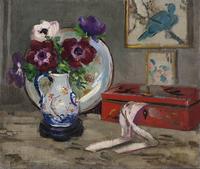
Still Life with a Box
Józef Pankiewicz
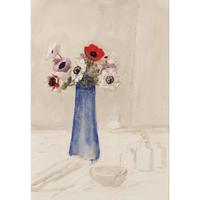
Vase D'Anemones
Theophile Steinlen
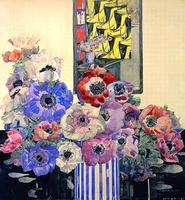
Still Life Of Anemones
Charles Rennie Mackintosh
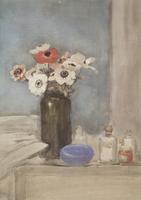
Still Life With Anemones
Theophile Steinlen
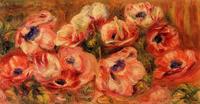
Anemones
Pierre-Auguste Renoir
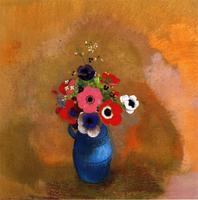
Bouquet of anemones
Odilon Redon
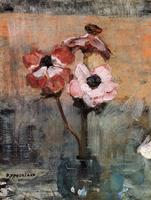
Anemones in a Vase
Piet Mondrian
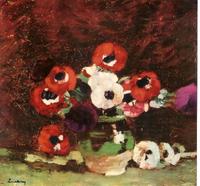
Anemone Flowers
Stefan Luchian
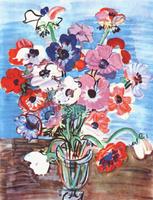
Anemones
Raoul Dufy
Untitled
Moise Kisling
Anemones
Odilon Redon
Flowers in a Green Vase
Samuel Peploe
Anemony W Wazonie
Józef Pankiewicz
Bouquet of flowers
Raoul Dufy
Anemones
Raoul Dufy