Expertenanalyse zu Alfred Kubins Abduction
Stil: Symbolism · Genre: illustration
Expert Analysis of "Abduction" by Alfred Kubin (Symbolist Illustration)
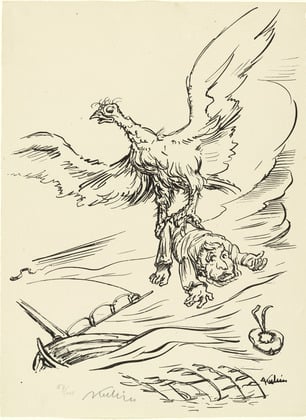
Alfred Kubin’s "Abduction" stands as a quintessential example of Symbolist illustration, a genre that prioritizes psychological depth, dreamlike ambiguity, and the evocation of inner turmoil over literal narrative. Working primarily in black-and-white pen-and-ink or wash, Kubin channels the macabre, the fantastical, and the subconscious—themes central to his oeuvre and to Symbolism’s broader rejection of naturalism in favor of metaphysical suggestion.
Significance within Symbolism:
Kubin’s "Abduction" captures the Symbolist preoccupation with terror, desire, and the irruption of the irrational into the everyday. In this piece, the act of abduction likely becomes a metaphor for the overwhelming forces of fate, fear, or the unconscious mind. The artist’s dense, swirling lines and exaggerated, grotesque forms—reminiscent of Odilon Redon’s noirish fantasies and Max Klinger’s graphic cycles—transform a simple narrative of capture into a psychological event. The victim and captor may be rendered as spectral or insect-like beings, dissolving boundaries between human and monster, reality and nightmare. This ambiguity forces the viewer to confront their own anxieties, a hallmark of Symbolist intent.
Genre of Illustration:
Kubin was a prolific illustrator, often working on literary projects (e.g., Dostoevsky, Poe, or his own novel The Other Side). "Abduction" functions as a self-contained visual story, its composition carefully choreographed to suggest motion, resistance, and doom. The illustration format allowed Kubin to distill complex emotional states into a single, charged scene, bypassing explanatory text. His precise, agitated linework—alternately delicate and aggressive—creates a texture of unease, while stark contrasts of light and dark heighten the drama.
Conclusion:
"Abduction" is significant not only for its technical mastery but for how it embodies the Symbolist fascination with the invisible, the forbidden, and the uncanny. Kubin’s ability to make the psychological palpable through ink on paper reaffirms his role as a bridge between 19th-century Symbolism and the emerging Expressionist movement, where inner experience would become the sole subject of art. This work remains a powerful testament to illustration as a vehicle for profound existential inquiry.
Visuell ähnlich
20 Werke mit ähnlicher Komposition und Farbpalette
Illustration to 'Armenian folk tales'
Martiros Sarian
Sea Serpent
Theodor Severin Kittelsen
Griffin
Martin Schongauer
How King Arthur Saw the Questing Beast
Aubrey Beardsley
Study of An Eagle
Bartolomeo Passerotti
Romulus Consulting the Augury
John Leech
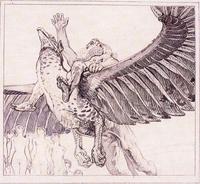
Prometheus in chains
Frantisek Kupka
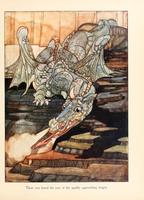
There was heard the roar of the quickly approaching dragon
Charles Robinson
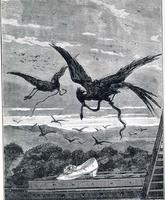
Illustration to "A Week of Kindness"
Max Ernst
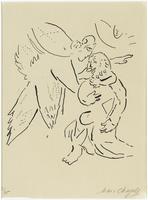
Isaiah under divine inspiration
Marc Chagall
Illustrations for Mikhail Stelmakh's book "In the Hedgehog's Windmill"
Hryhorii Havrylenko
Fighting
Wilhelm Kotarbinski
The owl in fight with other birds
Albrecht Durer
Gryphon
Arthur Rackham
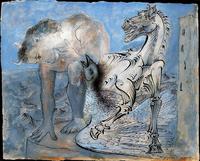
Faun, horse and bird
Pablo Picasso
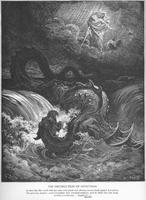
The Destruction of Leviathan
Gustave Dore
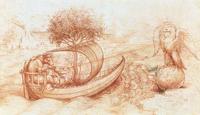
Allegory
Leonardo da Vinci
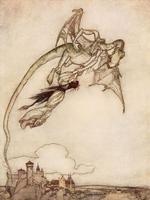
The King’s only daughter had been carried off by a Dragon
Arthur Rackham
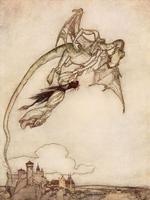
The King’s only daughter had been carried off by a Dragon
Arthur Rackham
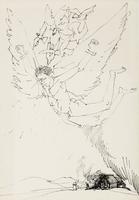
Kondor Béla , Galambcsőrök Csettennek
Kondor Béla