
Analisi esperta di Illustration to "A Week of Kindness" di Max Ernst
Stile: Surrealism · Genere: illustration
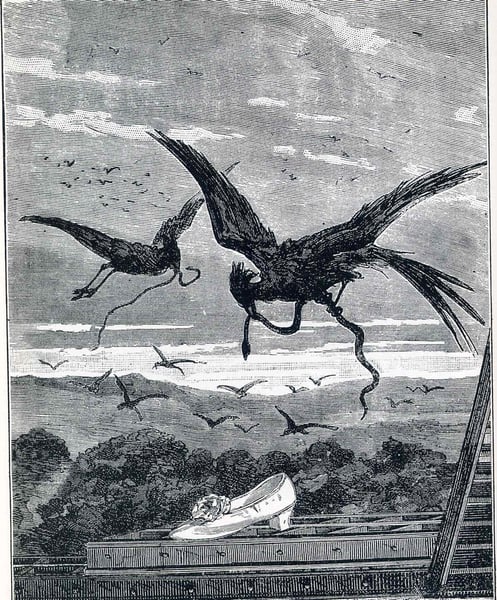
Expert Analysis: "Illustration to 'A Week of Kindness'" by Max Ernst
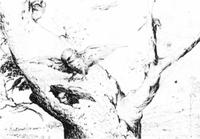
Max Ernst’s Illustration to "A Week of Kindness" (c. 1933–34) is a seminal work within the Surrealist movement, created during the artist’s First French period—a time when he fully embraced the dreamlike, irrational juxtapositions that define Surrealism. As an illustration from his famous collage novel Une Semaine de Bonté (A Week of Kindness), this piece is significant for several reasons:
1. Mastery of Surrealist Collage Technique
Ernst pioneered the use of collage as a method of automatic creation, cutting and reassembling Victorian-era wood engravings to produce jarring, uncanny scenes. In this illustration, he combines disparate elements—such as hybrid human-animal figures, architectural fragments, and unsettling indoor/outdoor spaces—to disrupt logical narrative. The result is a visual equivalent of a dream or nightmare, where familiar objects become sinister or absurd.
2. Subversion of Conventional Illustration
While nominally an illustration for a novel, the work defies traditional book illustration. Ernst’s images do not simply depict text; they generate their own enigmatic symbolism, often alluding to repressed desires, psychological trauma, or social critique. The Week of Kindness series, for example, is often interpreted as a dark parody of the seven deadly sins or a critique of bourgeois morality, using surrealist metaphor to unsettle the viewer.
3. Significance within Surrealist Philosophy
This work exemplifies Surrealism’s core aim: to reconcile dream and reality into a “super-reality.” Ernst’s collages operate through displacement and condensation (Freudian terms for dream logic), where fragmented body parts, strange textures (e.g., feathers, scales), and impossible architectures create a poetics of the irrational. The lack of a single focal point forces the eye to wander, mirroring the associative, non-linear flow of thought.
4. Historical Context and Influence
Created in Paris during the interwar period, the piece reflects the Surrealists’ fascination with the subconscious and the disruptive power of art. Ernst’s technique influenced later collage artists, from Joseph Cornell to contemporary digital remix culture. The Week of Kindness series remains a landmark of Surrealist publishing, demonstrating how illustration can transcend its genre to become a radical artistic statement.
5. Visual Analysis Highlights
- Composition: Ernst employs a shallow, claustrophobic space, often with abrupt shifts in scale (a tiny bird alongside a giant hand) to evoke anxiety.
- Color and Tone: Though the original collages were black-and-white, their stark contrasts heighten the eerie, theatrical quality—as if lit by an unnatural flash.
- Iconography: Recurring motifs such as lion-headed women, birds, and decaying interiors suggest a world where instinct (animal) and civilization (clothing, furniture) collide.
Conclusion: This illustration is a quintessential example of Surrealist method and mindset. By repurposing Victorian visual clichés into a dreamlike allegory, Max Ernst not only expanded the boundaries of graphic art but also gave form to the Surrealist belief that true creativity emerges from the unconscious. Its enduring power lies in its ability to remain simultaneously beautiful, disturbing, and intellectually challenging.
Museum / Gallery
Visivamente simili
20 opere con composizione e palette affini
Purgatorio Canto 8
Gustave Dore
The Inferno, Canto 22
Gustave Dore
journey to the Center of the Earth
Edouard Riou
Death of an Eagle
Wilhelm Kotarbinski
Alichino & Calcabrina
Gustave Dore
The Eagle II
Gustave Dore
Hans Christian Andersen Fairy Tales
Mykola Murashko
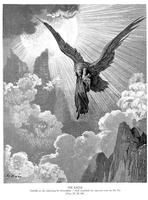
The Eagle
Gustave Dore
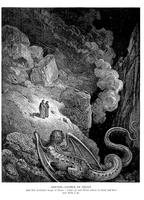
Geryon--Symbol of Deceit
Gustave Dore
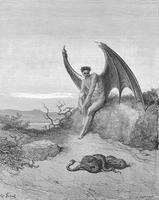
Him, fast sleeping, soon he found In labyrinth of many a round, self-rolled
Gustave Dore
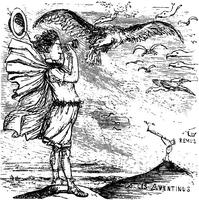
Romulus Consulting the Augury
John Leech
The Serpent
Gustave Dore
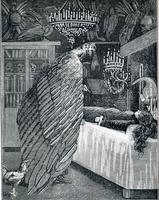
Illustration to "A Week of Kindness"
Max Ernst
Fighting
Wilhelm Kotarbinski
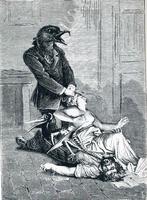
Illustration to "A Week of Kindness"
Max Ernst
The Descent on The Monster
Gustave Dore
Order Reigns in Warsaw
Felicien Rops
Don Quixote
Gustave Dore
How King Arthur Saw the Questing Beast
Aubrey Beardsley
Nest of Owls
Hieronymus Bosch