
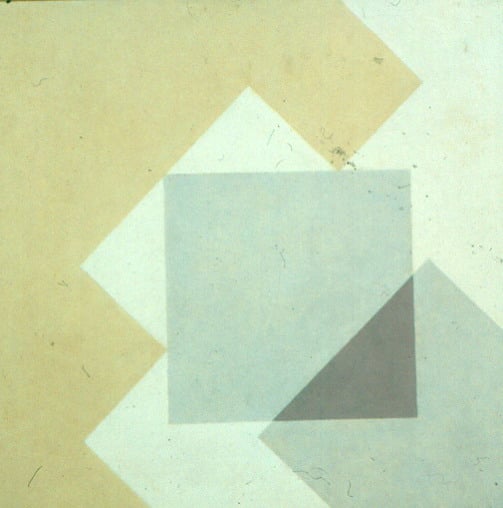
Composition 30
Expert analysis of Stefan Sevastre’s Composition 30
Style: Hard Edge Painting · Genre: abstract
Expert Analysis of Composition 30 by Stefan Sevastre
Stefan Sevastre’s Composition 30 is a compelling example of Hard Edge Painting, a movement that emerged in the mid‑20th century as a counterpoint to Abstract Expressionism’s gestural spontaneity. While the specific visual details of this work are not provided, the style itself dictates a strict vocabulary: razor‑sharp contours, flat unmodulated color fields, and an overall insistence on clarity and precision.
Significance within Hard Edge Painting
Hard Edge artists—such as Ellsworth Kelly, Frank Stella, and Al Held—sought to eliminate any trace of the artist’s hand, privileging pure form and optical immediacy. Composition 30 likely adheres to these principles through its rigorous geometric composition and carefully calibrated color relationships. The title “Composition” echoes the programmatic, often serial nature of Hard Edge works, where numerical titles (e.g., Composition 30) emphasize the systematic exploration of shape and space rather than personal expression.
What Makes This Work Significant
- Dialogue between figure and ground: Hard Edge painting relies on ambiguous space. In Composition 30, Sevastre likely employs overlapping or adjacent color shapes whose crisp boundaries create a flat yet dynamic tension—the shapes appear to advance or recede solely through hue and contrast, without illusionistic depth.
- Color as structure: Without painterly texture or drawing, color becomes the sole architect of the composition. Sevastre’s choice of hues and their saturation would determine the work’s energy. A palette of complementary or high‑key colors would produce a vibrating, retinal “pop,” a hallmark of the movement’s optical ambitions.
- Seriality and refinement: As “30” suggests, this is part of an ongoing series. Such repetition allows Sevastre to refine formal problems—balance, asymmetry, edge alignment—much like Stella’s Black Paintings or Kelly’s panel works. The significance lies in the incremental variation within a strict system.
Broader Art‑Historical Context
Composition 30 participates in Hard Edge’s broader rejection of metaphor and narrative. Its significance is not in “meaning” but in its rigorous material and perceptual presence. For a contemporary artist like Sevastre, this work also demonstrates that the language of Hard Edge remains viable beyond its mid‑century heyday, proving that geometric abstraction can still feel fresh and immediate when executed with exacting discipline.
In sum, Composition 30 is significant for its embodiment of Hard Edge’s core tenets: crisp facture, chromatic precision, and the refusal of subjective emotion—attributes that secure its place within a tradition that prizes formal intelligence above all else.
Visually similar
20 works with related composition and palette
Composition 31
Stefan Sevastre
Composition 4
Stefan Sevastre
Untitled
Sohrab Sepehri
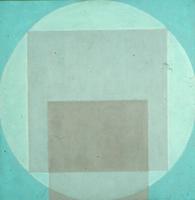
Composition 29
Stefan Sevastre
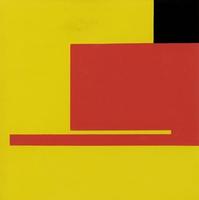
Negativo-Positivo
Bruno Munari
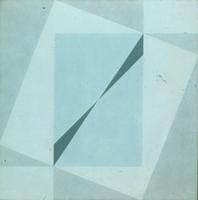
Composition 9
Stefan Sevastre

Composition 18
Stefan Sevastre
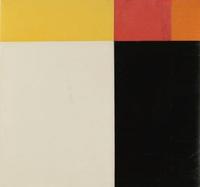
Study for Tiger
Ellsworth Kelly
Composition 34
Stefan Sevastre
Composition 13
Stefan Sevastre
Purple and Orange from the series Line Form Color
Ellsworth Kelly
Untitled
Vasile Dobrian
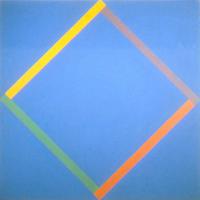
Mandarin
Jeremy Moon
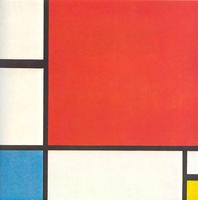
Composition with Red, Blue and Yellow
Piet Mondrian
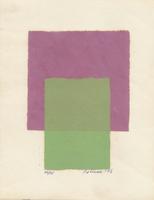
Dialogue 10
Vasile Dobrian
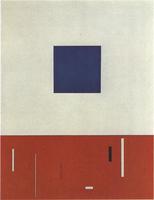
Composition No. 211
Friedrich Vordemberge-Gildewart
Pictorial Architecture
Lajos Kassak
Composition 25
Stefan Sevastre

Concreção 8744
Luis Sacilotto
Suprematism. Two Dimensional Self Portrait
Kazimir Malevich