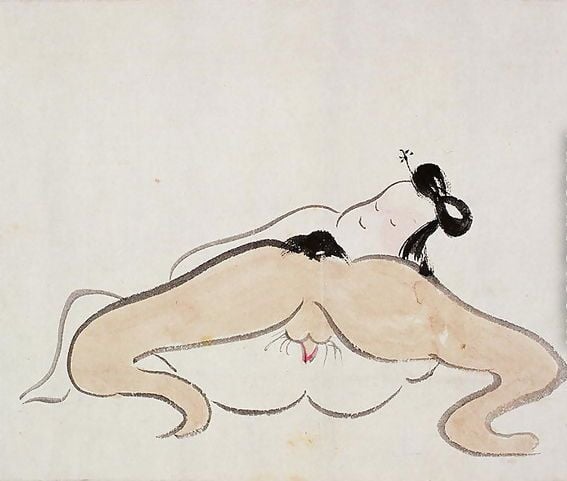
A Shunga
Expertenanalyse zu Ike no Taigas A Shunga
Stil: Nanga (Bunjinga) · Genre: nude painting (nu)
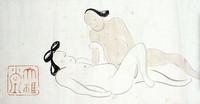
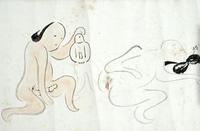
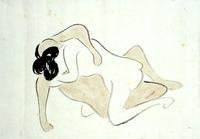
Expert Analysis of "A Shunga" by Ike no Taiga
Ike no Taiga (1723–1776) is celebrated as one of the foremost masters of the Nanga (Bunjinga) tradition—the Japanese school of literati painting inspired by Chinese scholar-artists. Nanga is characterized by expressive brushwork, understated elegance, and a deep reverence for nature, poetry, and intellectual refinement. It typically avoids overt sensuality or vulgarity, instead pursuing a refined, often austere beauty.
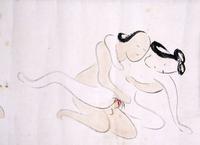
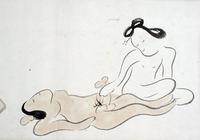
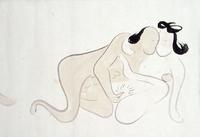
Against this backdrop, Taiga’s A Shunga is a remarkable and significant outlier. Shunga ("spring pictures") is the Japanese genre of erotic art, which flourished in ukiyo-e but was far rarer within the Nanga school. Taiga’s decision to produce a shunga work—and specifically a nude painting (nu) —represents a deliberate and provocative fusion of two seemingly incompatible realms: the lofty, scholarly ideals of Nanga and the earthy, intimate candor of erotic imagery.
The significance of this work lies in three key aspects:
-
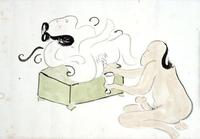
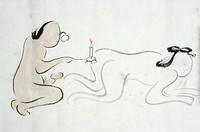
Aesthetic Tension: Taiga applies Nanga’s fluid ink washes, calligraphic linework, and “amateur” (yet highly cultivated) brush style to a subject that is anything but scholarly. The nude figure is rendered not with the polished, decorative detail of ukiyo-e but with the spontaneous, almost abstract economy of literati painting. This juxtaposition challenges the boundaries of both genres, suggesting that the exalted and the intimate can coexist in a single brushstroke.
-
Rarity and Risk: Within the Nanga canon, explicit erotic works are extremely uncommon. Nanga artists typically avoided such themes to maintain their identity as gentleman-scholars above commercial or vulgar pursuits. Taiga’s shunga thus stands as a bold personal statement—a playful or perhaps subversive commentary on the very conventions of his own school. It reveals a master unafraid to transgress norms for the sake of artistic exploration.
-
Cultural Dialogue: While shunga had a long history in Japan, Taiga bridges it with Chinese literati traditions. By treating a nude erotic subject with the same brush idiom used for landscapes and bamboo, he elevates the genre, asserting that human sensuality is as worthy of scholarly attention as nature or poetry.
In summary, A Shunga by Ike no Taiga is significant because it breaks the decorum of Nanga, introducing erotic realism into a tradition of idealized naturalism. It demonstrates the artist’s versatility and intellectual playfulness, and it stands as a rare testament to the intersection of high art and intimate human experience in 18th-century Japan.
Genre
Stil
Visuell ähnlich
20 Werke mit ähnlicher Komposition und Farbpalette
A Shunga
Ike no Taiga
A Shunga
Ike no Taiga
A Shunga
Ike no Taiga
A Shunga
Ike no Taiga
A Shunga
Ike no Taiga
Models Hugs
Katsushika Hokusai
A Shunga
Ike no Taiga
A Shunga
Ike no Taiga
The Adonis plant
Katsushika Hokusai
A Shunga
Ike no Taiga
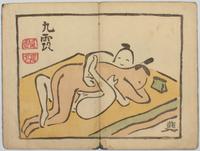
Daito keigo (4)
Ike no Taiga
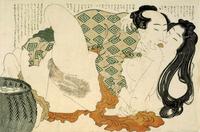
The Adonis Plant
Katsushika Hokusai
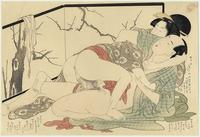
Lovers in front of a screen
Kitagawa Utamaro
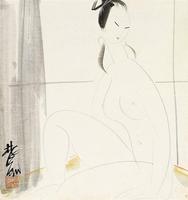
Lady
Lin Fengmian
A Shunga
Ike no Taiga
A Shunga
Ike no Taiga
Prelude of desire
Kitagawa Utamaro
Daito keigo (2)
Ike no Taiga
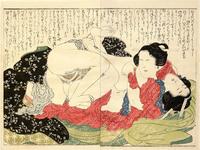
Two women having sex with one of them wearing a harikata (artificial phallus)
Katsushika Hokusai
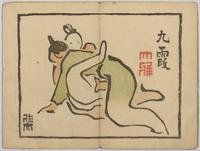
Daito keigo (3)
Ike no Taiga