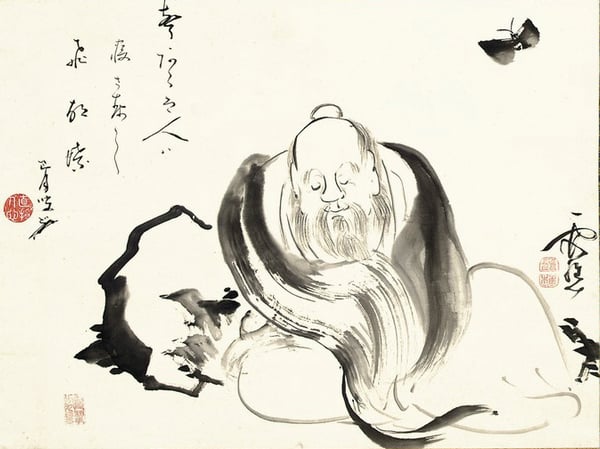
Zhuangzi dreaming of a butterfly (or a butterfly dreaming of Zhuangzi)
Ike no Taiga sanatçısının Zhuangzi dreaming of a butterfly (or a butterfly dreaming of Zhuangzi) eseri hakkında uzman analizi
Tarz: Nanga (Bunjinga) · Tür: portrait
Expert Analysis: "Zhuangzi Dreaming of a Butterfly" by Ike no Taiga
Ike no Taiga’s painting of the Zhuangzi butterfly paradox stands as a quintessential work of Japanese Nanga (also called Bunjinga, or literati painting). The piece is significant not only for its technical mastery but for how it encapsulates the very philosophical and aesthetic ideals of the bunjin (literati) movement.
Context and Style: In the Nanga tradition, painters were amateurs in the best sense—scholar-poets who valued personal expression, spontaneity, and a deep connection to Chinese literary and philosophical culture. Taiga, a founding figure of Japanese Nanga, was particularly known for his bold, free brushwork and his ability to imbue ink painting with intellectual rigor.
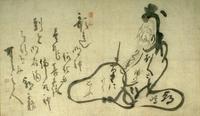
Significance of the Subject: The artwork depicts the famous Daoist parable from the Zhuangzi: the sage Zhuangzi dreams he is a butterfly, and upon waking, questions whether he is a man who dreamed of being a butterfly or a butterfly now dreaming of being a man. By choosing this subject for a portrait, Taiga pushes the boundaries of the genre. This is not a conventional likeness; it is an intellectual and spiritual portrait of a state of mind—the dissolution of ego and the unity of all things. The ambiguity in the title (“or a butterfly dreaming of Zhuangzi”) is central: Taiga visually explores the paradox, likely using minimal, suggestive ink strokes to blur the distinction between dreamer and dream.
Artistic Significance within Nanga:
- Philosophical Depth: Bunjinga prized works that were extensions of the artist’s cultivation. This painting is a direct meditation on a core Daoist text, demonstrating Taiga’s scholarly engagement. The image itself becomes a koan-like visual riddle.
- Brushwork and Simplicity: Typical of Taiga’s mature style, the painting likely employs rapid, expressive ink lines and washes (shasei filtered through personal vision) rather than meticulous detail. This spontaneity mirrors the dreamlike, transient nature of the subject.
- Championing the Idiosyncratic: Unlike formal Japanese portrait traditions (e.g., Nise-e or Zen patriarchs), Taiga’s work is deliberately anti-naturalistic. The figure of Zhuangzi is probably rendered with a humorous, wispy quality—the brushstrokes themselves suggesting ephemerality.
In summary, this artwork is significant because it marries the Nanga ethos of amateur scholarly painting with one of the most profound philosophical questions in East Asian thought. Ike no Taiga transforms a classic literary theme into a personal, playful, and deeply resonant visual statement, reminding the viewer that art, like dreaming, is a path to understanding reality.
Görsel olarak benzer
İlişkili kompozisyon ve renk paletine sahip 20 eser
Daruma
Joshu Shunso
Self-portrait
Hakuin Ekaku
Shotoku Taishi
Kogan Gengei
Reclining Daruma
Joshu Shunso
Portrait of Tao Yuanming
Chen Hongshou
Zhong Kui, Demons tamer
Shitao
Portrait of Nantembo
Deiryu
Scholar and Figure
Tomioka Tessai
Sketch of Daruma
Katsushika Hokusai
One hand clapping
Hakuin Ekaku
Li Bai's Drunken Calligraphy
Ding Yanyong
Drinking Tea
Huang Yongyu
The 2nd - Kanakavatsa Arhat
Guanxiu
Daikoku
Kogan Gengei
Zhong Kui
Ding Yanyong
Man alone
Shitao
Daruma
Soen Kogaku
Confucius
Ma Yuan
Hitomaro
Hakuin Ekaku
Storytelling
Owon