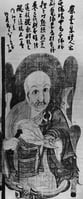
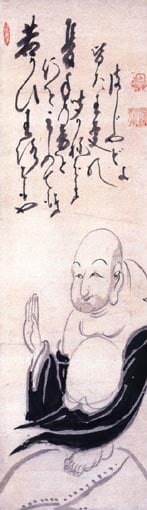
One hand clapping
Analisi esperta di One hand clapping di Hakuin Ekaku
Stile: Ink and wash painting · Genere: symbolic painting
Expert Analysis: "One Hand Clapping" by Hakuin Ekaku
Hakuin Ekaku (1686–1769) was a towering figure in Japanese Zen Buddhism, renowned for revitalizing the Rinzai school. This ink-and-wash painting, executed with swift, gestural brushstrokes, is a direct visual embodiment of the famous Zen koan: "What is the sound of one hand clapping?" — a riddle Hakuin himself popularized as a tool for breaking through dualistic thinking.
Stylistic Significance
As an ink-wash (sumi-e) painting, the work uses extreme economy of line and negative space to evoke profound meaning. Hakuin’s brush is both calligraphic and expressive: the hand is rendered in a few bold strokes, fingers slightly curved, with the palm turned outward as if in a gesture of offering or questioning. The surrounding emptiness is not void but charged—it invites the viewer to complete the koan mentally. The absence of clapping, of sound, of a second hand becomes the subject.
Symbolic Meaning
The single hand symbolizes non-duality, the Zen insight that transcends opposites (subject/object, sound/silence, self/other). Hakuin’s painting is not merely illustrative; it is a pedagogical device. The hand's ambiguity—is it in motion? Is it still?—prompts a direct, intuitive realization rather than intellectual answer. The work’s power lies in its paradox: by depicting “one hand,” it points to the sound that is silence, the action of non-action.
Historical and Cultural Context
Hakuin’s paintings were often given to disciples as dōshū (practice aids). In the Edo period, Zen monks frequently used visual art to transmit enlightenment experiences. This piece exemplifies the zenga (Zen painting) tradition, where aesthetic refinement serves spiritual awakening. Its significance endures because it encapsulates the core of Rinzai Zen: a sudden, shocking confrontation with the ultimate reality beyond words.
Visivamente simili
20 opere con composizione e palette affini
Zazen
Hakuin Ekaku
Daruma
Soen Kogaku
Buddha
Huang Yongyu
Hotei on a Boat
Hakuin Ekaku
Daruma
Joshu Shunso
Sketch of Daruma
Katsushika Hokusai
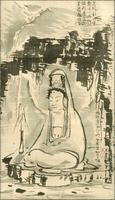
Untitled
Sengai
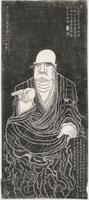
The 11th - Rahula Arhat
Guanxiu
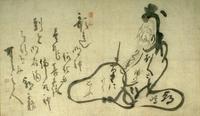
Hitomaro
Hakuin Ekaku
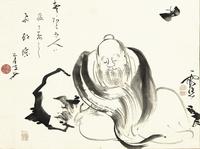
Zhuangzi dreaming of a butterfly (or a butterfly dreaming of Zhuangzi)
Ike no Taiga
Self-portrait
Hakuin Ekaku
Self-portrait
Hakuin Ekaku
Shotoku Taishi
Kogan Gengei
Untitled
Sengai
Hotei
Joshu Shunso
Self-portrait
Hakuin Ekaku
Reclining Daruma
Joshu Shunso
The 7th - Kalika Arhat
Guanxiu
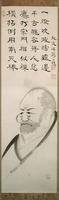
Portrait of Nantembo
Deiryu
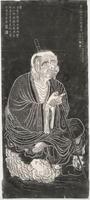
The 2nd - Kanakavatsa Arhat
Guanxiu