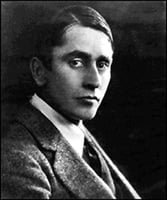
Analisi esperta di Tales of Mystery and Imagination by Edgar Allan Poe di Harry Clarke
Stile: Art Nouveau (Modern) · Genere: illustration
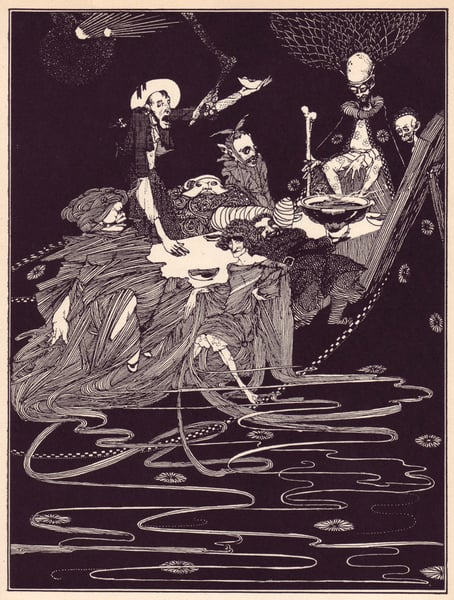
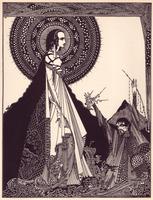
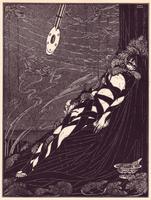
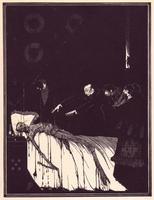
This artwork by Harry Clarke—an illustration for Edgar Allan Poe’s Tales of Mystery and Imagination—stands as a pinnacle of Art Nouveau book illustration, merging the movement’s decorative elegance with a deeply psychological, macabre sensibility.
Significance within Art Nouveau:
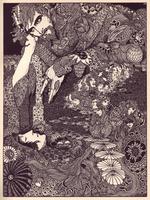
Clarke’s work exemplifies the Art Nouveau fascination with sinuous, organic lines and intricate ornamentation, but he subverts the style’s typical floral optimism. Instead, he weaves those flowing curves into grotesque, often skeletal forms—hair becomes writhing vines, drapery twists into serpentine shapes. This inversion of Art Nouveau’s natural motifs into symbols of decay and dread is what makes his illustrations so distinctive. The page is densely packed with elaborate borders and interlocking patterns, a hallmark of the style, but every decorative detail serves to amplify Poe’s atmosphere of psychological unease.
Mastery of Line and Tone:
Clarke’s use of black-and-white line work is virtuosic. He employs hatching, stippling, and cross-hatching to create rich tonal gradations without color, giving the illustrations a stained-glass-like luminosity and depth. The figures are elongated and gaunt, with hollow eyes and exaggerated gestures that recall both Gothic stained glass and the Symbolist penchant for expressive distortion. His ability to render both delicate filigree and stark shadows in the same composition demonstrates a technical command that elevated commercial illustration to fine art.
Psychological Resonance:
Significantly, Clarke’s interpretations do not merely illustrate Poe’s text—they visualize its inner horrors. He captures the feverish, claustrophobic mood of stories like The Tell-Tale Heart or The Masque of the Red Death by merging the ornate with the eerie: a peacock-feather motif might become a watching eye, a swirling border might suggest a vortex of madness. This synergy between decorative art and narrative terror was groundbreaking for its time, influencing later horror and fantasy illustration.
Legacy:
Published in 1919 (and later editions), Clarke’s Tales of Mystery and Imagination remains the definitive visual accompaniment to Poe’s work. It demonstrates how Art Nouveau—often dismissed as merely decorative—could be a vehicle for profound emotional and psychological expression, bridging the 19th-century Gothic tradition and the emerging modernist fascination with the subconscious.
Visivamente simili
20 opere con composizione e palette affini
Tales of Mystery and Imagination by Edgar Allan Poe
Harry Clarke
Hamlet
John Austen
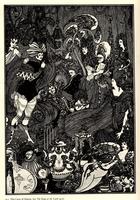
The Cave of Spleen
Aubrey Beardsley
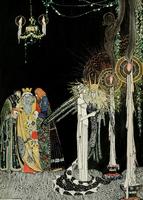
In Powder and Crinoline
Kay Nielsen
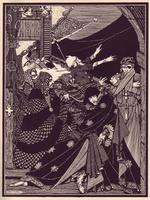
Tales of Mystery and Imagination by Edgar Allan Poe
Harry Clarke
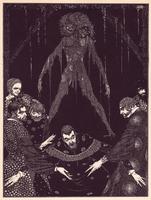
Tales of Mystery and Imagination by Edgar Allan Poe
Harry Clarke
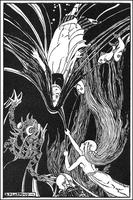
The Treasure of Carcassonne
Dorothy Lathrop
Tales of Mystery and Imagination by Edgar Allan Poe
Harry Clarke
Tales of Mystery and Imagination by Edgar Allan Poe
Harry Clarke
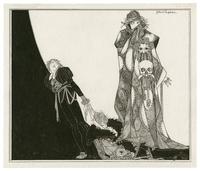
Hamlet
John Austen
Tales of Mystery and Imagination by Edgar Allan Poe
Harry Clarke
The novelist
Frantisek Kupka
Tales of Mystery and Imagination by Edgar Allan Poe
Harry Clarke
Nichiren saved from the executioners sword
Utagawa Kuniyoshi
Tales of Mystery and Imagination by Edgar Allan Poe
Harry Clarke
The Burial of Salome
Aubrey Beardsley
Dreams
Aubrey Beardsley
The Climax
Aubrey Beardsley
Ōnmyo Imoseyama
Katsushika Hokusai
Hamlet
John Austen