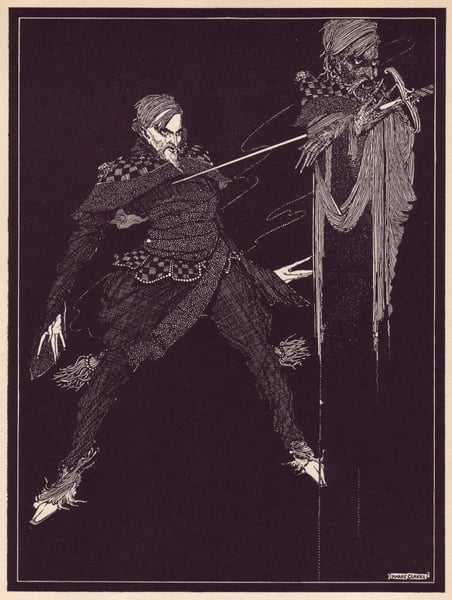
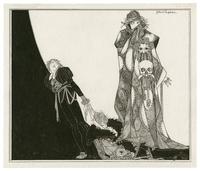
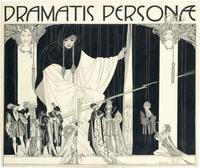
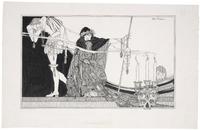
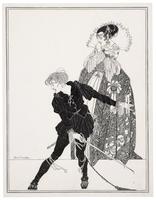
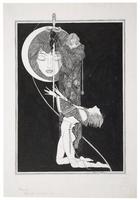
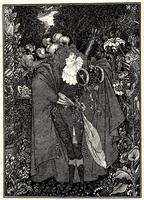
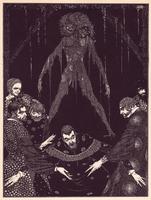
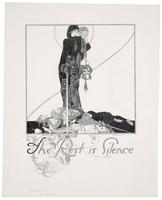
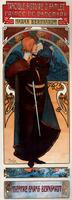
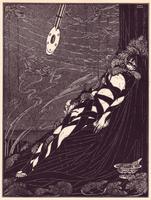
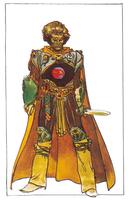
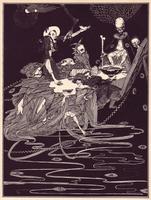
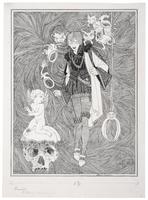
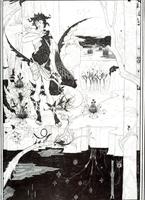
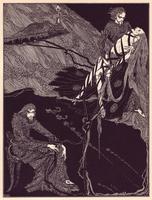
Harry Clarke’s “Tales of Mystery and Imagination by Edgar Allan Poe” is a landmark of Art Nouveau illustration, demonstrating how the movement’s sinuous lines and ornamental richness could be harnessed for psychological depth and Gothic atmosphere. As a modern illustration, it bridges the decorative ideals of Art Nouveau—fluid contours, intricate patterning, and organic forms—with the literary demands of Poe’s macabre narratives. Clarke’s work is significant for pushing the style beyond mere ornamentation: his meticulous linework and stark contrasts of light and shadow create a sense of unease and mystery that amplifies Poe’s text. The illustration’s dense, almost hallucinatory detail exemplifies Art Nouveau’s capacity for storytelling, making it a key example of how the period’s aesthetic principles could serve literary illustration, transforming a commercial genre into a vehicle for sophisticated, haunting visual poetry.