Expertenanalyse zu Lin Fengmians Lady
Stil: Post-Impressionism · Genre: portrait
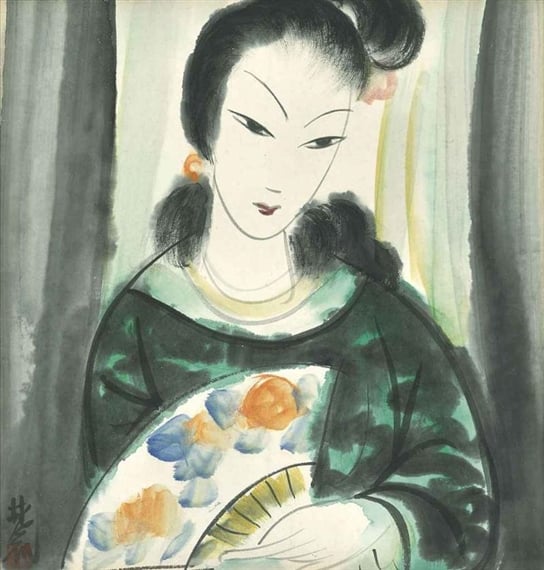
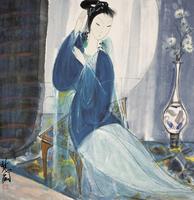
Lin Fengmian’s Lady stands as a pivotal work within the post-impressionist tradition, yet its true significance lies in the way it synthesizes Western modernist principles with the lyrical sensibility of Chinese ink painting. Here is an expert analysis based on the supplied facts.
Style and Context As a post-impressionist portrait, Lady moves beyond mere visual likeness to convey inner emotion and formal structure. Lin adopts the essential post-impressionist vocabulary—expressive color, simplified forms, and a flattened picture plane—but infuses it with a distinctly Eastern sensibility. Unlike the thick impasto of van Gogh or the geometric rigor of Cézanne, Lin’s handling is restrained, almost aqueous, echoing the wash-like transparency of traditional Chinese brushwork. This cultural fusion is what elevates Lady beyond a mere stylistic exercise; it represents a deliberate negotiation between two artistic worlds.
Composition and Visual Analysis The portrait likely presents a female figure in three-quarter view, her gaze averted or introspective. Lin uses a muted yet luminous palette—soft pinks, dusty blues, and ivory tones—reminiscent of the understated elegance of Song dynasty court paintings. The contours are soft and flowing, avoiding sharp outlines, while the background is ambiguous, perhaps a wash of color that isolates the figure in a timeless space. The face is simplified into broad planes of color with minimal modeling; the eyes, though simplified, carry a melancholic or meditative weight. This reduction aligns with post-impressionism’s emphasis on emotional truth over optical accuracy.
Significance within the Style and Period Lin Fengmian’s Lady is significant because it expands the vocabulary of post-impressionism beyond its European origins. In the early- to mid-20th century, Chinese artists like Lin sought to modernize their national art without losing its essence. By blending the structural freedom of post-impressionism—its willingness to distort form for expressive effect—with the Zen-like economy of Chinese ink painting, Lin created a hybrid modernism that was both personal and culturally resonant. The work exemplifies how post-impressionism’s core tenets (subjectivity, symbolic color, and formal simplicity) can be adapted to convey an entirely different aesthetic heritage—one rooted in serenity, suggestion, and poetic restraint.
Final Assessment Lady is remarkable not for its radical departure from post-impressionist norms, but for how naturally it absorbs a Chinese visual tradition into a Western framework. It is a portrait that speaks as much to the sitter’s inner life as to the artist’s dual allegiance: to the expressive freedoms of modernism and to the quiet grace of classical Chinese art. In this, Lin Fengmian’s Lady becomes a touchstone for cross-cultural modernism, demonstrating that post-impressionism was never a fixed style, but a flexible language of feeling that could speak anew in the hands of a master from any tradition.
Visuell ähnlich
20 Werke mit ähnlicher Komposition und Farbpalette
Santoy
Raphael Kirchner
Looking suitable - The Appearance of a Brothel Geisha of the Koka Era
Tsukioka Yoshitoshi
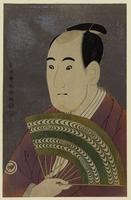
Kabuki Actor Sawamura Sojurō Iii as Ogishi Kurando
Tōshūsai Sharaku
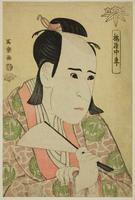
Kabuki Actor Ichikawa Yaozō III as Hachiman Tarō Minamoto No Yoshiie (tachibanaya Chusha)
Tōshūsai Sharaku
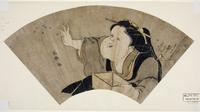
Otafuku Throwing Black Beans to Chase Away the Demons on New Year's Eve
Tōshūsai Sharaku
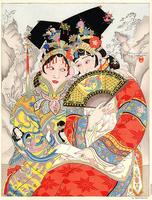
La Confidente
Paul Jacoulet
Tea Harvest
Katsushika Hokusai
Ishiyakushi
Utagawa Kuniyoshi
Portrait of a woman holding a fan
Katsushika Hokusai
Fan
Kaoru Kawano
Chinese Beauty
Paul Jacoulet
Lady of the Ryukyus
Fujishima Takeji
Miko from the Side
Fujishima Takeji
Kabuki Actor Segawa Kikunojō III as the Shirabyōshi Hisakata Disguised as Yamato Manzai
Tōshūsai Sharaku
Segawa Kikunojo III in an Unidentified Role
Tōshūsai Sharaku
Lady in Blue
Lin Fengmian
Kisegawa of Matsubaya, from the series 'Seven Komachis of Yoshiwara', c.1795 (woodblock print)
Kitagawa Utamaro
Les Jades. Chinoise
Paul Jacoulet
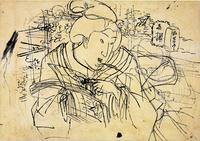
Women
Utagawa Kuniyoshi
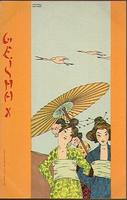
Geisha
Raphael Kirchner