Analisi esperta di Hiking in the Mountains di Ding Yanyong
Stile: Expressionism, Ink and wash painting · Genere: landscape
Expert Analysis: "Hiking in the Mountains" by Ding Yanyong
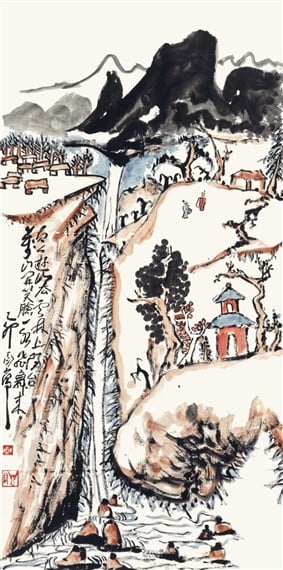
Ding Yanyong’s Hiking in the Mountains stands as a pivotal work that bridges Eastern ink tradition with Western Expressionist vitality. Executed in the idiom of ink and wash painting—a medium historically rooted in restrained literati aesthetics—the painting radically reimagines landscape through the emotive, gestural language of Expressionism.
Significance within Style and Period:
-
Synthesis of Two Traditions – Ding Yanyong was a leading figure in early 20th-century Chinese modernist painting, and this work exemplifies his signature achievement: fusing the spontaneity and brush economy of xieyi (freehand ink painting) with the psychological intensity and color dynamism of European Expressionism. In Hiking in the Mountains, the ink washes are not mere atmospheric gradients but charged, almost riotous strokes that convey the raw energy of the mountain terrain—a departure from the serene, harmonious landscapes of classical Chinese art.
-
Subjective Vision over Objective Representation – True to Expressionism, Ding subordinates topographical accuracy to emotional truth. The mountains appear distorted, their contours exaggerated by bold, sometimes jagged brushwork. This allows the viewer to feel the hiker’s physical exertion and the sublime overwhelm of nature, rather than simply observe a scenic vista. The ink itself becomes a vehicle for psychological state—dense, turbulent passages evoke struggle, while lighter, looser areas suggest release or awe.
-
Ink as Modernist Medium – By applying Expressionist principles to ink and wash, Ding reasserts the medium’s relevance in a modern, global context. At a time when many Chinese artists were turning wholly to oil or rejecting tradition, Hiking in the Mountains demonstrates that traditional materials could generate radical new forms. The work anticipates later trends in Chinese contemporary art that explore cross-cultural hybridity.
-
Genre Reimagined – The landscape genre, historically a vehicle for Daoist harmony or Confucian moral allegory in Chinese art, is here transformed into a site of personal, visceral experience. The “hiking” motif itself—mundane, physically demanding—defies the detached, idealized journeys of classical mountain painters. It is a modern, bodily encounter with nature, filtered through an Expressionist lens.
In essence, Hiking in the Mountains is significant not only as a masterful example of Ding Yanyong’s oeuvre but as a landmark in the transnational evolution of modern art. It proves that ink and wash can carry the same emotional weight as oil, and that Chinese landscape painting could remain vital by embracing, rather than resisting, the subjective turmoil of the 20th century.
Visivamente simili
20 opere con composizione e palette affini
Go by the cold paths
Shitao
Landscape (Dong Yuan and Juran Style)
Bada Shanren
Two Divinities Dancing
Tomioka Tessai
Landscape
Sesshu Toyo
Landscape (Juran Style)
Bada Shanren
Keimyung Gok Amdo
Shin Yoon-bok
The Source in the hollow of the Rock
Shitao
Lofty Mount Lu
Shen Zhou
Sansui chokan, detail
Sesshu Toyo
On the other side of the water
Shitao
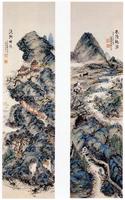
Earthly paradise and sacred mountains
Tomioka Tessai
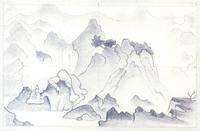
Padmasambhava
Nicholas Roerich
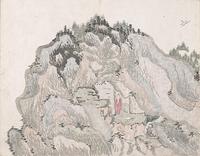
Untitled (a cave halfway up the mountain)
Ike no Taiga
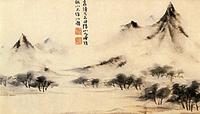
Mists on the mountain
Shitao
Village at the foot of the mountains
Shitao
Untitled (Mountains)
Ike no Taiga
Jinting Mountains in Autumn
Shitao
Clearing after Snow on a Mountain Pass
Tang Yin
Landscape in night of autumn
Kim Hong-do
Autumn the mountain
Shitao