Expertenanalyse zu Huang Yongyus In Mood
Stil: Expressionism · Genre: self-portrait
Expert Analysis: In Mood by Huang Yongyu
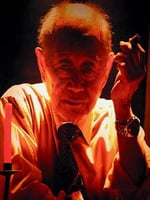
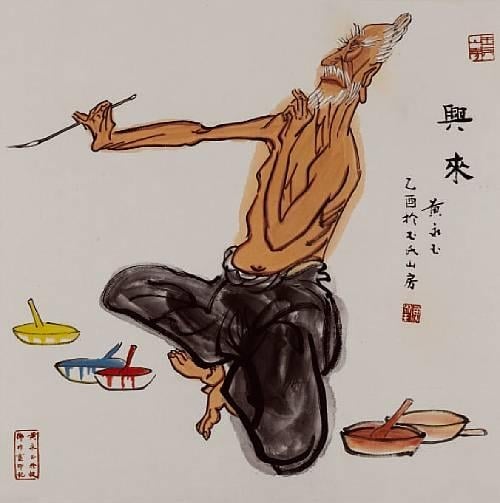
As an expressionist self-portrait, Huang Yongyu’s In Mood occupies a distinctive position within both Chinese modern art and the broader expressionist tradition. The work’s significance lies in its bold fusion of Western expressionist emotional intensity with the gestural spontaneity of Chinese ink painting—a hallmark of the artist’s career.
Style & Period Significance
Huang Yongyu (born 1924) emerged during a transformative era when Chinese artists sought to reconcile traditional literati aesthetics with modern Western movements. In Mood exemplifies this synthesis: the expressive, almost raw brushwork and distorted features typical of Expressionism are heightened by Huang’s use of Chinese ink and color washes, lending a fluid, lyrical quality to the emotional turmoil. The self-portrait genre here becomes a vehicle for psychological introspection, common to Expressionism, but Huang anchors it in a distinctly personal and cultural narrative—his own resilience during periods of political upheaval (notably the Cultural Revolution).
What Makes It Significant
-
Cross-Cultural Innovation – Huang avoids mere imitation of European Expressionism (e.g., Munch, Kirchner) by grounding the work in Chinese calligraphic line and negative space. The “mood” is conveyed not only through exaggerated features but also through the kinetic energy of the brush, a technique unique to his hybrid style.
-
Self-Portrait as Testimony – Unlike many Western expressionist self-portraits that explore universal angst, Huang’s In Mood subtly references a specific historical moment. The artist’s gaze and posture suggest defiance and introspection, making the work a quiet but powerful document of individual experience under collective pressure.
-
Legacy in Chinese Modernism – This painting reinforces Huang Yongyu’s role as a pioneer who proved that Expressionism could be authentically “Chinese.” It paved the way for later generations to explore subjective emotion without abandoning traditional media.
In summary, In Mood is significant as a masterful cross-cultural dialogue—where Expressionism’s raw emotional vocabulary is reimagined through the disciplined freedom of Chinese ink art, yielding a self-portrait that is both deeply personal and historically resonant.
Genre
Stil
Visuell ähnlich
20 Werke mit ähnlicher Komposition und Farbpalette
Opera Figures
Ding Yanyong
All the World's a Stage
Ding Yanyong
The man with the comb
Qi Baishi
Persona
Ding Yanyong
Opera Figures
Ding Yanyong
Untitled
Sengai
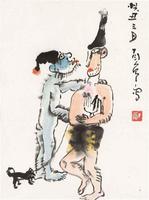
Opera Figures
Ding Yanyong
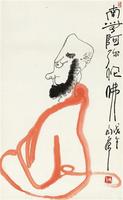
Figure
Ding Yanyong
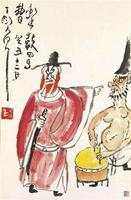
Denouncement of Cao Cao
Ding Yanyong
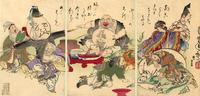
The Seven Lucky Gods
Tsukioka Yoshitoshi
Hotei
Joshu Shunso
La Chenille Verte. Coree
Paul Jacoulet
The 8th - Arhat Vajraputra
Guanxiu
Daruma
Soen Kogaku
Menpeki (Wall Gazing) Daruma
Soen Kogaku
Bird on Willow Branch
Ding Yanyong
A fisherman with a fishing rod
Qi Baishi
Hitomaro
Hakuin Ekaku
Drinking Tea
Huang Yongyu
Untitled
Vasile Kazar