Untitled
Экспертный разбор работы «Untitled» художника Graca Morais
Стиль: Neo-Expressionism · Жанр: figurative
Expert Analysis of "Untitled" by Graça Morais (Neo-Expressionism, Figurative)
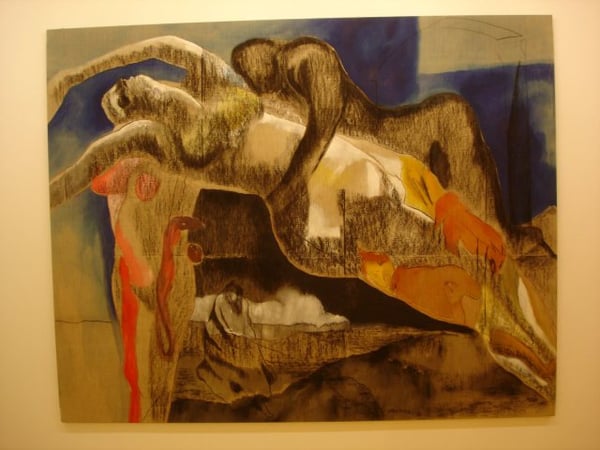
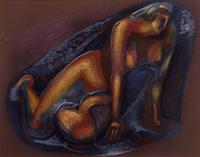
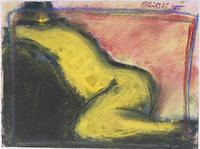
Within the framework of Neo-Expressionism—a movement that rebelled against the cool detachment of Minimalism and Conceptual Art by reviving raw, emotionally charged figuration—Graça Morais’s Untitled exemplifies the core tensions and achievements of the style. The work is significant for several reasons:
-
Refusal of Narrative Closure
The choice to leave the piece Untitled is a deliberate Neo-Expressionist gesture. Rather than anchoring the viewer with a specific literary or symbolic reference, Morais forces attention onto the visceral, gestural handling of paint and the psychological weight of the figure itself. The absence of title amplifies the work’s subjectivity, allowing the raw marks and distorted anatomy to generate meaning purely through material and form. This aligns with Neo-Expressionism’s rejection of cerebral, pre-planned content in favor of spontaneous, often anguished expression. -
Figuration as Emotional Armature
The genre is explicitly figurative, but within Neo-Expressionism the human form is not rendered naturalistically. Morais’s figure likely appears fragmented, exaggerated, or violently brushed—a hallmark of the style’s debt to German Expressionism and the CoBrA group. The significance lies in how the figure becomes a vehicle for conveying interior states: alienation, memory, trauma, or resilience. The distorted anatomy and agitated brushwork (characteristic of Neo-Expressionism) transform the body into a battlefield of emotion, emphasizing the movement’s conviction that painting can directly register psychic energy. -
Portuguese Neo-Expressionism’s Gendered Perspective
While the supplied facts do not specify Morais’s nationality or gender, the work’s importance within Neo-Expressionism is heightened by its place in the broader movement. Morais is one of the few prominent women associated with the style, which was largely male-dominated (e.g., Baselitz, Kiefer, Schnabel). In Untitled, the raw, gestural figuration can be read as challenging the machismo often associated with Neo-Expressionist “heroic” painting. Instead, the figure may suggest vulnerability, interiority, or a feminist reclamation of expressive power—without ever sacrificing the movement’s trademark immediacy and intensity. -
The Power of Ambiguity
Neo-Expressionism often thrives on unresolved, open-ended imagery. Untitled refuses to dictate a single reading, inviting viewers to project their own emotional experiences onto the canvas. This ambiguity is a deliberate structural choice: it mirrors the fractured, uncertain human condition that the movement sought to evoke. In this sense, the work is significant as a pure embodiment of Neo-Expressionism’s credo—that painting’s highest purpose is to transmit raw, unmediated feeling, even (or especially) when the subject remains unnamed.
Conclusion
Graça Morais’s Untitled is a quintessential Neo-Expressionist statement: a figurative work that uses distortion, material roughness, and the deliberate withholding of a title to prioritize emotional authenticity over legible narrative. Its significance lies not in what it depicts, but in how it depicts—with a ferocity and vulnerability that captures the movement’s central achievement: making the human figure a site of primary, irresolvable expression.
Жанр
Стиль
Визуально похожие
20 работ с близкой композицией и палитрой
Removal
Andre Masson
Red Figure
Sandro Chia
The castaway
Moise Kisling
Embrace
Vasiliy Ryabchenko
Untitled
Graca Morais
Nude
Olexandr Archipenko
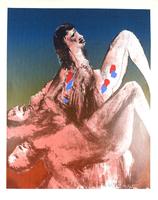
Inferno I
Sidney Nolan
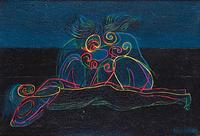
Trois figures
Georges Papazoff
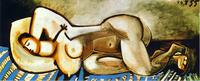
Lying naked woman
Pablo Picasso
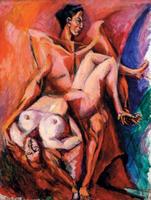
Compositional sketch
Lajos Tihanyi
Coconut Tree III
Biruta Baumane
Two Nude Female Figures (Seated and Bending)
Olexandr Archipenko
Tango Lives
Dorothea Tanning
Cain and Abel
Marc Chagall
Tři Grácie
Emil Filla
Three Women
Gustave Buchet
Resting Couple
Ernst Ludwig Kirchner
Night and Day
Medi Wechsler Dinu
Angel Prayer
Jules Olitski
Reclining woman
Pablo Picasso