Экспертный разбор работы «Lagoon» художника Anthony Caro
Стиль: Abstract Art · Жанр: sculpture
Expert Analysis of Anthony Caro's Lagoon (Abstract Sculpture)
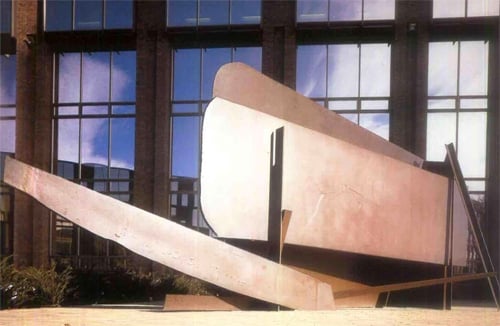
Anthony Caro's Lagoon stands as a defining work within the trajectory of 20th-century abstract sculpture, emblematic of his radical break from modernist tradition. As a key figure in the New Generation Sculpture movement (1960s Britain), Caro rejected the monolithic, pedestal-bound formalism of earlier sculpture in favor of a ground-hugging, horizontal, and open construction that invites the viewer into a dynamic spatial dialogue.
Significance within Abstract Art and Period Context
1. Reconfiguration of Sculptural Space
Unlike traditional sculpture that sits on a plinth, Lagoon is placed directly on the floor, eliminating the pedestal’s separation of art from life. This decision forces the viewer to encounter the work as an object in shared physical space—a radical shift that aligns with Caro’s ambition to make sculpture “like an environment.” The horizontal spread of Lagoon echoes the calm, expansive quality of its namesake, but without representation; instead, Caro uses abstract forms to evoke a sense of floating, weightless rhythm.
2. Industrial Materials and Painterly Color
Caro welded steel—a material associated with industry and engineering—and then painted it a uniform color (often bright or neutral, like the deep blue or green seen in Lagoon). This painterly treatment suppresses the metal’s inherent texture and emphasizes pure shape and volume. The color unifies disparate elements into a singular visual field, referencing the flatness of painting while preserving the sculpture’s three-dimensional presence.
3. Influence of David Smith and “Drawing in Space”
Caro was deeply influenced by American sculptor David Smith, but he adapted Smith’s “drawing in space” into a more overtly linear, flowing composition. In Lagoon, sinuous curves, cantilevered beams, and intersecting planes create a sense of airy, lyrical movement—almost like a collapsed, three-dimensional gesture. The sculpture’s openness allows light and space to pass through, making emptiness as significant as the metal itself.
4. Challenging Monumentality and Narrative
Lagoon is deliberately non-referential and non-narrative. Its forms do not depict water or landscape but instead generate an abstract sensation of liquidity, balance, and repose. This purity of abstract expression—devoid of symbolic or figurative content—was central to Caro’s goal of focusing solely on the material, structural, and perceptual experience of sculpture.
5. Legacy in Sculptural Practice
Caro’s approach—using industrial fabrication, bright color, ground-level placement, and abstract, interlocking geometries—opened the door for later Minimalist and Post-Minimalist sculptors. Works like Lagoon demonstrate how sculpture could be physically intimate yet formally ambitious, merging the language of painting with the tectonic logic of engineering.
In sum, Lagoon is significant not only as a masterful example of Caro’s mature style but as a milestone that redefined what sculpture could be: an abstract, immersive, and spatially interactive art form divorced from pedestal, narrative, and illusion.
Жанр
Стиль
Визуально похожие
20 работ с близкой композицией и палитрой
Sky Landscape
Louise Nevelson
Transparent Horizon
Louise Nevelson
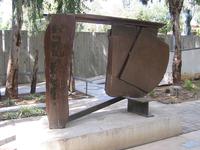
Black Cover Flat
Anthony Caro
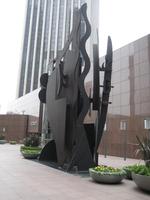
Night Sail
Louise Nevelson
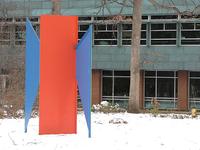
Wink
Lyman Kipp
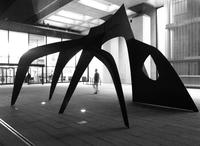
LE GUICHET
Alexander Calder
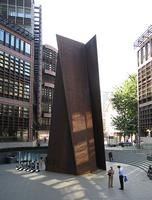
Fulcrum
Richard Serra
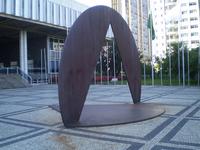
Escultura no Hall das Bandeiras da Assembleia Legislativa de Minas Gerais
Amilcar de Castro
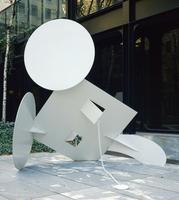
Geometric Mouse, Scale A
Claes Oldenburg
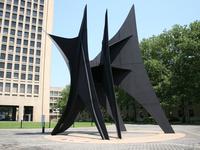
LA GRANDE VOILE (THE BIG SAIL)
Alexander Calder
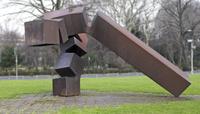
Monumento
Eduardo Chillida
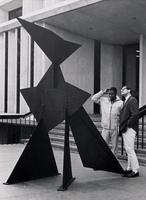
POLYGONS ON TRIANGLES
Alexander Calder
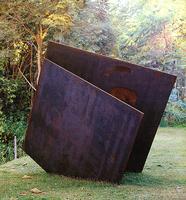
Untitled
Amilcar de Castro
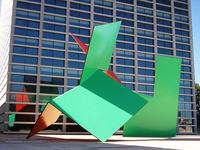
Sculpture in front of Burgo Empreendimento
Angelo de Sousa
Berlin
Eduardo Chillida
Untitled
Amilcar de Castro
Source
Tony Smith
Teodelapio
Alexander Calder
Two Discs
Alexander Calder
Gudari
Eduardo Chillida