
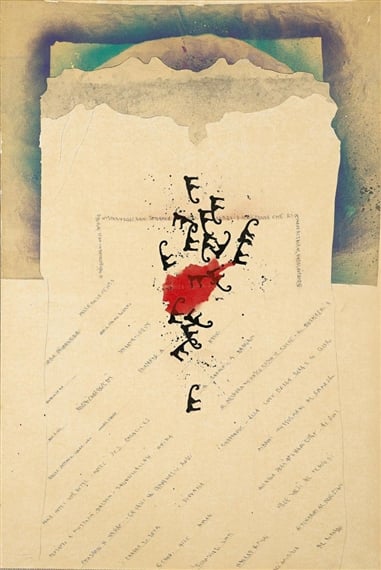
Expert analysis of Alighiero Boetti’s Afghanistan
Style: Conceptual Art · Genre: abstract
Expert Analysis: "Afghanistan" by Alighiero Boetti
Style: Conceptual Art | Genre: Abstract
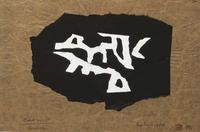
Alighiero Boetti’s “Afghanistan” is a paradigm of Conceptual Art’s power to merge process, politics, and perception. Though rendered in an abstract genre, the work is deeply rooted in Boetti’s signature practice of “delegation”—outsourcing execution to others, here almost certainly to Afghan embroiderers. The significance lies not in what is depicted but in how it was made and what it represents.
1. The Non-Hierarchical Collaboration
Boetti famously hired women in Kabul (and later in refugee camps) to hand-embroider his designs, using their traditional craft. “Afghanistan” likely belongs to his iconic series of “Mappe” (world maps), where each country’s outline is filled with its national flag, rendered in thread. The abstract quality emerges from the dense, colorful stitching—each country becomes a pattern, a pixelated field of color. By ceding control to anonymous artisans, Boetti critiques the Western myth of the solitary genius, elevating collaborative, anonymous labor to the level of high art.
2. Geopolitical Condensation
In the “Mappe” series, the map of Afghanistan is both a literal territory and a conceptual stand‑in for the nation itself. Boetti’s mapping is never neutral: it reflects the artist’s awareness of Afghanistan’s shifting borders, conflicts, and cultural identity. The abstract embroidery transforms the country into a tactile, fragile object—a stark contrast to the brutality of war. The work becomes a memorial to the craftswomen, their skill, and their precarious existence under changing regimes.
3. The Abstract as Conceptual Strategy
The genre of abstraction here is not about pure form but about information compression. Each thread color is a code (e.g., red for the Afghan tricolor), reducing a complex national identity to a system of signs. Boetti forces the viewer to read the surface: the abstraction is legible only if one knows the code. This aligns with Conceptual Art’s demand that the idea precede the object. The embroidered surface is beautiful, but its meaning hinges on the intellectual act of decoding.
4. Temporal and Political Resonance
Created during the Soviet‑Afghan War and later the rise of the Taliban, “Afghanistan” echoes Boetti’s own experiences in the country. The piece’s significance grows as the nation’s fate changes—the embroidery becomes a frozen moment of national identity, preserved in thread long after the original context shifts. It exemplifies Conceptual Art’s ability to be simultaneously aesthetic, social, and historical.
In summary, “Afghanistan” is significant because it dissolves the boundaries between artist and artisan, high art and craft, map and abstraction. It stands as a quiet, resilient act of collaboration in the face of geopolitical turmoil, proving that Conceptual Art can be both rigorously intellectual and deeply human.
Visually similar
20 works with related composition and palette
Untitled
Antonio Sanfilippo
Untitled (number drawing)
Craig Kauffman
Bottle of Vieux Marc, Glass, Guitar and Newspaper
Pablo Picasso
Loudspeaker (Haut parleur)
Pierre Alechinsky
Estensione blu-grigio
Antonio Sanfilippo

Lover of Abstraction
Oleh Sokolov
Untitled
Houria Niati
Inner Space
Luciano Bartolini
Illustration for review "Troyer/Courant"
Marc Chagall
Number 9: In Praise of Gertrude Stein
Bradley Walker Tomlin
Petrificada Petrificante II
Antoni Tapies
Schadografija
Christian Schad
Untitled
Adrien Dax
'Daniel Meyerplein' No 6. - mono-print, 2007; artist Hilly van Eerten
Hilly van Eerten

G-7
Emil Schumacher
White Butterfly
Willi Baumeister

Untitled
Lee Krasner

Despair
Theo van Doesburg
Exercise in Shadow and Reflection
Luis Camnitzer
Tiere aus Ur, Meudon
Leo Leuppi