
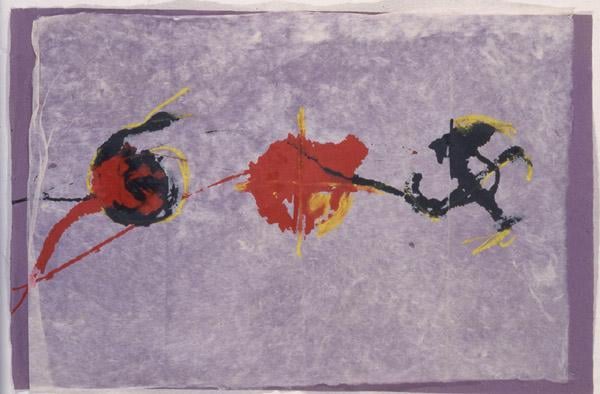
Expertenanalyse zu Luciano Bartolinis Inner Space
Stil: Art Informel · Genre: abstract
Expert Analysis of "Inner Space" by Luciano Bartolini
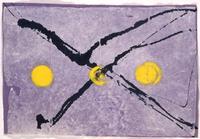
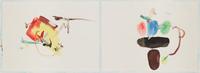
Luciano Bartolini’s "Inner Space" stands as a compelling example of Art Informel, the European post-war movement that rejected formal composition in favor of spontaneous, material-driven expression. Within this abstract genre, the work’s significance lies in its embodiment of Art Informel’s core ethos—prioritizing the artist’s inner impulse over external representation.
Key Significance Within Style and Period:
-
Embodiment of Gestural Materiality
Art Informel emphasized the physical act of painting—often thick impasto, scraping, or staining—as a direct record of emotion. "Inner Space" likely uses layered, textured surfaces that evoke a sense of excavation or organic growth, aligning with the movement’s rejection of rigid geometry and its embrace of the “formless.” Bartolini’s hallmark use of monochrome (common in his practice) would here transform the canvas into a field of subtle tonal shifts, where material becomes meaning. -
Interiority as Existential Space
The title “Inner Space” directly references the introspective, psychological orientation of Art Informel. Unlike American Abstract Expressionism’s heroic scale, European Informel was often more intimate and philosophical, reflecting post-war anxieties about existence and the subconscious. Bartolini’s work channels this interiority: the abstract marks are not random but condensed gestures that map an internal landscape—a space where thought and matter merge. -
Rejection of Narrative in Favor of Process
In the context of mid-20th-century abstraction, “Inner Space” is significant for its refusal to depict an external world. Every mark, scrape, or veil of paint is the residue of an action, making the artwork a record of its own making. This process-oriented approach aligns with Art Informel’s debt to Surrealist automatism and Jean Fautrier’s haute pâte (thick paste) technique, but Bartolini’s synthesis—quiet, concentrated, almost meditative—distinguishes it from the more dramatic European counterparts.
Conclusion:
“Inner Space” is a quintessential Art Informel work because it transforms abstraction into a phenomenological encounter. By making the viewer sense the physical weight of paint and the artist’s gesture, Bartolini demonstrates how formless material can articulate profound interior states. Its significance lies in this paradox: a “space” that is both intimate and infinite, created through deliberate yet spontaneous means.
Visuell ähnlich
20 Werke mit ähnlicher Komposition und Farbpalette
Thai Papier
Anton Heyboer
Vibrations on a river
Alfred Freddy Krupa
Gc-17
Emil Schumacher
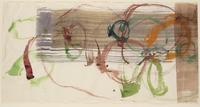
New River Watercolor, Series I, No. 3
John Cage
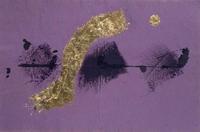
Inner Space
Luciano Bartolini
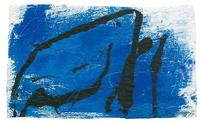
G-7
Emil Schumacher
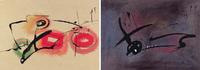
Untitled (Diptych)
Li Yuan-chia
Untitled
Jackson Pollock
Untitled (Composition)
Afro
Composition with taches
Victor Hugo
Inner Space
Luciano Bartolini
The big one
Alfred Freddy Krupa
Farbspiele
Ernst Wilhelm Nay
GE-11
Emil Schumacher
The Eye of the Eyes
Carol Rama
Untitled (number drawing)
Craig Kauffman
Mon Mistral
Francois Arnal
G-3
Emil Schumacher
Composition Juviem
Carl Buchheister
Blues Overlapping, No. 3
Richard Tuttle