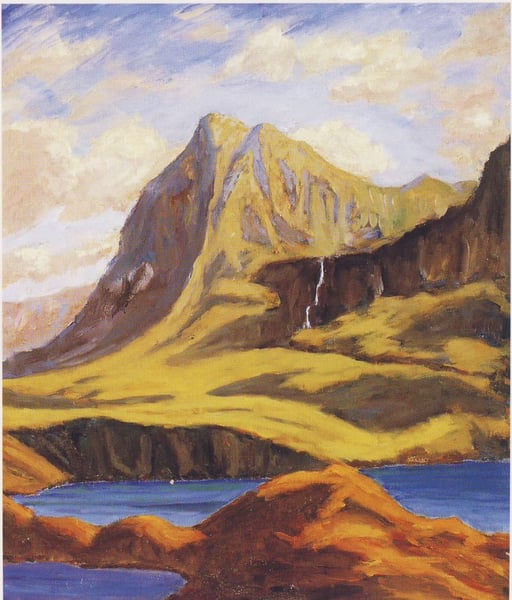
Mountain near Lochmore
Analisi esperta di Mountain near Lochmore di Winston Churchill
Stile: Impressionism · Genere: landscape
Expert Analysis: "Mountain near Lochmore" by Winston Churchill
As an Impressionist landscape, Winston Churchill’s Mountain near Lochmore captures a fleeting moment of natural beauty through loose brushwork and a vibrant, atmospheric palette. The work is significant not only as a masterful example of amateur Impressionism but also as a deeply personal reflection of Churchill’s lifelong engagement with painting as a respite from political life.
Stylistic Execution:
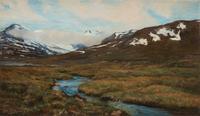
Churchill adopts the core tenets of Impressionism—rapid, visible strokes that convey light and movement rather than fine detail. The mountain is rendered in layers of soft blues, purples, and greens, suggesting the shifting effects of sun and shadow across the Scottish Highlands. The sky likely shows broken color—perhaps whites, pale yellows, and grays—to evoke the moist, luminous air of Lochmore. The foreground is treated with broader, more gestural marks, typical of Churchill’s outdoor studies, where he aimed to capture the immediate sensory impression of the scene.
Context and Significance:
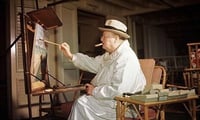
- The Artist’s Unusual Path: Churchill took up painting in his forties under the guidance of Sir John Lavery and later befriended Paul Maze, a noted Impressionist. Mountain near Lochmore is part of a body of work that demonstrates Churchill’s disciplined observation and his adaptation of Impressionist methods, despite being an amateur. His paintings were praised by professional critics for their vitality and directness.
- Personal Retreat: The location, Lochmore in the Scottish Highlands, held deep personal meaning for Churchill. He often escaped there for painting holidays, finding solace in the rugged landscape during the tumultuous years of the 1930s and 1940s. This work thus serves as a visual diary of his emotional and psychological restoration.
- Legacy: Churchill’s landscapes are significant because they bridge his public identity and private passion. They are collected by major institutions (e.g., the National Trust, Churchill War Rooms) and remain a testament to the restorative power of art. Mountain near Lochmore exemplifies how an amateur artist—even one burdened by world-historical responsibilities—can achieve a sincere, expressive Impressionism that stands on its own merits.
Conclusion:
Mountain near Lochmore is important not because Churchill was a professional painter, but because it embodies the spirit of Impressionism as a means of personal expression and delight in nature. Its significance lies in the union of a statesman’s disciplined eye with the movement’s emphasis on transient beauty, making it a compelling artifact of both art history and human resilience.
Genere
Stile
Visivamente simili
20 opere con composizione e palette affini
Irish Landscape
Robert Henri
Loch on the Duke of Sutherland's Estate
Winston Churchill
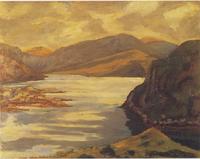
Loch Scene on the Duke of Sutherland's Estate
Winston Churchill
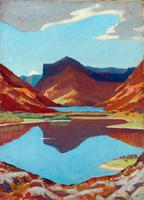
The Lake District for Holidays. Honister Crag (London, Midland and Scottish Railway Poster Artwork)
Algernon Talmage
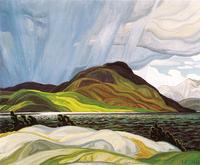
Lake Wabagishik
Franklin Carmichael
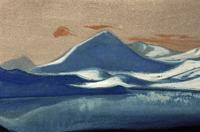
Lahaul
Nicholas Roerich
Cinnabar Mountain, Yellowstone River (watercolour)
Thomas Moran
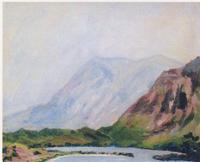
View at Lochmore
Winston Churchill
Mirrored Mountain, South Greenland
Rockwell Kent
Welsh Landscape
Augustus John
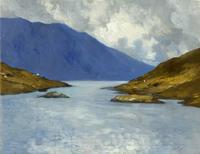
Leenane
Paul Henry
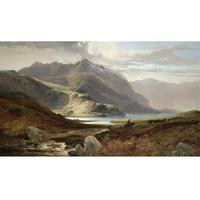
Near Loch Loi, Argyllshire
Joseph Adam
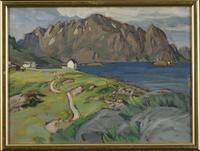
Summer, Store Molla. Study from Lofoten
Anna Katarina Boberg
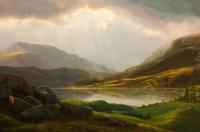
Mountain of Memory
Adam Abram
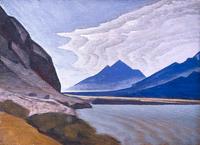
Nubra Valley
Nicholas Roerich
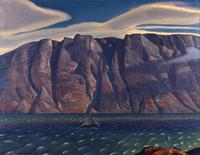
Squall, Greenland
Rockwell Kent
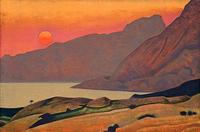
Monhegan
Nicholas Roerich
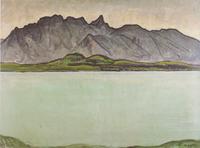
Thun, Stockhornkette
Ferdinand Hodler
Mountain Landscape
Kitty Lange Kielland
Lights Entrance
Adam Abram