Analisi esperta di Matthias, Holy Roman Emperor, as King of Bohemia di Hans von Aachen
Stile: Mannerism (Late Renaissance) · Genere: portrait
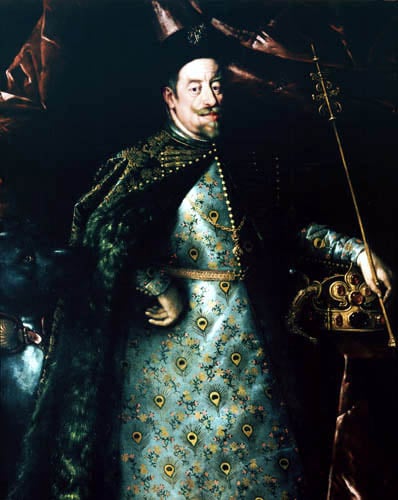
Expert Analysis: "Matthias, Holy Roman Emperor, as King of Bohemia" by Hans von Aachen
This portrait is a quintessential example of Mannerist (Late Renaissance) court portraiture, a style that deliberately moved away from the balanced naturalism of the High Renaissance toward an artificial, intellectual, and often symbolic elegance. Painted by Hans von Aachen, a leading German court artist for the Habsburgs, the work’s significance lies in how it merges political propaganda with Mannerist artifice to project imperial authority.
Significance within Mannerism:
- Elongated proportions and refined pose: The figure likely displays the characteristic Mannerist elongation—an idealized, almost sculptural form that conveys grace and noble bearing rather than anatomical accuracy. This deliberate stylization elevates the emperor above ordinary humanity, aligning him with divine or mythological ideals.
- Complex composition and surface polish: Von Aachen’s smooth, enamel-like finish and intricate handling of textures (armor, fabric, regalia) reflect Mannerism’s obsession with technical virtuosity. Every detail—from the jeweled crown to the scepter—is rendered with meticulous precision, creating a sense of opulent, frozen perfection.
- Symbolic and psychological tension: The subject’s gaze, often direct yet slightly aloof, embodies Mannerism’s characteristic psychological distance. The portrait does not aim for intimate realism but rather constructs a carefully calibrated image of authority, using attributes like the Bohemian crown and imperial orb as visual declarations of power.
Genre and Historical Context:
As a portrait, this work transcends mere likeness to become a political manifesto. Matthias had recently consolidated his rule as Holy Roman Emperor and King of Bohemia, and von Aachen’s portrayal reinforces his legitimacy through Mannerist conventions: the sitter appears timeless, regal, and detached, embodying the Habsburg ideal of a ruler chosen by divine right.
In summary, the painting is significant not only as a masterful Mannerist artifact—with its synthetic elegance, symbolic density, and technical bravura—but also as a key document of Habsburg imperial self-fashioning at the dawn of the 17th century. Von Aachen’s ability to fuse courtly propaganda with the sophisticated visual language of Late Renaissance Mannerism makes this portrait a standout example of the style’s enduring fascination with power, artifice, and idealized form.
Genere
Visivamente simili
20 opere con composizione e palette affini
Portrait of Charles
Anthony van Dyck
Charles I, King of England
Anthony van Dyck
El embajador de Rusia Peter Ivanovich Potemkin
Juan Carreno de Miranda
Portrait of Frederick V, Elector Palatine, as King of Bohemia
Gerard van Honthorst
Portrait of the Doge Giovanni Bembo
Tintoretto
Pedro I De Castilla
Joaquín Domínguez Bécquer
George IV
Thomas Lawrence
Queen Victoria and Prince Albert at the Bal Costumé of 12 May 1842
Edwin Henry Landseer
Portret Jana Dzierżysława Tarnowskiego
Henryk Rodakowski
King George III in Coronation Robes
Allan Ramsay
Henry Somerset
John Riley
Władysław Sigismund Vasa
Pieter Soutman
John Murray
Thomas Lawrence
Charles Cornwallis (1675–1722), 4th Lord Cornwallis
Michael Dahl
Portrait of Doge Pietro Loredan
Tintoretto
Marshal Jan D. Tarnowski
Henryk Rodakowski
Colin, 3rd Earl of Balcarres
John Riley
A portrait of a young Alessandro Farnese, the future Duke of Parma
Sofonisba Anguissola
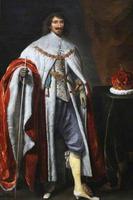
Philip Herbert (1584–1650), 4th Earl of Pembroke, 1st Earl of Montgomery, KG
Daniel Mytens the Elder
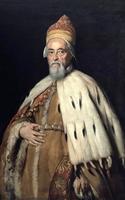
Doge Francesco Erizzo
Bernardo Strozzi