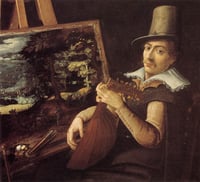
Expert analysis of Paul Bril’s Landscape
Style: Baroque · Genre: landscape
Expert Analysis: Paul Bril’s “Landscape”
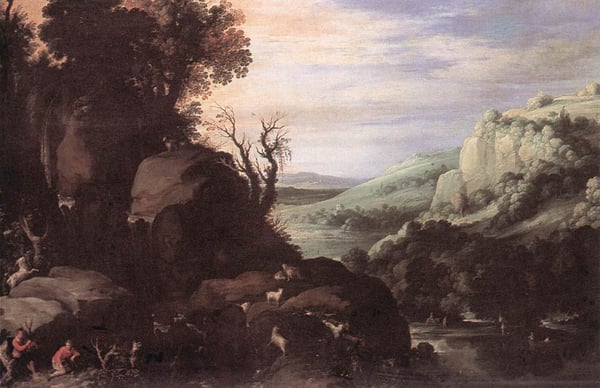
Paul Bril’s Landscape stands as a pivotal work within the Baroque period, particularly in the development of landscape as an independent genre. Though the specific composition is not detailed here, Bril’s oeuvre is widely recognized for bridging the late Mannerist tradition and the emerging Baroque sensibility—a shift that made the natural world a subject worthy of its own dramatic narrative.
Significance within Baroque Landscape Painting
-
Pioneering Naturalism: Bril, a Flemish painter active in Rome, was among the first to treat landscape not merely as a backdrop for historical or mythological scenes, but as a primary vehicle for artistic expression. His Landscape likely employs the Baroque hallmarks of sweeping vistas, atmospheric depth, and a dynamic interplay of light and shadow, emphasizing the sublime grandeur of nature.
-
Integration of Northern and Italian Traditions: Bril synthesized the detailed, topographical clarity of Flemish landscape painting (derived from Pieter Bruegel the Elder) with the idealized, classical spatial organization favored in Italy. This fusion anticipates the work of later Baroque masters such as Claude Lorrain and Nicolas Poussin, who elevated the idealized landscape into a definitive genre.
-
Dramatic Baroque Spirit: Even within a calm scene, Bril infuses the Baroque love for movement and contrast—perhaps through a winding river, rugged cliffs, or a sudden burst of light piercing storm clouds. Such elements transform the landscape into a stage for nature’s own drama, reflecting the Baroque era’s fascination with the ephemeral and the infinite.
Conclusion
Paul Bril’s Landscape is significant not only for its technical refinement but for its role in legitimizing landscape painting as a serious, self-sufficient genre within the Baroque canon. It represents a crucial step toward the Romantic awe of nature that would flourish in later centuries, while remaining firmly rooted in the 17th-century quest for emotional resonance and visual splendor.
Visually similar
20 works with related composition and palette
FELSIGE WALDLANDSCHAFT MIT WASSERSTURZ UND ARCHITEKTUR
Adriaen Frans Boudewyns
A CAPRICCIO MOUNTAINOUS LANDSCAPE, WITH FIGURES AND CATTLE IN THE FOREGROUND, A BRIDGE AND HILLTOP TOWNS BEYOND
Roelant Roghman
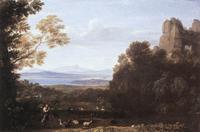
Landscape with Apollo and Mercury
Claude Lorrain
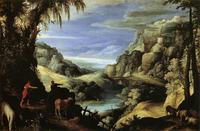
Landscape with Mercury and Argus
Paul Bril
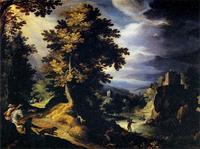
Landscape with Stag Hunt
Paul Bril
Berger et son troupeau dans un paysage de montagne
Johann Heinrich Roos
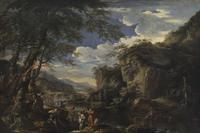
Saint John the Baptist Baptizing Christ in the Jordan
Salvator Rosa
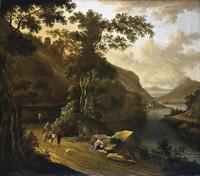
Paesaggio fluviale con viaggiatori
Jan Hackaert
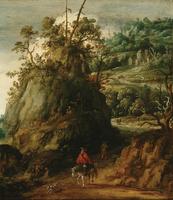
Mountainous landscape with traveller
Esaias van de Velde
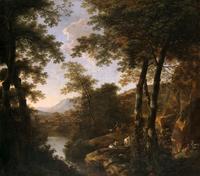
Italian Landscape with Roman Warriors
Jan Dirksz Both
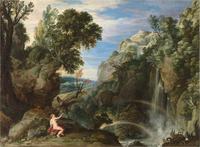
Landscape with Psyche and Jupiter
Peter Paul Rubens
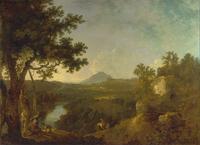
View near Wynnstay, the Seat of Sir Watkin Williams-Wynn, BT.
Richard Wilson
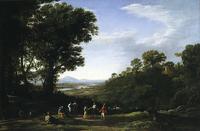
Villagers Dancing
Claude Lorrain
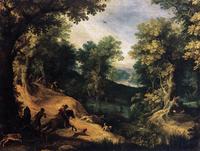
The Stag Hunt
Paul Bril
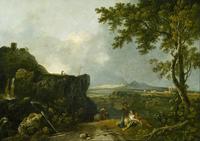
The White Monk
Richard Wilson
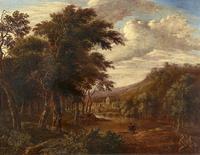
Bewaldete Uferlandschaft mit Stadt
Gerrit Battem
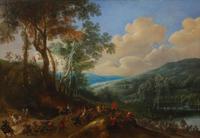
Scène de bataille
Adriaen Frans Boudewyns
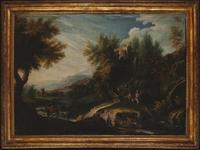
River landscape with figures
Alessio de Marchis
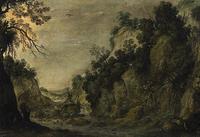
Mountainous landscape
Jacob Savery the Elder
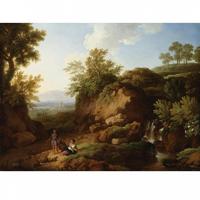
A ROCKY RIVER LANDSCAPE WITH THREE FIGURES CONVERSING IN THE FOREGROUND
Christian Wilhelm Ernst Dietrich