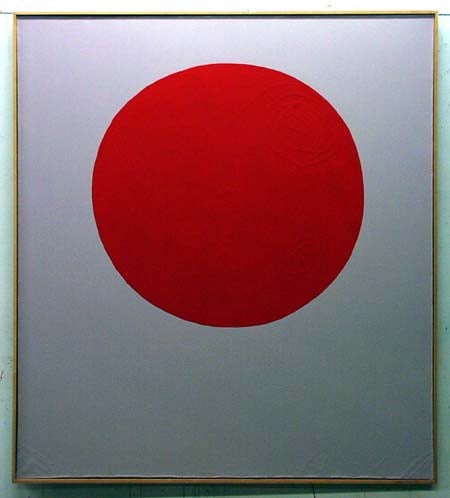
Walter Darby Bannard の Hopewell Valley Sun の専門的な分析
スタイル:Minimalism · ジャンル:abstract
Based on the provided facts, here is an expert analysis of Walter Darby Bannard’s Hopewell Valley Sun, focusing on its significance within Minimalism.
Expert Analysis: Walter Darby Bannard’s Hopewell Valley Sun
Hopewell Valley Sun is a significant work within the Minimalist movement, not because it adheres to a rigid, hard-edged geometry, but because it exemplifies a critical and more sensuous offshoot of Minimalist thought—often referred to as Lyrical Abstraction or Post-Painterly Abstraction. Bannard, a key theorist and practitioner of this phase, pushed Minimalism’s core tenets of formal reduction and anti-illusionism into new territory, emphasizing the physical properties of paint and color as the sole subject.
Significance Within the Minimalist Context:
-
Beyond Pure Geometry: While early Minimalism (e.g., Stella, Judd) often relied on stark, geometric symmetry, Bannard’s work introduces a soft, organic, and atmospheric effect. In Hopewell Valley Sun, the title’s reference to a specific landscape (Hopewell Valley) suggests a source in nature, yet the work remains rigorously abstract. It achieves significance by transforming natural light and space into pure optical sensation, rather than depicting it. This aligns Minimalism with the poetic and the perceptual.
-
Materiality and Process as Subject: True to Minimalism’s rejection of narrative or symbolic meaning, the painting’s significance lies in its own making. Bannard’s technique—likely involving pouring, staining, or thinning acrylic paint to create veils of color—makes the interaction of pigment and canvas the central drama. The “sun” is not an image but a field of luminous color that mimics the behavior of light. This places the work in dialogue with Color Field painters like Helen Frankenthaler and Morris Louis, yet Bannard’s distinctly Minimalist discipline keeps the composition spare and non-gestural.
-
Active Viewer Engagement: Hopewell Valley Sun demands the kind of instantaneous, holistic viewing championed by Minimalism. There is no central figure or composition to “read”; the entire canvas is a single, unified field. The viewer is asked to experience the work’s physical scale and the visceral impact of its color relationships. The significance here is that the painting is its own reality—a direct, phenomenological encounter with hue, surface, and light.
In summary, Hopewell Valley Sun is significant as a bridge within Minimalist abstraction. It retains the movement’s essential reduction and formalism, yet introduces a lyrical, almost naturalistic warmth. It demonstrates that Minimalism was not a dead end of austere forms, but a platform for exploring the extreme limits of color and material perception. Bannard’s work here is a masterful example of how a strict adherence to abstract principles can still yield a deeply atmospheric, radiant experience.
視覚的に類似
構図やパレットが近い作品 20 件
Greenstone
Walter Darby Bannard
The Elders
Walter Darby Bannard
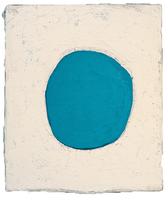
Norma (Pool Painting for Norma Desmond)
Julian Schnabel
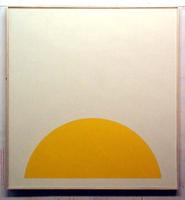
Yellow Rose #1
Walter Darby Bannard
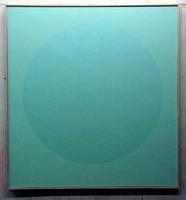
Aqua Same
Walter Darby Bannard
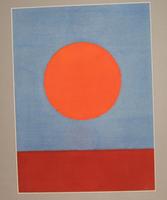
Composition
Hryhorii Havrylenko
Untitled
Jef Verheyen
(Untitled) from Sunset
Andy Warhol
Black Circle
Kazimir Malevich
Black and Orange
Rashid Al Khalifa
Baffin
Walter Darby Bannard
Untitled Abstract
Alexander Liberman
Camellia Same
Walter Darby Bannard
Figure Alteration
Mario Ballocco
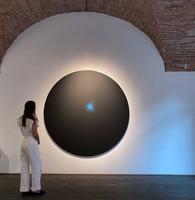
Mantra 59
Armen Agop
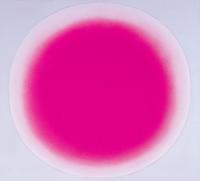
621/71
Rupprecht Geiger
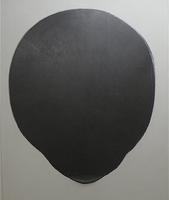
Cercle 99-7-18
Matsutani
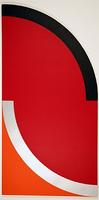
Shapin' Up
Leo Valledor
(Untitled) from Sunset
Andy Warhol
Cadmium Orange of Doctor Frankenstein
Jules Olitski