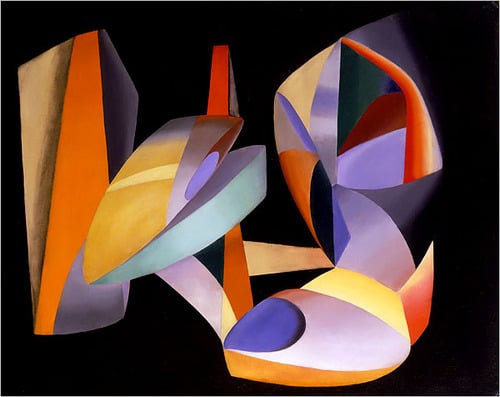
Paris Abstract
Analisi esperta di Paris Abstract di John Ferren
Stile: Abstract Art · Genere: abstract
Expert Art Historical Analysis of "Paris Abstract" by John Ferren
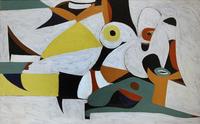
Within the framework of Abstract Art, John Ferren’s "Paris Abstract" stands as a significant work that embodies the transatlantic dialogue central to the development of mid-20th‑century abstraction. While the provided facts limit detailed formal description, the painting’s significance can be understood through its stylistic and historical positioning: as an abstract piece, it deliberately eschews representational subject matter in favor of pure visual language—line, color, form, and composition—to evoke emotion or rhythm. Ferren, an American artist who worked in Paris in the 1930s and later became a key figure in the New York School, represents a bridge between European abstraction (notably the geometric tendencies of the Parisian avant‑garde) and the gestural, expressive freedom of Abstract Expressionism. "Paris Abstract" likely captures this synthesis, making it significant as a document of how abstraction evolved from European roots into a potent, universal modern idiom. Its very existence within Ferren’s oeuvre highlights the artist’s commitment to non‑objective art during a period when abstraction was redefining the boundaries of painting.
Visivamente simili
20 opere con composizione e palette affini
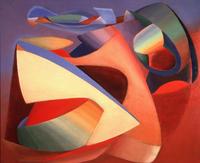
Lutte as Ciel
John Ferren
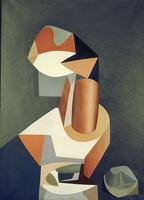
Figure rose
Jean Helion
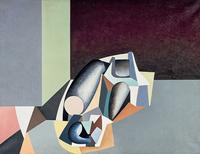
Fallen Figure
Jean Helion
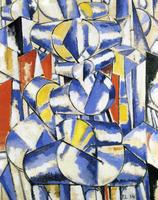
Contrast of forms
Fernand Leger
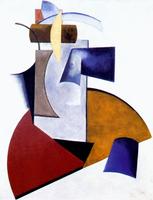
The disc and lid
Alexander Rodchenko
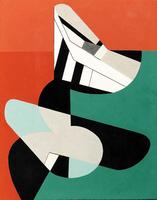
Untitled
John McLaughlin
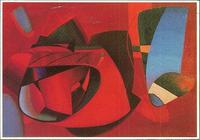
Composition
John Ferren
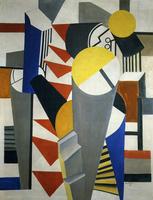
Composition
Fernand Leger
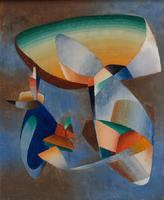
Composition
John Ferren
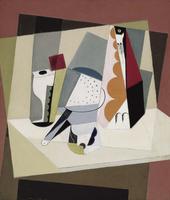
Cubist Still Life
Maria Blanchard
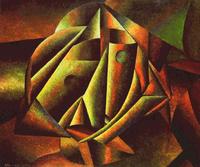
Head of a Peasant Girl
Kazimir Malevich
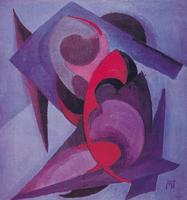
Composition
Janos Mattis-Teutsch
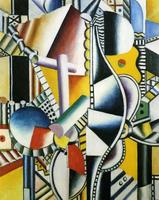
Propellers 2nd state
Fernand Leger
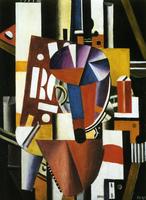
The typographer
Fernand Leger
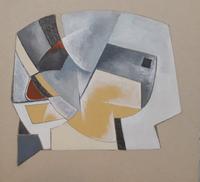
Composição 1
André Merez
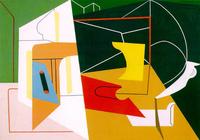
Egg Beater No. 4
Stuart Davis
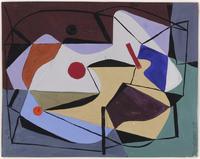
Study for a Painting
Ad Reinhardt
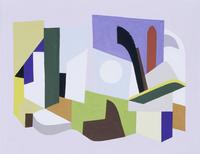
Untitled (N.Y. World's Fair)
Ad Reinhardt
Composition
Arshile Gorky
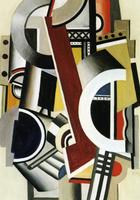
Machine element 1st state
Fernand Leger