Analisi esperta di Transfiguration du jongleur di Michel Seuphor
Stile: Abstract Art · Genere: abstract
Expert Analysis of "Transfiguration du jongleur" by Michel Seuphor
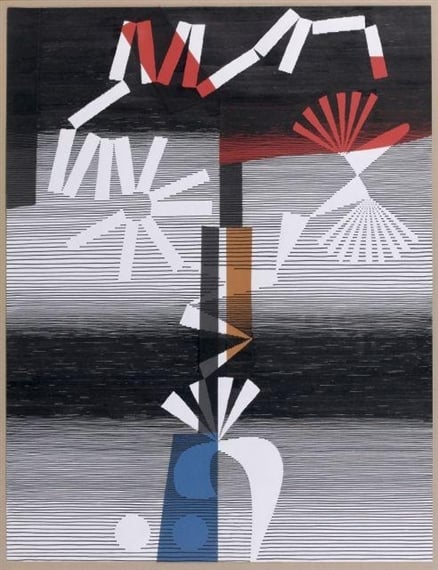
Michel Seuphor (born Fernand Berckelaers) was a pivotal figure in the development of geometric abstraction, co-founding the influential Art Concret group in 1930 alongside Joaquín Torres-García and others. Transfiguration du jongleur (“Transfiguration of the Juggler”) exemplifies the core tenets of this movement: a commitment to pure, non-representational form, rigorous structure, and a universal visual language.
Significance within Abstract Art:
-
Embodiment of Art Concret Principles – The work likely employs precise geometric shapes—circles, rectangles, lines—arranged in a balanced, architectonic composition. Seuphor’s practice rejected naturalistic references in favor of mathematically ordered, self-sufficient visual elements. The “juggler” of the title is not depicted literally but transmuted into a rhythmic constellation of forms, suggesting motion and transformation through abstract means.
-
Dialogue Between Figure and Abstraction – The title’s reference to a juggler (a performer of dexterity and balance) provides a metaphorical anchor. The composition probably captures a sense of dynamic equilibrium—elements suspended in tension, as if caught mid-maneuver. This transfiguration process reflects Seuphor’s belief that abstraction could distill essential qualities of reality (energy, harmony, play) without representation.
-
Synthesis of Visual and Poetic Rhythm – Seuphor was also a poet, and his abstract works often convey a lyrical cadence. In Transfiguration du jongleur, the interplay of positive and negative space, repetition of silhouetted forms, and subtle color contrasts (likely muted tones of grey, black, white, and perhaps a single accent) create a visual rhythm akin to a poem’s meter—each element “juggled” in a choreographed whole.
-
Historical Context – Produced during the height of Seuphor’s involvement with the Abstraction-Création group (1930s–1940s), this work stands as a testament to the international push toward pure abstraction. It aligns with contemporaries like Mondrian, van Doesburg, and Gabo, yet retains a distinct, almost playful humanist undercurrent through its title.
In sum, Transfiguration du jongleur is significant not only as a masterful example of geometric abstraction but as a key document of Seuphor’s philosophy: that art can transfigure everyday phenomena into timeless, universal structures. Its balance of rigorous form and latent dynamism makes it a compelling study of how abstraction can express the essence of movement and transformation.
Visivamente simili
20 opere con composizione e palette affini
Chanson nocturne
Michel Seuphor
Non-objective Composition
Olga Rozanova
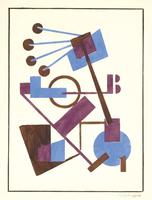
Bortnyik Sándor. Ma Album 2
Sandor Bortnyik
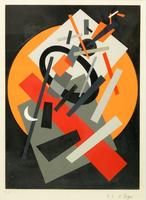
Abstract
Nadia Khodossiévitch-Léger
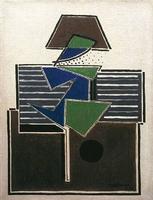
The Tree
Serge Charchoune
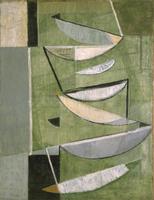
Green, Black and White Movement
Terry Frost
Dark freshness
Wassily Kandinsky
Painting
Aleksandra Ekster
Composition
Henryk Berlewi
Dialogue II
Constantin Flondor
Decisive Pink
Wassily Kandinsky
Kateau
Victor Vasarely
Red Staff
Rudolf Bauer
Animated Tension
Alberto Magnelli
Composition abstraite
Nadia Khodossiévitch-Léger
Heure meridienne
Gustave Singier
Composition
Leo Leuppi
Fair
Toyen
Non-Objective Composition (Suprematism)
Olga Rozanova
Energy Field
Constantin Flondor