Analisi esperta di The Tree di Serge Charchoune
Stile: Abstract Art · Genere: abstract
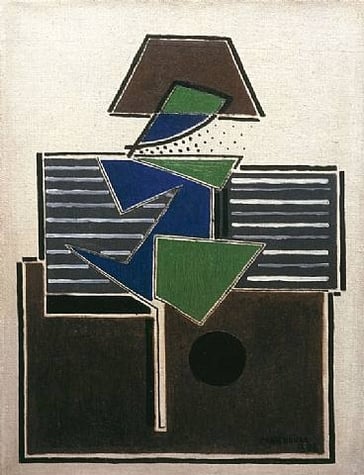
Serge Charchoune’s The Tree is a significant work within the broader trajectory of early 20th-century abstract art, particularly for its fusion of Dada’s irreverence with a lyrical, almost musical approach to pure form. As a Russian-born painter active in the Parisian avant-garde, Charchoune developed a distinctive style that rejected narrative in favor of rhythmic compositions built from simplified geometric shapes and soft, luminous color fields.
In The Tree, the title suggests a natural subject, yet the painting dissolves any recognizable botanical form into an arrangement of floating, biomorphic shapes and delicate, calligraphic lines. This tension between representation and abstraction is central to Charchoune’s practice: he often used a title as a point of departure, then allowed the interplay of color and line to generate a visual “melody.” The work’s significance lies in how it embodies the transitional moment between Cubist structure and pure abstraction—a path that would later influence lyrical abstraction and Tachisme. By reducing a tree to its essential rhythms, Charchoune demonstrates that abstract art need not be cold or geometric; it can be poetic, intimate, and deeply resonant with the natural world without ever depicting it literally.
Genere
Stile
Visivamente simili
20 opere con composizione e palette affini
Sur fond gris n. 10
Alberto Magnelli
Composition
Albert Gleizes
Painting
Aleksandra Ekster
Composizione
Alberto Magnelli
Abstraccion No. 3
Martha Boto
First Study for the Williamsburg Mural
Ilya Bolotowsky
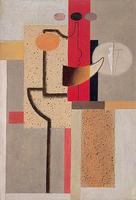
The Sculptor
Willi Baumeister
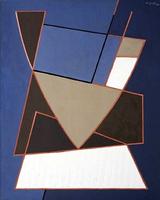
Bulwark No. 1
Alberto Magnelli
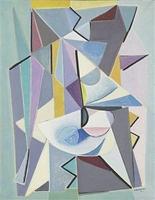
Composizione
Bice Lazzari
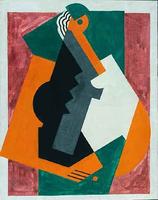
Figure Cubiste
Albert Gleizes
Interior
Robert Blackburn
Inauguration
Will Barnet
Animated Tension
Alberto Magnelli
Studio per composizione
Enrico Prampolini
A dancer
Gino Severini
Kateau
Victor Vasarely
Bortnyik Sándor. Ma Album 2
Sandor Bortnyik
Black and Violet
Wassily Kandinsky
Rhythm Colour
Sonia Delaunay
Composition Tight Curves. 25
Carl Buchheister