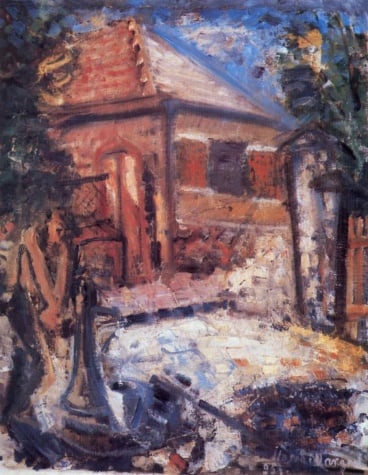
Expert analysis of Istvan Ilosvai Varga’s Pumping the Well
Style: Expressionism · Genre: genre painting
The significance of Pumping the Well by Istvan Ilosvai Varga lies in its fusion of Expressionist emotional intensity with the humble, everyday subject matter of genre painting. By choosing a mundane rural task—pumping water—Ilosvai Varga elevates a simple act into a charged psychological scene.
In the Expressionist tradition, the artist likely distorts forms, exaggerates gestures, and employs bold, non-naturalistic colors to convey the physical struggle and spiritual weight of manual labor. This transcends mere documentation; the well becomes a symbol of life’s fundamental cycles—toil, sustenance, community.
Compared to earlier naturalistic genre scenes (e.g., by Dutch Golden Age painters or Realists), Ilosvai Varga’s work prioritizes subjective feeling over objective accuracy—the pump’s angularity, the figures’ contorted poses, and the charged atmosphere suggest inner turmoil or resilience. This aligns with Expressionism’s goal to express raw human experience, making Pumping the Well a powerful example of how the movement transformed even the most ordinary genre scene into a vessel for existential drama.
Genre
Style
Visually similar
20 works with related composition and palette
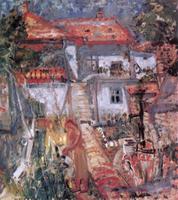
Flowery Garden
Istvan Ilosvai Varga
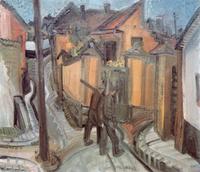
Alleyway
Istvan Ilosvai Varga
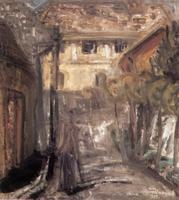
Houses with Crippled Man
Istvan Ilosvai Varga
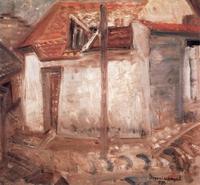
White Walls
Istvan Ilosvai Varga
Fringe of Bucharest
Rudolf Schweitzer-Cumpana
In the Shade
Francisc Sirato
Old Man in Warnemunde
Edvard Munch
Village Street
Bela Kadar
Curved Street at Szentendre
Kmetty János
Spring Sun
Matej Sternen
Landscape with a dog
Robert Falk
Farmyard with Donkeys and Roosters
Adolphe Joseph Thomas Monticelli
Landscape with white houses
Kazimir Malevich
Balchik Springtime
Lucian Grigorescu
The House of Rab Ráby
Istvan Ilosvai Varga
View of a Street at Hatvan
Bela Czobel
Landscape with Figures
Chaim Soutine
Village
Victor Brauner
Grossrouvre
Bela Czobel
Spring
Kazimir Malevich