Ernst Wilhelm Nay sanatçısının Oberon eseri hakkında uzman analizi
Tarz: Art Informel · Tür: abstract
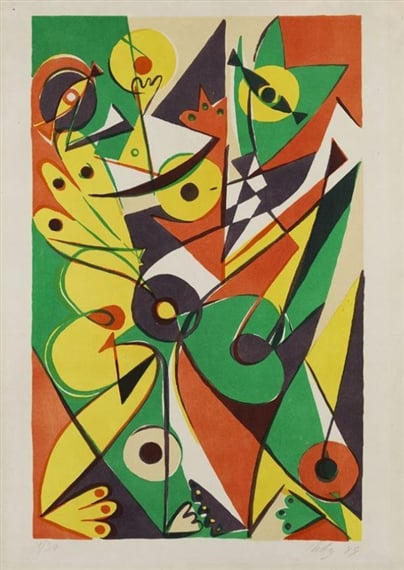
Ernst Wilhelm Nay’s Oberon stands as a compelling example of Art Informel, a post-war European movement that prioritized spontaneity, gesture, and the rejection of geometric order. As an abstract work, Nay’s painting embodies the Informel ethos by subverting figurative reference in favor of intuitive, often turbulent mark-making. The title Oberon—drawn from Shakespearean mythology—suggests a narrative or atmospheric allusion, yet Nay dissolves any literal imagery into a dense interplay of vibrant color fields and dynamic brushwork. This tension between title and abstraction is key to the work’s significance: it evokes the chaotic, subconscious energies of the Informel moment while hinting at the spectral, magical realm of its namesake. Nay’s signature use of saturated, clashing tones and layered, gestural forms exemplifies the movement’s break from both prewar expressionism and geometric abstraction, affirming Oberon as a vital contribution to the European abstract lexicon of the 1950s.
Tür
Stil
Görsel olarak benzer
İlişkili kompozisyon ve renk paletine sahip 20 eser
Composition
Arshile Gorky
Untitled
Ad Reinhardt
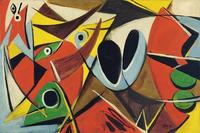
Mythe
Ernst Wilhelm Nay
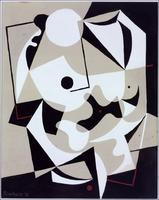
Untitled
Ad Reinhardt
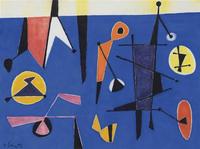
Marée haute
Gustave Singier
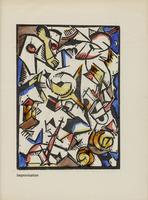
Improvisation (plate, Page 11) from the Periodical Der Schwarze Turm, Vol. 1, No. 3 (July 1919)
Georg Tappert
Abstract 1
René Marcil
Pedestal
Pablo Picasso
Looping
Félix Del Marle
Night
Chaldin Alex
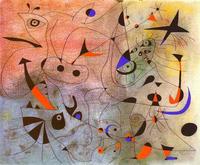
Constellation: The Morning Star
Joan Miro
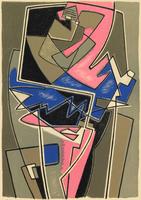
Ballerina
Gino Severini
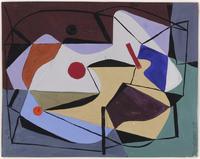
Study for a Painting
Ad Reinhardt
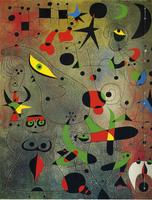
Constellation Awakening at Dawn
Joan Miro
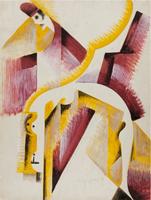
Scheiber Hugó, Táncosok
Scheiber Hugó
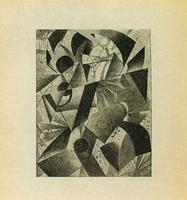
Pilot
Kazimir Malevich
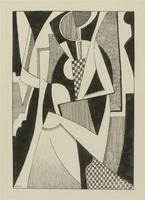
Untitled
Gustave Buchet
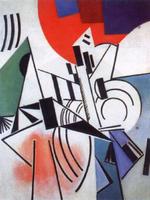
Suprematism
Olga Rozanova
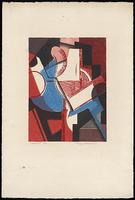
Interior
Robert Blackburn
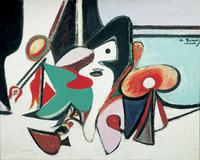
Painting
Arshile Gorky