Analisi esperta di Charity of Saint Elladius of Toledo di Francisco Bayeu y Subias
Stile: Neoclassicism · Genere: genre painting
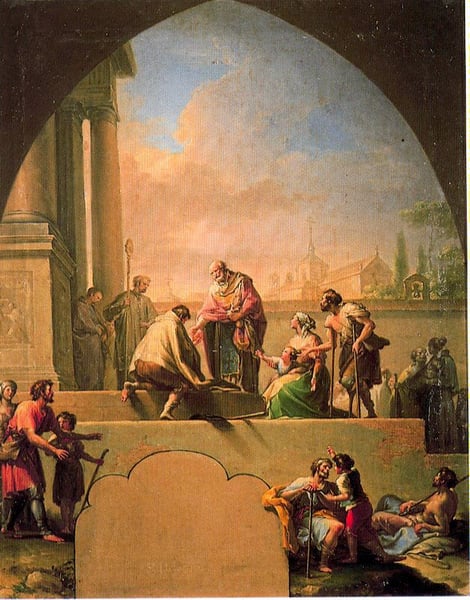
Expert Analysis: "Charity of Saint Elladius of Toledo" by Francisco Bayeu y Subias
Style & Period Context
Francisco Bayeu y Subias (1734–1795) was a leading figure in Spanish Neoclassicism, a style that sought to revive the clarity, order, and moral purpose of classical art. Neoclassicism rejected the ornate excesses of Rococo in favor of balanced compositions, noble subjects, and didactic clarity. Bayeu, as a court painter and director of the Royal Academy of Fine Arts of San Fernando, helped shape this aesthetic in Spain, often focusing on religious and historical themes infused with Enlightenment ideals of virtue and reason.
Genre Classification
Although the work is a religious scene, it is classified as genre painting—a depiction of everyday life—because it centers on a tangible, human action: the saint’s charitable giving. This aligns with Neoclassicism’s interest in moral exemplars drawn from daily experience. The scene shows Saint Elladius distributing alms, transforming a hagiographic moment into a relatable lesson in compassion and civic duty.
Significance Within Neoclassicism
- Moral Clarity: The composition is clear and legible, with the saint positioned centrally, his gesture of giving anchoring the narrative. The poor recipients are rendered with dignity, avoiding sentimentality—a Neoclassical emphasis on rational empathy over emotional excess.
- Classical Order: Bayeu employs a balanced, frieze-like arrangement of figures, reminiscent of ancient reliefs. The architectural setting is geometric and restrained, drawing from Renaissance and Greco-Roman precedents.
- Didactic Purpose: Like other Neoclassical works, the painting serves as a visual sermon on charity as a civic virtue, reinforcing the Enlightenment belief that art should improve society.
Artistic Legacy
Bayeu’s treatment of Saint Elladius—a Visigothic bishop of Toledo—reflects Spain’s unique Neoclassical synthesis: a strict classical vocabulary applied to Catholic iconography. This work demonstrates Bayeu’s mastery in fusing academic rigor with devotional storytelling, influencing younger artists, including his brother-in-law Francisco Goya. Its significance lies in how it embodies the Spanish Neoclassical ideal—balancing moral instruction, historical reference, and accessible human action—while remaining rooted in the country’s religious traditions.
Visivamente simili
20 opere con composizione e palette affini
The preaching of Saint Eugene
Francisco Bayeu y Subias
Paul and Barnabas at Lystra
Nicolaes Pietersz. Berchem
The Visitation
Luca Giordano
The Continence of Scipio
Nicolas Poussin
Presentation of the Virgin in the Temple
Eustache Le Sueur
Hannibal Swearing Eternal Enmity
Jacopo Amigoni
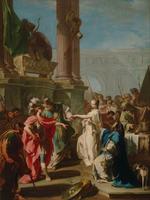
Il Sacrificio Di Polissena
Giambattista Pittoni
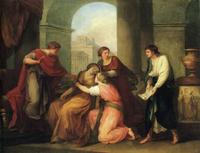
Virgil Reading the Aeneid to Augustus and Octavia
Angelica Kauffman
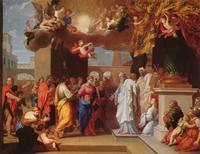
The Marriage of the Virgin
Jacques Stella
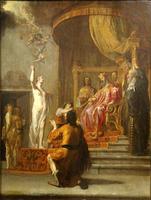
Zorobabel Devant Darius
Nikolaus Knüpfer
Queen of Sheba Before Solomon
Nikolaus Knüpfer
The death of Virginia
Vincenzo Camuccini
Arbitrato Di Papa Benedetto XIV
Placido Costanzi
Saint Eustace
Giambattista Pittoni
Agrippine Landing at Brundisium with the Ashes of Germanicus
Benjamin West
Judith with the Head of Holofernes
Francesco Solimena
Esquisse d'une scène antique
Gabriel-Francois Doyen
The Prodigal Son
Jan Weenix
Sacrificio Di Polissena
Giambattista Pittoni
Christ Among the Doctors
Luca Giordano