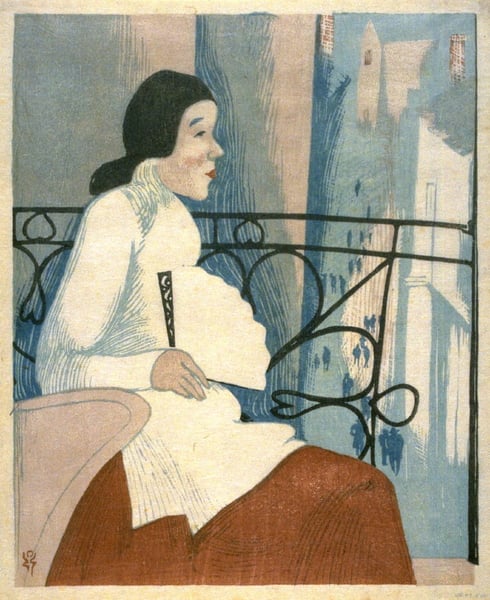
Analisi esperta di Chinese Lady di Kanae Yamamoto
Stile: Sōsaku hanga · Genere: portrait
Expert Analysis of "Chinese Lady" by Kanae Yamamoto
Kanae Yamamoto’s Chinese Lady is a seminal work within the Sōsaku hanga (“creative print”) movement, a revolutionary shift in Japanese printmaking that began in the early 20th century. As a portrait, it marks a departure from the traditional ukiyo-e model, where designers, carvers, and printers were separate specialists. Instead, Yamamoto embodied the Sōsaku hanga ethos: he personally carved the block, inked it, and printed the image, asserting the print as a direct, individual expression of the artist—not a commercial reproduction.
The choice of a Chinese lady as subject reflects the cross-cultural currents in early modern Japanese art. During the late Meiji and Taishō periods, Japanese artists like Yamamoto were influenced by Western portraiture, particularly its emphasis on psychological presence and modeling, while also retaining a sensitivity to line and flat color from Eastern traditions. This work likely balances both: a distinct, quiet dignity in the figure’s expression, rendered through controlled carving and ink gradations characteristic of the artist’s hand.
Significance within the style/period:
- Chinese Lady represents Yamamoto’s pioneering role in the Sōsaku hanga movement (founded in the 1910s), which challenged the anonymous, production-line nature of earlier Japanese prints.
- The portrait genre allowed Yamamoto to explore individuality and interiority, values central to modern art. Unlike typical ukiyo-e beauties, this image probably avoids decorative idealization in favor of a more naturalistic, introspective representation.
- It exemplifies how Sōsaku hanga artists reclaimed printmaking as a fine art medium, where the artist’s personal mark—chipping of wood, uneven ink absorption, subtle pressure—becomes part of the aesthetic.
- As a work from the movement’s formative years, it stands as a key document of Japan’s artistic modernization, blending Western artistic autonomy with Eastern print traditions.
Genere
Stile
Visivamente simili
20 opere con composizione e palette affini
Illustration for a book
Mana Parpulova
Xan Krohn
Xan Krohn
Pierrette
Alexandre-Jacques Chantron
Mulher com leque
Mily Possoz
Girls with olive green surrounds
Raphael Kirchner
Portrait
Thomas Eakins
On the Sofa
Berthe Morisot
The Lamp
Mary Cassatt
Portrait of A.N. Protasova
Boris Kustodiev
Mrs. Newton with a Parasol
James Tissot
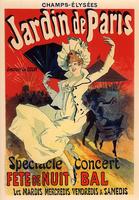
Jardin de Paris, Fête de Nuit Bal
Jules Cheret
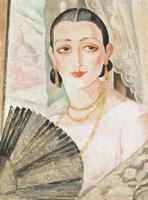
Portrait of Lili Elbe with a Fan
Gerda Wegener
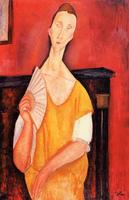
Woman with a Fan (Lunia Czechowska)
Amedeo Modigliani
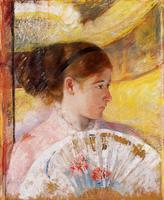
At the Theater
Mary Cassatt
Unknown
Christian Schad
Portrait of Berthe Morisot
Edouard Manet
Ortachali Beauty with a Fan
Niko Pirosmani
Nouvelles Chanson
Theophile Steinlen
Corbeille des femmes
Gerda Wegener
Les Cloches du Soir
Theophile Steinlen