Analisi esperta di The Lamp di Mary Cassatt
Stile: Impressionism, Japonism · Genere: genre painting
Expert Analysis: "The Lamp" by Mary Cassatt
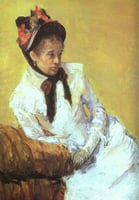
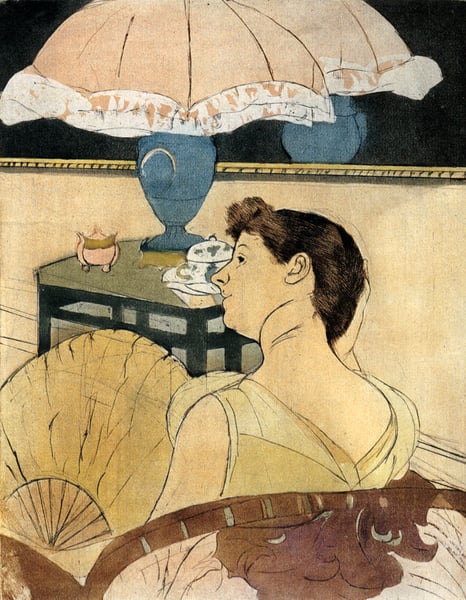
Mary Cassatt’s “The Lamp” is a masterful example of late‑19th‑century genre painting that synthesizes two pivotal influences: Impressionism and Japonism. Its significance lies in how Cassatt used these styles to elevate a quiet domestic moment into a timeless study of intimacy, light, and maternal care, while also challenging the boundaries of Western pictorial tradition.
1. Impressionist Innovation
Cassatt was the only American painter formally invited to exhibit with the French Impressionists. In “The Lamp,” she demonstrates the hallmark Impressionist concern with natural and artificial light. The soft, warm glow of the lamp models the figures and creates a hushed, contemplative atmosphere. Her visible, broken brushstrokes capture the flickering quality of lamplight—a technique derived from both Impressionism and her study of Japanese woodblock prints (ukiyo‑e), where flat patches of color are balanced against delicate line work.
2. Japonism: Compositional Asymmetry and Flatness
The work shows a clear debt to Japanese aesthetics. Cassatt crops the scene asymmetrically, often leaving empty space around the figures—a device typical of ukiyo‑e that focuses attention on the central action. The flat expanses of color (e.g., the tabletop, the wall) and the high vantage point (looking slightly downward) also echo Japanese print design. This departure from traditional Western perspective makes the composition feel both modern and intimately observed.
3. Significance as Genre Painting
Cassatt’s genre scenes rarely stray from the domestic sphere. “The Lamp” is significant because it elevates everyday life—likely a mother reading to or with a child—to the level of high art. This focus on private, female experience was radical in her time, offering a counter‑narrative to the male‑dominated subject matter of history painting. Her work aligns with the broader Impressionist goal of capturing modern life, but with a distinctly feminine viewpoint that emphasizes tenderness, education, and quiet bonds.
4. Synthesis of Traditions
What makes “The Lamp” particularly important is how seamlessly Cassatt blends Impressionist light‑effects with Japonist structure. The lamplight is both a literal source and a metaphor for enlightenment—the soft illumination mirrors the act of reading or sharing knowledge. Her use of asymmetry, flat color planes, and cropped composition was far ahead of its time, influencing later developments in modern art, from Post‑Impressionism to early 20th‑century painting.
In summary, “The Lamp” is significant not merely as a charming domestic scene, but as a work that demonstrates Cassatt’s role as a bridge between European Impressionism and Japanese graphic traditions. It redefines genre painting by imbuing the ordinary with technical subtlety and emotional depth, securing her place as a pioneering figure in both movements.
Museum / Gallery
Visivamente simili
20 opere con composizione e palette affini
Anne Catherine (première Épouse De L’artiste) À L’éventail
Antonio de La Gándara
Mulher com leque
Mily Possoz
Xan Krohn
Xan Krohn
Corbeille des femmes
Gerda Wegener
On the Sofa
Berthe Morisot
The Coiffure study
Mary Cassatt
Portrait of Lili Elbe with a Fan
Gerda Wegener
Lili Hot Summer
Gerda Wegener
Contemplation
Mary Cassatt
The Visit
Mary Cassatt
Model with Fan and Shawl
Gerda Wegener
Woman with a Fan (Lunia Czechowska)
Amedeo Modigliani
Jewellery
Raphael Kirchner
Laurette in Green in a Pink Chair
Henri Matisse
Fan
Raphael Kirchner
Chinese Lady
Kanae Yamamoto
At the Theater
Mary Cassatt
The Fitting
Mary Cassatt
Illustration for a book
Mana Parpulova
Woman with fan
Delphin Enjolras